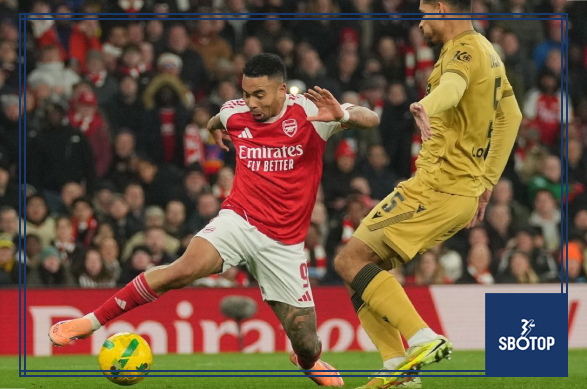
A serious knee injury once placed Gabriel Jesus at a crossroads in his career. The Arsenal forward was ruled out for an extended period after suffering a devastating anterior cruciate ligament (ACL) injury in January, an absence that would stretch close to a full year.
For any elite striker, spending nearly 12 months away from competitive football is mentally and physically draining. For Jesus, who plays a central role in Arsenal’s attacking system, the setback was particularly painful. The road back was long, filled with doubt, rehabilitation sessions, and countless hours away from the matchday spotlight.
Yet at the start of this month, perseverance finally paid off. Gabriel Jesus made his long-awaited return to the pitch, offering Arsenal and their supporters a powerful reminder of his quality—and resilience.
A Long Road Back From an ACL Setback
The severity of an ACL injury cannot be overstated. Beyond the physical trauma, it demands patience, discipline, and unwavering belief during recovery. For Jesus, the early stages were the hardest.
Arsenal’s medical staff placed him on an intensive rehabilitation program, carefully managing each phase to avoid setbacks. While the club adjusted tactically in his absence, Jesus was left to fight a solitary battle away from the roar of the crowd.
The striker later admitted that the first few months were dominated by uncertainty. Doubts crept in as he questioned when—or even how—he would feel like himself again on the pitch.
Emotional Return on the European Stage
Jesus’ comeback came on a major stage. He returned as a second-half substitute in Arsenal’s UEFA Champions League clash against Club Brugge, entering the match for the final 30 minutes.
Despite limited minutes, the signs were encouraging. Jesus pressed aggressively, linked play smoothly, and showed flashes of the sharp movement that has defined his Arsenal career. More importantly, his body language suggested renewed confidence.
For Jesus, the moment was deeply emotional. Nearly 11 months after suffering one of the most serious injuries in football, he was back competing at the highest level.
Speaking to Arsenal’s official media after the match, Jesus reflected honestly on his journey:
“In the first three months, I had a lot of doubts in my head, and then I could focus more on what God wanted for me. Everyone expects me to score goals, and of course I want that too. I had some chances, but even so, I am very happy and satisfied to be back, to have touches like I did tonight, the way I moved and controlled the ball.”
Arsenal’s Attack Gets a Timely Boost
Jesus’ return could not have come at a better time for Arsenal. With the season entering a crucial phase across domestic and European competitions, Mikel Arteta’s side have been in need of attacking depth and experience.
While expectations remain realistic—full sharpness will take time—the Brazilian’s presence alone alters the dynamic of Arsenal’s forward line. His pressing, link-up play, and tactical intelligence add dimensions that go beyond goals.
For Arsenal, the comeback is as much psychological as it is tactical. Having a senior forward return from such adversity sends a powerful message within the squad.
Martinelli’s Quiet but Crucial Role
Behind Jesus’ recovery lies a lesser-known but deeply meaningful story—one of teammate support. Gabriel Martinelli played a significant role in helping Jesus navigate the mental challenges of a prolonged injury layoff.
Martinelli’s involvement was personal. The Arsenal winger had previously suffered knee problems himself and understood the loneliness and frustration that often accompany long-term rehabilitation.
Their shared Brazilian roots strengthened the bond. Communication came naturally, and Martinelli often made a conscious effort to stay close to Jesus during difficult moments.
Speaking to Sky Sports, Martinelli explained:
“I had a meniscus problem a few years ago, and I know it’s not easy to be out for that long. Whenever I had the chance to be close to him, I was there. I tried to talk to him because I know it’s a difficult time. Even though he’s older than me, I wanted to support him.”
A Relationship Built on Admiration
Martinelli’s support also stemmed from admiration. As a teenager in Brazil, he watched Jesus rise rapidly through the ranks at Palmeiras, becoming a first-team regular at just 16.
“There’s only a three-year difference, but he went straight into the first team when he was 16. I was 12 or 13 watching him on TV. I always tell him that,” Martinelli added.
Now teammates at Arsenal, that early admiration has evolved into mutual respect and trust—qualities that proved invaluable during Jesus’ recovery.
Looking Ahead With Optimism
With Gabriel Jesus back in contention, Arsenal can look forward with renewed optimism. The Brazilian forward may not immediately return to peak form, but his determination, experience, and mentality remain intact.
For Jesus, the journey has reshaped his perspective. The injury tested him in ways football rarely does, but it also reinforced the importance of patience, faith, and support.
For Martinelli, seeing his teammate back on the pitch is a reward in itself.
“It’s great to have him back,” he said. “Hopefully in the next games he can score goals and play well.”
As Arsenal push forward in multiple competitions, the story of Gabriel Jesus’ comeback—strengthened by Martinelli’s quiet support—stands as a powerful reminder that football success is built not only on talent, but on resilience, unity, and belief.
ALSO READ :