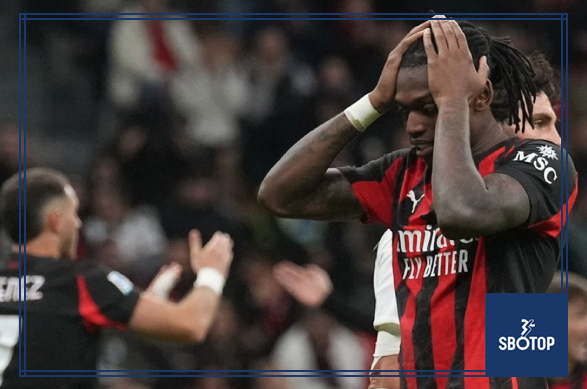
Plans to stage the Serie A fixture between AC Milan and Como in Perth, Australia, have been officially scrapped following a mutual decision between Lega Serie A and the Government of Western Australia. The announcement brings an abrupt end to what was widely regarded as one of the most ambitious international expansion projects ever attempted by an elite European football league.
The proposed match had been scheduled as a landmark event — the first time a top-flight European league fixture would be played outside its home country. Serie A officials initially hailed the concept as a bold step toward globalizing Italian football, particularly in markets with strong growth potential such as Australia.
However, despite months of preparation and high-level discussions, the project ultimately proved too complex to complete.
Why the AC Milan vs Como Match in Perth Was Cancelled
In its official statement, Lega Serie A confirmed that the cancellation was driven primarily by financial and regulatory risks that could no longer be mitigated. While early stages of approval had progressed smoothly, final authorization hurdles emerged at a critical moment.
One of the main obstacles was the requirement for additional approvals linked to inter-confederation regulations. Although the match involved two Italian clubs, hosting it outside Europe introduced jurisdictional challenges that fell beyond the authority of both the league and the local organizers.
Lega Serie A emphasized that it had exhausted all possible avenues to keep the project alive. However, new demands from the Asian Football Confederation introduced legal and procedural uncertainties that could not be resolved in time.
Crucially, the proposed match had already received unanimous approval from all 20 Serie A clubs. The Federazione Italiana Giuoco Calcio and UEFA had also granted their consent, underscoring how advanced the planning process had become.
Despite this support, Lega Serie A concluded that the financial exposure for both the league and the Western Australian government had reached an unacceptable level.
A Missed Opportunity for a Historic First
From Serie A’s perspective, the Perth fixture represented a unique chance to redefine how European leagues engage with global audiences. Italy’s top division has long sought to expand its international footprint, competing with other major leagues that have aggressively targeted overseas markets.
Hosting AC Milan — one of the most globally recognized clubs — was expected to deliver immense visibility. Lega Serie A described the event as a once-in-a-generation opportunity for Western Australia to host a match of historical significance in world football.
Yet ambition alone was not enough. Without full regulatory clarity and risk guarantees, the league opted for caution rather than controversy.
Reaction from Western Australia Government
Western Australia’s Minister for Sport and Recreation, Rita Saffioti, expressed disappointment but defended the decision as responsible governance. She confirmed that the regional government had worked closely with AC Milan and Serie A for more than 12 months to make the project viable.
“This is disappointing, but it is the right decision,” Saffioti said. “We were not prepared to expose Western Australia to a level of risk that was simply unacceptable.”
She highlighted that political complexities within international football, legal uncertainties, and bureaucratic processes ultimately derailed the project. Importantly, Saffioti reassured the public that no financial payments had been made, meaning Western Australia would not suffer any direct monetary loss from the cancellation.
Despite the match not taking place, the project generated significant international attention. According to estimates, the initiative produced global media exposure valued at more than USD 280 million, reinforcing Perth’s reputation as a destination capable of hosting world-class sporting events.
Serie A President: “A Lost Opportunity”
Lega Serie A president Ezio Simonelli also weighed in on the outcome, describing it as a missed chance for Italian football’s global growth.
“All authorization procedures were followed correctly and in full,” Simonelli stated. “This conclusion represents a lost opportunity for the international development of Italian football.”
He also acknowledged the disappointment felt by overseas fans who had hoped to watch Serie A clubs compete live in their region.
“This decision is particularly unfortunate for international supporters who wanted to experience Serie A up close,” he added.
What Happens Next for AC Milan vs Como?
With the Australian plan officially abandoned, Lega Serie A is now exploring alternative solutions for the AC Milan vs Como fixture. The most likely outcome is that the match will be played in Italy, with San Siro emerging as the primary venue, subject to scheduling adjustments.
League officials are expected to confirm revised arrangements in the coming weeks, ensuring minimal disruption to the broader Serie A calendar.
For AC Milan and Como, the focus quickly shifts back to sporting matters. While the global showcase opportunity has vanished, the match remains significant in domestic terms, particularly as both clubs navigate important phases of their respective campaigns.
Lessons for Serie A’s Global Strategy
Although the Perth experiment did not reach fruition, it has provided valuable insight for Serie A’s future international ambitions. The league now has a clearer understanding of the regulatory complexity involved in hosting competitive matches outside Europe.
Rather than abandoning global expansion altogether, Serie A officials are expected to pursue alternative approaches, such as preseason tournaments, enhanced broadcast partnerships, and fan engagement initiatives abroad.
A Setback, Not the End
For fans, the cancellation of AC Milan vs Como in Australia is undeniably disappointing. However, it also serves as a reminder that innovation in football often comes with setbacks.
While this historic first will not materialize, Serie A’s willingness to push boundaries has been noted across the global football community. The league may have stumbled this time, but the ambition to bring Italian football closer to international audiences remains firmly intact.
In the end, AC Milan vs Como will still be played — just not on Australian soil.
ALSO READ :