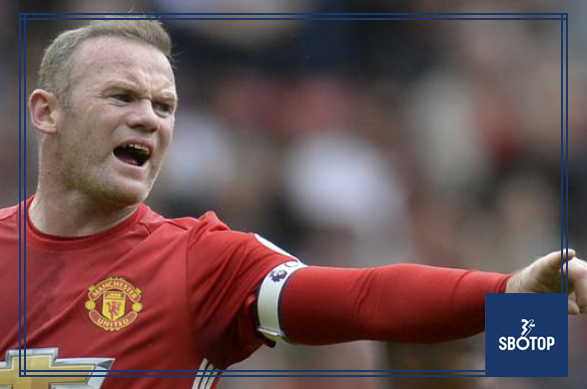
Wayne Rooney has opened up about one of the darkest periods of his career, revealing that his high-profile move from Everton to Manchester United came with chilling death threats and intense hostility from sections of the public.
The former England captain, widely regarded as one of the greatest players of his generation, shared the experience during a recent episode of The Wayne Rooney Show on BBC Sport. His comments offer a rare glimpse into the psychological toll faced by elite footballers at a young age—long before social media amplified public scrutiny.
A Teenage Star Under Siege
Rooney was just 18 years old when he made the controversial switch from Everton, his boyhood club, to Manchester United. The deal, worth £27 million in 2004, shattered the British transfer record for a teenager at the time. While the move marked the beginning of a legendary career at Old Trafford, it also triggered a wave of anger among certain Everton supporters.
“I received death threats,” Rooney admitted candidly.
“My parents’ house was vandalized and sprayed with paint. The same thing happened to my girlfriend’s house at the time—who is now my wife.”
The situation escalated beyond verbal abuse, becoming a deeply personal ordeal for Rooney and his family. What should have been an exciting step in his career instead turned into a test of emotional resilience.
“That’s when you really need to be mentally strong,” he added. “The people around you have to support you through moments like that.”
Leaving Everton Was Never Easy
Despite the backlash, Rooney insists that his decision to leave Everton was not taken lightly. Raised in Liverpool and developed through Everton’s academy, the club held enormous emotional value for him.
“Leaving Everton was incredibly difficult,” Rooney explained. “And the fact that I joined Manchester United made it even harder because of the rivalry between Liverpool and Manchester.”
The historic rivalry intensified the sense of betrayal felt by some fans, turning Rooney into a target almost overnight. However, he believes that adopting a ruthless mindset was essential for survival.
“I’ve always had the mentality of knowing what I want and how to get it,” he said. “You have to be selfish sometimes. You have to make decisions that are best for your career.”
Rooney acknowledged that the hostility coming from people in his own city made the experience particularly painful. Still, he refused to let it derail his ambitions.
“It was tough because it came from people I grew up around,” he said. “But I told myself, ‘I don’t care.’ If you want to reach the top, you have to be strong.”
Mental Toughness at a Young Age
Rooney’s story highlights the immense pressure placed on young footballers who break through at elite clubs. While modern discussions often focus on mental health awareness, Rooney believes his era required players to develop emotional armor quickly.
“At that time, you either coped or you didn’t,” he reflected. “There wasn’t the same support system you see today.”
His move to Manchester United would eventually prove to be the right one. Under Sir Alex Ferguson, Rooney won five Premier League titles, the UEFA Champions League, and became the club’s all-time leading scorer. Yet the early scars from his transfer experience remain vivid.
The Social Media Era: Pressure Multiplied
Rooney also contrasted his experience with the challenges faced by young players today, noting that the rise of social media has fundamentally changed the landscape.
“When I was coming through, social media didn’t exist like it does now,” he said. “If people talked about you, it was mostly in local newspapers or on TV.”
Now, the scrutiny is constant and global—something Rooney sees firsthand through his eldest son, Kai, who is currently part of Manchester United’s academy system.
“I see it with my 16-year-old son,” Rooney explained. “He plays for United, he’s sponsored by Puma, and suddenly there are hundreds of thousands of people watching him online.”
The visibility, Rooney believes, brings a new layer of pressure that young players must learn to handle.
“I never had that level of attention at that age,” he added. “Today’s kids need strong support networks more than ever.”
Lessons From a Turbulent Beginning
Rooney’s reflections serve as a powerful reminder that behind record-breaking transfers and glittering careers lie moments of vulnerability and fear. His willingness to speak openly about receiving death threats underscores the darker side of football fame—especially for teenagers thrust into the spotlight.
Despite the turmoil, Rooney’s career trajectory proves that resilience, self-belief, and the right support system can turn adversity into success. His experience also reinforces the importance of safeguarding young players, both mentally and emotionally, as they navigate the unforgiving world of elite football.
For Rooney, the pain of leaving Everton and the hostility that followed ultimately shaped him into the competitor he became.
“You have to trust yourself,” he concluded. “If you know what you want, you can’t let anything—or anyone—stop you.”
ALSO READ :