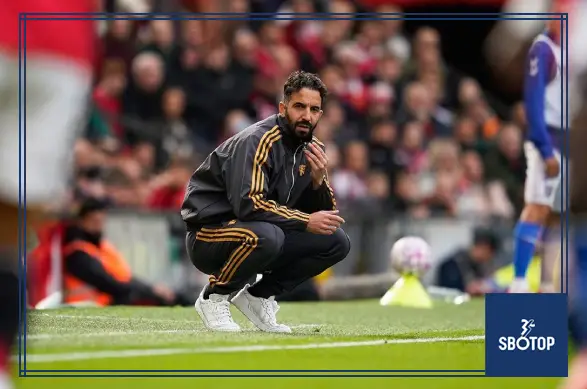
Ruben Amorim’s spell at Manchester United came to an abrupt end, far sooner than many had anticipated. The Portuguese coach was officially dismissed after just 14 months in charge, following the Red Devils’ 20th-week Premier League clash against Leeds United in the 2025/26 season.
The decision came despite signs of improvement on the pitch. United had briefly climbed toward the top of the Premier League table, showing flashes of the potential Amorim had promised upon his arrival. However, inconsistent performances and deep-seated issues within the dressing room overshadowed those gains.
Behind the scenes, Amorim’s relationships with several key players had deteriorated over time, resulting in conflicts with figures such as Marcus Rashford and Kobbie Mainoo.
Marcus Rashford: From Key Player to Loaned Out
Amorim’s arrival was initially seen as a fresh start for England international Marcus Rashford. The forward made an immediate impact, scoring three goals across his first two games under the new coach.
Yet, Rashford’s form gradually dipped, prompting criticism from Amorim, who reportedly questioned the striker’s professionalism and commitment during training sessions. Tensions escalated when Amorim publicly explained his decision to limit Rashford’s playing time, emphasizing that performance in training dictated matchday opportunities.
This dispute culminated in Rashford’s loan to Aston Villa. Upon returning, Amorim declined to reintegrate him into the first team, ultimately leading to a second loan spell at Barcelona. The saga highlighted the growing rift between player and manager, illustrating the friction that plagued United during Amorim’s tenure.
Alejandro Garnacho: Conflict at the Crucial Stage
Alejandro Garnacho also fell out of favor with Amorim. The relationship soured during United’s deep run in the Europa League. Mistakes in the semifinal drew sharp criticism from the coach, who later opted to bench Garnacho in the final against Tottenham.
Frustration boiled over in public after the match, with Garnacho questioning why he received only limited minutes in one of the most important games of the season.
Soon after, Garnacho departed Old Trafford, joining Chelsea in a high-profile transfer. The move underscored the irreparable nature of the conflict between the young winger and Amorim.
Jadon Sancho: Longstanding Issues Persist
Jadon Sancho’s struggles at Manchester United did not end with the departure of Erik ten Hag. Under Amorim, the winger’s situation deteriorated further. The coach reportedly believed Sancho failed to meet the team’s tactical and commitment standards, casting doubt over his future at the club.
The management ultimately approved Sancho’s transfer to Aston Villa. Even after leaving, tensions remained evident. When United faced Villa, Amorim deliberately avoided giving Sancho special attention, emphasizing that his focus was solely on his current squad.
Antony: Never Part of the Plan
Brazilian winger Antony was another player largely sidelined under Amorim. Considered incompatible with his tactical approach, Antony was loaned to Real Betis in January 2025. Amorim cited physical demands as the primary reason behind the decision.
The move drew criticism from Antony’s camp, with his agent accusing both the player and the club of being treated unfairly. Eventually, Antony’s transfer to Betis became permanent, and he publicly expressed disappointment over how he had been handled during his time at United.
Rasmus Hojlund: Misaligned Philosophy
Rasmus Hojlund initially continued to feature in Amorim’s plans but gradually lost his position as the club’s main striker. During the summer transfer window, he was loaned to Napoli, further straining their relationship.
Amorim openly stated his preference for forwards with intelligent movement and quick reactions, remarks widely interpreted as a pointed critique of Hojlund. The Danish striker responded on social media with sarcastic posts, signaling a complete breakdown in communication between player and coach.
Kobbie Mainoo: A Young Talent Marginalized
Perhaps most striking was Amorim’s treatment of young midfielder Kobbie Mainoo. Despite his previous contributions in Euro 2024 and the FA Cup final, Mainoo started only once during the season.
Amorim reportedly questioned whether Mainoo’s pace suited a two-central-midfielder formation, a decision that sparked debate among fans and pundits alike.
The tension extended beyond the pitch. Mainoo’s family made their dissatisfaction public during a match, with one sibling wearing a “Free Kobbie Mainoo” T-shirt in the stands—a powerful visual reflecting the growing unrest within the club and the broader implications of Amorim’s management style.
A Legacy Marked by Conflict
Ruben Amorim’s tenure at Manchester United was characterized by a series of high-profile conflicts with players who were expected to be central to the club’s success. From Rashford’s loans to Garnacho’s transfer and the marginalization of Mainoo, these disputes reveal a turbulent period behind the scenes that ultimately overshadowed any tactical progress or on-field achievements.
The dismissal of Amorim closes a controversial chapter at Old Trafford, but the ramifications of his relationships with key players will likely be felt for some time. Manchester United now faces the dual challenge of stabilizing the squad while rebuilding trust and cohesion after a season marked as much by internal strife as by competitive ambition.
ALSO READ :