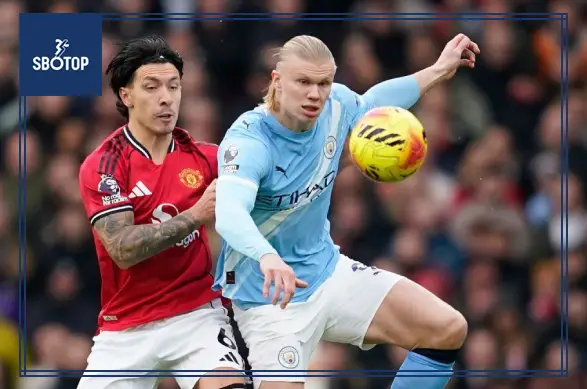
Manchester City endured a painful defeat as they traveled to Old Trafford on Saturday night, falling 2-0 to Manchester United in a derby that felt unusually one-sided. The final score barely tells the story—the manner in which City collapsed raised serious questions about their preparation, focus, and tactical approach.
“The analysis is simple: Manchester United were better,” Pep Guardiola admitted after the match. For the normally measured manager, this candid remark sounded unusually harsh and blunt, reflecting the shock of what happened on the pitch.
The more pressing question, however, is not who was better, but why City performed so poorly. Despite the 2-0 scoreline, United dominated in a style strikingly reminiscent of the high-intensity, possession-based football typically associated with Guardiola himself.
A Mental Absence at the Derby
Guardiola, who rarely speaks so critically of his own side, was uncharacteristically blunt.
“In ten years, how often have they truly been better than us? Today, we were not present,” he said, referring to the lack of mental and tactical presence on the field.
For Guardiola, “being present” goes beyond simply standing on the pitch—it involves readiness to compete in duels, control of possession, and the courage to dictate the tempo of the game. At Old Trafford, City displayed none of these qualities.
While City were neither aggressive nor visibly panicked, the defeat signals that the Premier League title race may be slipping further away. Realistic focus now shifts to the three remaining cup competitions, but doubts remain whether such a collapse could recur at crucial moments.
United, by contrast, started with energy and intensity, while City seemed unprepared, setting the tone for a lopsided contest.
Fragile, Patchwork Defense
City’s defensive vulnerabilities were apparent from the team sheet. Guardiola fielded a young central defensive pairing of Abdukodir Khusanov (21) and Max Alleyne (20), while Matheus Nunes’ absence due to illness forced an emergency adjustment with Lewis stepping in.
Nathan Ake was deployed at left-back instead of Nico O’Reilly, likely to balance Lewis’ tendency to drift into central areas. Yet the plan faltered almost immediately.
United pressed relentlessly, disrupting City’s ability to build from the back. Small mistakes quickly snowballed: a poor touch from Ake in the opening minutes gave United early momentum and energized the home crowd.
Alleyne, recently recalled from a loan at Watford, performed adequately but lacked authority. When Bernardo Silva and Rodri also struggled, City’s midfield control crumbled. Rodri even gifted United a scoring chance through an uncharacteristic sloppy pass.
Instead of dominating and silencing Old Trafford as they usually do, City allowed United to thrive on the ball and press aggressively, completely reversing the usual dynamic.
Tactical Adjustments That Failed
Days before the match, Guardiola had warned that Lewis was not a traditional up-and-down fullback. With Nunes unavailable and Ake playing out of position, City were forced to abandon their usual patterns: wide, aggressive fullbacks and creative players operating behind Erling Haaland.
Jeremy Doku and Antoine Semenyo were left isolated wide, receiving the ball without adequate support, reminiscent of a pre-Guardiola City struggling to navigate tight spaces. But the usual quick circulation of the ball never materialized.
“They had something we didn’t,” Guardiola admitted. He was referring to the energy, duels, and sharpness in the final third that City completely lacked.
Ineffective in the Final Third
Although City managed to push United back at times, they created virtually no real scoring opportunities. Doku was active on the left but delivered disappointing results, while Semenyo struggled to influence the game. Phil Foden remained passive and was eventually substituted at halftime.
Rayan Cherki’s introduction offered a brief spark, but his half-hearted cross and a lost ball on a secondary phase led directly to a three-on-two counterattack for United—highlighting the team’s systemic problems.
City also failed to capitalize on set-pieces. Their opening corner, delivered along the ground without direction, exemplified a side struggling to impose itself even in controlled situations. The only shot on target came from Alleyne’s header, easily collected by United’s goalkeeper.
Substitutions Unable to Turn the Tide
Despite dominating possession in patches, City never managed to shift the flow of the game. Guardiola made two halftime substitutions, including bringing on O’Reilly and Cherki and moving Ake to central defense, but the overall pattern remained unchanged.
Cherki showed bravery and composure under pressure, yet the team’s structure failed to improve. Ironically, City’s best performer was Gianluigi Donnarumma, who had to make multiple world-class saves to prevent the scoreline from being even more humiliating.
Once United went 2-0 up, the contest was effectively over. Substitutions for Haaland, Doku, and Bernardo Silva late in the match seemed more like a signal to accept the defeat and exit quickly.
A Derby to Forget
This derby was more than just a loss for Manchester City. It was a rare night when their standards completely collapsed, forcing Guardiola to acknowledge with unusual candor that his team was, in every sense, not present on the pitch.
The defeat will linger as a warning: even the most successful squads under Guardiola are vulnerable when energy, focus, and tactical coherence are absent—especially at the fiercest of rivalries.
ALSO READ :