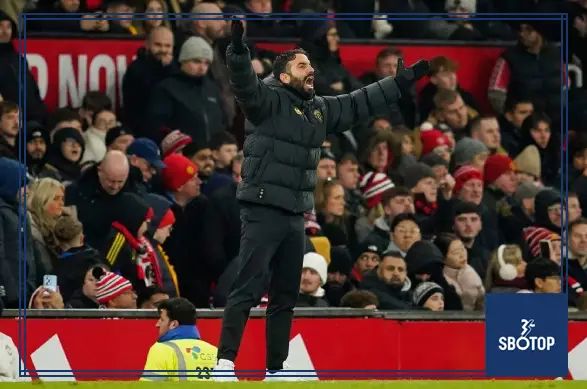
New details have emerged surrounding the growing tension between Ruben Amorim and Manchester United’s hierarchy, with reports outlining two major issues that have pushed the Portuguese coach into open frustration with the club’s leadership.
Amorim recently sent shockwaves through English football after publicly criticizing Manchester United’s management following their clash against Leeds United. The comments marked a rare moment of transparency from the head coach, who hinted that his authority at Old Trafford was being undermined behind the scenes.
According to sources close to the situation, the relationship between Amorim and the club’s decision-makers has deteriorated rapidly, driven by broken promises and increasing interference in tactical matters. British outlet The Telegraph reports that there are two primary reasons behind Amorim’s anger—both of which could have serious implications for Manchester United’s future.
Broken Promises Over the January Transfer Window
The first and most significant source of frustration for Ruben Amorim revolves around the club’s handling of the January transfer window.
When Amorim agreed to take charge of Manchester United, he was reportedly assured that he would be backed financially, including funds to strengthen the squad during the winter window. Those assurances played a key role in convincing the former Sporting CP coach to commit to the project.
Initial plans indicated that United would allocate around £65 million for reinforcements in January. Amorim quickly identified Bournemouth forward Antoine Semenyo as a key target to improve United’s attacking options. However, the deal collapsed after Semenyo opted for a move to Manchester City instead.
While missing out on the player was not the main issue, the situation escalated when United’s board suddenly withdrew their financial commitment, informing Amorim that no further signings would be possible during the winter window.
This abrupt change reportedly left Amorim furious. From his perspective, the club not only failed to deliver on a clear promise but also left him short-handed during a crucial phase of the season. Sources claim Amorim felt misled, believing that long-term planning was being sacrificed due to internal financial concerns and indecision.
Pressure to Abandon His Preferred Tactical System
The second flashpoint concerns tactical interference from Manchester United’s technical leadership, particularly involving technical director Jason Wilcox.
From the outset of his appointment, Amorim was transparent about his footballing philosophy. He made it clear that he intended to implement his trusted 3-4-2-1 formation, a system that brought him success in Portugal and one he believes best suits modern European football.
Crucially, Amorim was reportedly given assurances that the club would fully support this tactical approach, including recruiting players specifically tailored to the system. That guarantee was central to his long-term vision at Old Trafford.
However, recent weeks have seen a shift in stance from the club’s hierarchy. Wilcox is said to have urged Amorim to switch to a back-four formation, arguing that the current squad is better suited to a more traditional setup.
This intervention has not been well received. Amorim reportedly views the request as a direct challenge to his authority and expertise, reinforcing his belief that he is being treated more as a head coach than a true manager with full control.
Concerns Over Managerial Authority at Old Trafford
The situation has fueled wider concerns about Manchester United’s structural hierarchy and whether the club is once again repeating past mistakes.
Amorim’s frustration reportedly stems from a feeling that key football decisions are being dictated from above, limiting his ability to implement a clear identity and long-term strategy. For a coach known for demanding autonomy and discipline, this dynamic has proven increasingly difficult to accept.
Sources suggest Amorim believes that consistent interference risks destabilizing the dressing room and undermining his credibility with players, particularly during a transitional period.
Emergency Talks Planned as Pressure Mounts
Despite the growing tension, Manchester United’s board is eager to prevent the situation from escalating further.
Reports in England indicate that the club has scheduled urgent talks with Amorim in an attempt to repair the relationship and clarify roles and expectations moving forward. The meeting is expected to address both transfer strategy and tactical autonomy.
However, there is also a sense of uncertainty surrounding Amorim’s future. While dismissal is not the club’s preferred outcome, sources suggest that his position could come under serious threat if common ground cannot be found quickly.
A Defining Moment for Manchester United’s Project
The coming days could prove decisive for both Ruben Amorim and Manchester United.
If the club fails to restore trust and provide clarity, the fallout could extend beyond one manager, once again raising questions about United’s long-term direction and governance. Conversely, resolving the dispute could help stabilize the project and allow Amorim to fully implement his vision.
For now, all eyes remain on Old Trafford as one of Europe’s most high-profile managerial standoffs continues to unfold—one that may shape Manchester United’s season and future for years to come.
ALSO READ :