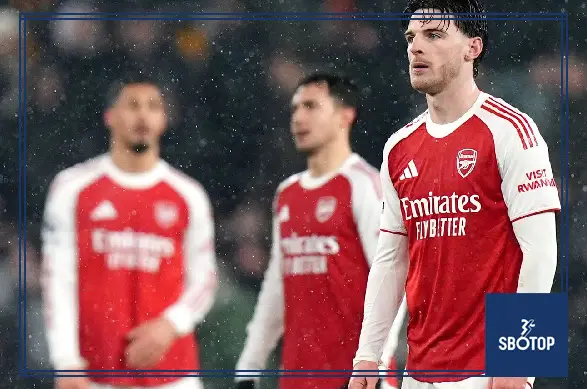
Arsenal’s latest stumble in the Premier League has reignited a familiar and uncomfortable narrative. After being held to a frustrating draw by Wolverhampton Wanderers, criticism has poured in from pundits and supporters alike. Among the most vocal was former Arsenal midfielder Paul Merson, who described the team’s display as “slow and lazy,” warning that the dreaded “bottle jobs” label could once again resurface if performances do not improve.
The stalemate against Wolves was not merely about dropped points. It was about tempo, mentality, and whether Arsenal possess the resilience required to sustain a title challenge under manager Mikel Arteta. In a season defined by razor-thin margins, such slip-ups can carry disproportionate weight. This article explores Merson’s comments, analyzes Arsenal’s performance, examines the psychological dimensions of title races, and considers what lies ahead for the Gunners.
A Frustrating Night Against Wolves
Facing Wolves at home was viewed as a prime opportunity for Arsenal to maintain pressure on their title rivals. Instead, the match unfolded in a manner that left fans restless. While Arsenal dominated possession, their approach lacked urgency and penetration. Wolves remained compact, disciplined, and tactically astute, absorbing pressure and limiting clear-cut opportunities.
Arsenal’s build-up play was methodical to a fault. Passes circulated across the back line and midfield without sufficient vertical thrust. The tempo rarely quickened, and attacking movements lacked the sharpness that had characterized their best performances earlier in the season. Wolves, meanwhile, capitalized on transitions, occasionally threatening on the counterattack and exposing Arsenal’s vulnerability when overcommitted.
By full-time, the scoreboard reflected a draw that felt more like a defeat in emotional terms. The reaction was swift—and sharp.
Paul Merson’s Critique
As a former Arsenal player and now a prominent pundit, Paul Merson’s opinions carry emotional and symbolic weight. His assessment was blunt: Arsenal were “slow and lazy.” Such language is not merely technical criticism; it strikes at the heart of professionalism and competitive hunger.
Merson argued that title contenders cannot afford complacency, particularly against teams positioned lower in the table. According to him, the lack of intensity suggested a mental dip rather than a purely tactical issue. He warned that if Arsenal continue to falter in winnable matches, the “bottle jobs” narrative—a phrase that implies psychological fragility—would grow louder.
This term has haunted Arsenal in recent seasons, especially after narrowly missing out on the title despite leading the table for extended periods. Merson’s comments, therefore, tapped into a sensitive nerve among supporters.
Tactical Analysis Where Arsenal Fell Short
From a tactical perspective, Arsenal’s issues against Wolves were multifaceted:
- Predictable Build-Up Play
Arsenal’s passing patterns became predictable, with limited variation in attacking angles. Wolves were able to anticipate movements and close down space efficiently. - Lack of Width and Overlapping Runs
While Arsenal’s wingers attempted to stretch the play, the full-backs did not consistently provide overlapping support, making it easier for Wolves to defend in compact lines. - Midfield Stagnation
Arsenal’s midfield trio struggled to break lines with penetrating passes. Instead, possession often recycled laterally, allowing Wolves to reset defensively. - Limited Directness
The absence of quick vertical transitions reduced Arsenal’s ability to unsettle Wolves’ defensive structure.
These elements combined to create the perception of slowness. While “lazy” may be harsh, the lack of dynamism was undeniable.
The Psychological Dimension
Title races are as much about mentality as they are about tactics. The psychological pressure of sustaining a challenge can subtly influence performance. When expectations rise, so too does scrutiny. Players may become cautious, prioritizing ball retention over risk-taking.
Arsenal’s young core, though immensely talented, is still gaining experience in managing these high-stakes moments. Every draw feels amplified. Every missed opportunity invites comparison to previous campaigns.
Merson’s warning about the “bottle jobs” label reflects the broader narrative battle Arsenal must win. If the team internalizes external doubts, performance anxiety can compound.
Arteta’s Response
Manager Mikel Arteta has consistently emphasized resilience and collective responsibility. Following the Wolves draw, he acknowledged shortcomings but defended his players’ effort levels. Arteta argued that while execution may have faltered, commitment remained intact.
He highlighted the need for sharper decision-making in the final third and stressed that maintaining composure is vital during demanding stretches of the season. Arteta’s measured tone contrasted with Merson’s blunt critique, illustrating the balance between external analysis and internal confidence-building.
Fan Reaction and Media Pressure
Supporters’ reactions were mixed. Some echoed Merson’s frustration, pointing to a pattern of underwhelming displays against defensively organized opponents. Others defended the squad, citing fatigue, injuries, and the unpredictable nature of football.
Media narratives often amplify moments of weakness. Headlines questioning Arsenal’s mentality can shape public perception, regardless of underlying context. In modern football, managing narrative momentum is almost as important as managing on-field momentum.
The “Bottle Jobs” Narrative
The phrase “bottle jobs” carries significant emotional charge. It implies a failure of courage at decisive moments. For Arsenal, the narrative gained traction after previous seasons where late collapses cost them silverware.
However, labeling a team prematurely can obscure nuanced realities. Football outcomes hinge on fine margins—deflections, refereeing decisions, injuries. While mentality plays a role, reducing complex campaigns to a single narrative risks oversimplification.
Nevertheless, perception influences psychology. Arsenal must address not only tactical deficiencies but also the confidence required to silence critics.
Key Players Under Scrutiny
Several Arsenal players found themselves under the microscope:
- Midfield Creators: Expected to dictate tempo and unlock defenses, they must rediscover incisiveness.
- Wide Forwards: Their ability to beat defenders and deliver quality crosses remains essential.
- Defensive Leaders: Maintaining composure during opposition counters is crucial to avoid costly lapses.
Collectively, the squad must elevate intensity and decisiveness.
Statistical Perspective
While the draw felt disappointing, underlying statistics may provide context. Arsenal dominated possession and recorded more shots than Wolves. However, expected goals (xG) figures suggested that clear-cut chances were limited.
This statistical disparity highlights the difference between territorial dominance and effective penetration. Quality often outweighs quantity in elite competition.
Lessons Moving Forward
- Increase Tempo: Quick ball circulation can disrupt compact defenses.
- Encourage Risk-Taking: Creative players must attempt line-breaking passes.
- Mental Reset: Focus on the process rather than external narratives.
- Squad Rotation: Fresh legs may reinvigorate intensity levels.
- Set-Piece Optimization: Maximizing dead-ball opportunities can unlock tight matches.
Implementing these adjustments could restore momentum.
Title Race Implications
Every dropped point narrows margin for error. Rivals will capitalize on any hesitation. Arsenal’s ambition requires consistency, particularly against mid-table opponents.
However, a single draw does not define a season. The true measure lies in response. If Arsenal rebound with conviction, the Wolves stalemate may become a footnote rather than a turning point.
Also Read:
- SBOTOP: Anthony Gordon Shines with Four Goals as Newcastle Thrash Qarabag 6-1 in Champions League Play-Off First Leg
- SBOTOP: Gary Rowett Takes Charge as Leicester Manager for Remainder of the Season
- SBOTOP: Derek McInnes Cautions Rangers and Celtic Against Underestimating Hearts in Scottish Premiership Title Race