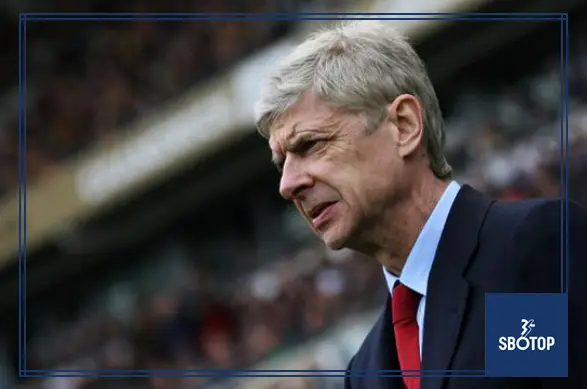
For more than two decades, Arsène Wenger shaped Arsenal in a way few managers have ever shaped a football club. His philosophy, eye for talent, and commitment to attacking football transformed the North London side into one of Europe’s most admired teams. From global superstars to emerging prospects, Wenger built squads filled with brilliance, resilience, and identity.
During his reign, Arsenal celebrated unforgettable triumphs — none more iconic than the unbeaten 2003/04 Premier League campaign that delivered the club’s unique gold trophy. Yet, beyond the dazzling names and headline moments, Wenger insists that one of the most important figures of that era rarely received the recognition he truly deserved.
Wenger’s Arsenal Legacy and the Invincibles Era
Under Arsène Wenger, Arsenal evolved into a modern football powerhouse. He nurtured legends such as Thierry Henry, Dennis Bergkamp, and Patrick Vieira, blending technical excellence with tactical intelligence.
The pinnacle of Wenger’s tenure came during the 2003/04 season, when Arsenal went an entire Premier League campaign without defeat — a feat unmatched in modern English football. That squad, famously dubbed “The Invincibles,” is still regarded as one of the greatest teams in football history.
However, while attacking flair often captured the spotlight, Wenger emphasizes that the team’s balance was built on quieter, less glamorous contributions. Behind every spectacular goal and midfield surge was a player ensuring structure and stability.
The Most Underrated Arsenal Player According to Wenger
In an interview with SPORTBible, Wenger was asked to name the most underrated player he ever coached at Arsenal. His answer was immediate and unequivocal: Gilberto Silva.
“Gilberto Silva. He was naturally very humble,” Wenger explained. “I remember when I signed him in 2002. He was in Japan for the World Cup. I watched him and thought he wasn’t doing anything spectacular. But then you ask yourself — who won that ball? Gilberto Silva. Who made that pass? Gilberto Silva.”
The French manager highlighted the midfielder’s subtle influence. Gilberto was not a player who dominated highlight reels, but his presence ensured that others could flourish.
Wenger added that during the Invincibles era, few people spoke about Gilberto. “He’s the type of player whose quality you only truly notice when he’s not playing. When he plays, everything looks natural.”
The Backbone of the Invincibles
Gilberto Silva joined Arsenal after impressing for Brazil at the 2002 FIFA World Cup. Competing with Europe’s elite clubs for his signature, Arsenal secured the midfielder who would soon become an indispensable figure in their golden era.
His role in the Invincibles side was clear: shield the defense, recycle possession, and maintain tactical discipline. In a team bursting with attacking brilliance, Gilberto’s positional awareness and composure provided the foundation.
Over time, he accumulated more than 240 appearances for Arsenal, contributing to two FA Cup triumphs and the historic unbeaten league title. He also etched his name into club history by scoring Arsenal’s first goal at the Emirates Stadium — an equalizer against Aston Villa that symbolized continuity during a new chapter.
Yet despite these achievements, recognition often flowed elsewhere.
Overshadowed by Patrick Vieira
One of the key reasons Gilberto Silva remained underappreciated was the presence of Patrick Vieira. Widely regarded as one of the greatest midfielders in football history, Vieira’s commanding style naturally drew attention.
While Vieira drove forward with power and charisma, Gilberto operated with understated efficiency. Their partnership, however, was symbiotic. Vieira’s freedom to attack was made possible by Gilberto’s defensive intelligence and positional reliability.
In many ways, Gilberto represented the silent architect of Arsenal’s midfield dominance. He anticipated danger, broke up opposition attacks, and initiated transitions — often without fanfare.
This contrast explains why Wenger believes he never received full credit. Football narratives tend to celebrate the spectacular, but teams are often sustained by those who prioritize balance over glory.
Why Gilberto Silva’s Legacy Matters Today
In modern football, data analytics increasingly highlight the value of players who control tempo and recover possession. Looking back, Gilberto Silva embodied these qualities long before metrics became mainstream.
Wenger’s reflections invite a broader conversation about how greatness is measured. Is it defined solely by goals and assists, or by influence and cohesion? Gilberto’s career suggests that football intelligence and humility can be just as decisive as flair.
For Arsenal supporters, revisiting his contributions provides renewed appreciation for the foundations of the Invincibles’ success. Without his discipline and awareness, that unbeaten campaign may not have been possible.
Conclusion
Arsène Wenger’s revelation that Gilberto Silva was the most underrated player he managed at Arsenal sheds light on an often-overlooked truth about elite football teams. Behind every iconic squad lies a figure who works tirelessly in the shadows, ensuring that brilliance can thrive.
While names like Henry, Bergkamp, and Vieira dominate discussions of Arsenal’s golden era, Gilberto Silva’s quiet excellence remains integral to that legacy. His humility, tactical intelligence, and consistency formed the backbone of the Invincibles — even if it was not always acknowledged at the time.
As football continues to evolve, Wenger’s words serve as a reminder: sometimes the most influential players are those who make greatness look effortless. And in Arsenal’s storied history, Gilberto Silva stands as the ultimate example of understated brilliance.
ALSO READ :