For any elite footballer, few moments are more devastating than a sudden injury with no warning. That nightmare became reality for Hugo Ekitike, whose season has come to a premature end following a ruptured Achilles tendon. The Liverpool striker now faces not only a long rehabilitation process but also the crushing blow of missing out on a potential place in France’s squad for the 2026 World Cup. In a sport where timing and peak performance are everything, this type of injury is widely regarded as one of the most feared—often considered even more severe than an ACL tear.
How Hugo Ekitike’s Achilles Injury Happened
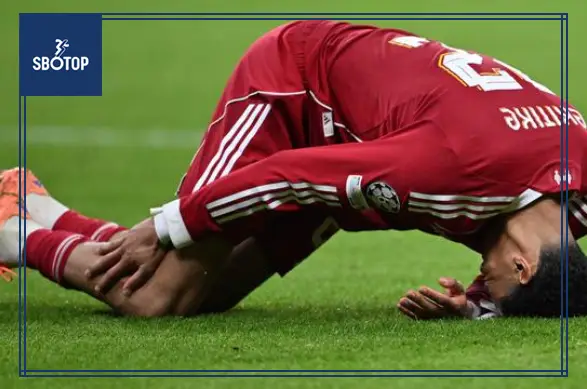
The incident occurred during a high-intensity Champions League clash against Paris Saint-Germain. In what initially appeared to be a routine movement, Ekitike attempted to change direction while sprinting. There was no collision, no tackle—just a sudden collapse.
Moments like these are particularly alarming in football. Ekitike reportedly glanced behind him, assuming contact from an opponent, only to realize he was completely alone. The damage had already been done. His Achilles tendon, one of the strongest yet most vulnerable structures in the body, had ruptured under extreme stress.
This type of non-contact injury is common in Achilles ruptures and highlights the unpredictable nature of the condition. Unlike many injuries caused by impact, Achilles damage often strikes without warning, making it even more psychologically distressing for athletes.
Why Achilles Tendon Injuries Are More Severe Than ACL Tears
In recent years, advances in sports medicine have significantly improved recovery outcomes for ACL injuries. Many players return to their previous level of performance after undergoing surgery and rehabilitation. However, Achilles tendon injuries present a very different challenge.
Former footballer Jamie O’Hara has described Achilles ruptures as more frightening than ACL tears, emphasizing the uncertainty surrounding recovery. While ACL procedures are now relatively standardized, Achilles injuries often lead to long-term physical changes.
The Achilles tendon connects the calf muscles to the heel bone and plays a crucial role in explosive movements such as sprinting, jumping, and rapid direction changes. When this tendon is compromised, it directly impacts a player’s ability to perform at the highest level.
Even after recovery, athletes frequently report a loss of power, reduced acceleration, and diminished confidence in their movements. This is why many consider Achilles injuries not just a temporary setback, but a potentially career-altering event.
The Science Behind a Difficult Recovery
One of the main reasons Achilles tendon injuries are so difficult to treat lies in their mechanical function. The tendon acts like a spring, storing and releasing energy during movement. When a player sprints, the force passing through the Achilles can reach three to five times their body weight.
Repairing such a critical structure is only part of the challenge. Restoring its original elasticity, strength, and responsiveness is significantly more complex. This explains why surgery, while essential, is only a fraction of the overall recovery process.
Medical experts suggest that surgery accounts for roughly 25 percent of the solution. The remaining 75 percent depends on rehabilitation, which requires time, discipline, and careful progression. For Ekitike, this means months of structured recovery under close medical supervision.
Concerning Statistics for Elite Athletes
Data from leading specialists in foot and ankle injuries reveals sobering statistics. Around 20 percent of elite footballers fail to return to their pre-injury performance levels after an Achilles rupture. In other words, one in five players may never fully regain their peak form.
The numbers are even more concerning in other high-impact sports. Rugby and American football report higher rates of performance decline following similar injuries, highlighting the universal difficulty of recovering from Achilles damage.
For a young player like Ekitike, these figures underline the scale of the challenge ahead. While his age and access to world-class medical facilities offer hope, the path to full recovery remains uncertain.
The Long Road Back: Stages of Rehabilitation
Recovery from an Achilles tendon rupture is a structured and demanding process that typically spans six to nine months, or even longer. It begins with an immobilization phase, during which the affected leg must be protected and weight-bearing is restricted. This period can last up to 12 weeks and often involves the use of specialized protective footwear.
The second phase focuses on restoring movement. Players gradually reintroduce light exercises, including controlled weight training and pool-based rehabilitation, to rebuild strength without placing excessive strain on the tendon.
The final phase emphasizes explosive movement. Athletes begin advanced drills such as single-leg jumps, agility exercises, and eventually a return to full training. Each stage must be carefully managed to avoid setbacks, as rushing the process can increase the risk of re-injury.
The Mental Challenge of Returning to Form
Beyond the physical demands, Achilles injuries also pose a significant psychological challenge. Many players struggle to regain confidence in their bodies, particularly when performing high-intensity movements.
Former professionals who have experienced similar injuries often describe the recovery as mentally exhausting. The frustration of not feeling like the same player can linger long after physical healing is complete.
Regaining sharpness, speed, and explosiveness requires not only physical conditioning but also mental resilience. This aspect of recovery is often overlooked, yet it plays a crucial role in determining whether a player can truly return to their best form.
Conclusion: Hugo Ekitike’s Uncertain Road Ahead
Hugo Ekitike now begins one of the most challenging periods of his career. At just 23 years old, he still has time on his side, along with access to elite medical care and support at Liverpool. However, an Achilles tendon rupture is not an injury that follows a predictable timeline.
Recovery is not simply about ticking off milestones on a calendar—it is about respecting the body’s natural healing process and gradually rebuilding strength and confidence. While modern medicine offers tools and hope, the reality remains that returning to peak performance after such an injury is never guaranteed.
For Ekitike, the journey ahead will test both his physical limits and mental resilience. Whether he can overcome this setback and reclaim his place at the top level of football will depend on patience, perseverance, and the careful management of one of the sport’s most feared injuries.
ALSO READ :
- SBOTOP Premier League Twist : Manchester City Capitalize on Arsenal’s Dip in Form
- SBOTOP: Frank Lampard Silences Critics Again as He Leads Coventry to Historic Promotion into the Premier League
- SBOTOP: Arsenal’s Persistent Attacking Struggles Emerge as Major Concern Despite Another Champions League Semi-Final Run Under Mikel Arteta