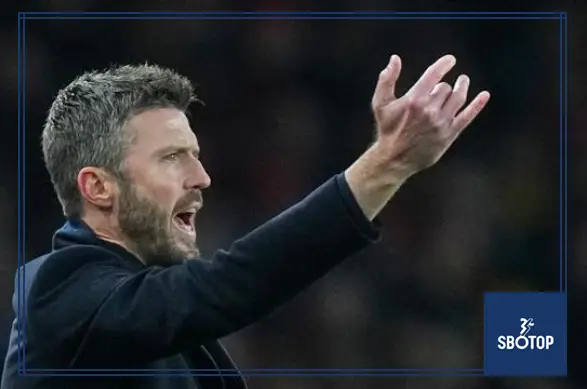
Interim Manchester United manager Michael Carrick has introduced a striking tactical change: removing the use of long throw-ins from the team’s strategy. The decision comes amid a Premier League trend where set pieces, particularly long throws, have become a potent weapon for several clubs. Teams like Arsenal and Brentford have demonstrated the effectiveness of such approaches, converting them into significant goal-scoring opportunities.
Despite its popularity elsewhere, not everyone has embraced Carrick’s approach. Liverpool manager Arne Slot has been vocal in criticizing the dominance of set-piece tactics at the highest level, expressing concern about their overuse in the modern game.
Since taking over from Rúben Amorim at Old Trafford, Carrick has overseen a decrease in Manchester United’s threat from set pieces, particularly long throws.
Drop in Set-Piece Threat
Under Amorim, when open-play opportunities were limited, Manchester United scored 13 goals from set-piece situations, second only to Arsenal, who netted 18. However, under Carrick, the team has added only five more goals from set pieces, with a notable decline in attempts overall.
The most dramatic change involves long throw-ins. During Amorim’s tenure, Diogo Dalot frequently executed these throws, creating 13 clear chances for United. Since Carrick’s appointment, the Red Devils have registered just a single attempt from this tactic.
This shift is particularly notable given that many Premier League teams increasingly exploit long throws as an effective means of creating goal-scoring opportunities.
Slot’s Perspective on Set Pieces
Arne Slot has openly commented on Manchester United’s tactical departure from league trends, reflecting a broader frustration he has expressed regarding set-piece reliance.
“When I watch other leagues, I don’t see the same emphasis on set pieces. In the Netherlands, for example, goals are disallowed more frequently and fouls against the goalkeeper are strictly enforced. It makes me realize just how different the approach can be,” Slot said.
“As a former player, I’m not particularly fond of it. You can nearly hit the goalkeeper in the face here, and the game continues. I don’t like that,” added the Dutch coach, emphasizing the stylistic differences between leagues.
Impact on Match Quality
Slot also raised concerns about the overall quality and entertainment value of matches heavily reliant on set pieces.
“I remember watching Barcelona 10 or 15 years ago. Every Sunday, you looked forward to seeing them play,” he said.
“Many Premier League matches I watch now may not be as entertaining in that sense, but they remain compelling due to the intense competition,” he noted, acknowledging the league’s overall appeal despite tactical shifts.
Carrick’s Positive Start
Interestingly, despite this tactical reduction in set-piece reliance, Manchester United’s performance has improved under Carrick. The team has gradually climbed from outside the top four and is now competing for a Champions League spot.
United’s resurgence contrasts with rivals such as Liverpool and Chelsea, who remain outside the top four. Carrick has enjoyed an impressive start: in his first ten games as interim manager, he has secured seven wins and suffered only one defeat.
This improvement suggests that limiting long throw-ins and emphasizing other tactical approaches has not hindered United’s competitive edge, and may have helped streamline their attacking efficiency.
A New Era at Old Trafford
Carrick’s decision highlights a tactical philosophy that prioritizes structured play over exploiting unconventional set-piece methods. By moving away from long throws, United is focusing on creating opportunities from open play and more controlled situations, reflecting a modern, adaptable approach in the Premier League.
Although the move diverges from current league trends, it appears to be producing positive results on the table, proving that bold managerial decisions can pay off even when they contrast with conventional wisdom.
Looking Ahead
As Manchester United continues its push for Champions League qualification, Carrick’s approach will be closely watched. Will other Premier League managers adopt similar reductions in set-piece emphasis, or will teams continue to exploit long throws and free-kick strategies?
For now, Carrick has managed to blend pragmatism with efficiency, guiding Manchester United toward stability and competitiveness in a highly demanding league. His early success suggests that careful tactical adjustments, even against prevailing trends, can lead to tangible results and renewed optimism among fans at Old Trafford.
In the modern Premier League, where set pieces often dominate highlights, Carrick’s bold stance demonstrates that there is more than one path to success. By trusting structured play over long throws, Manchester United is charting a distinctive course that balances discipline, effectiveness, and competitive ambition.
ALSO READ :