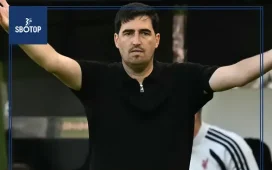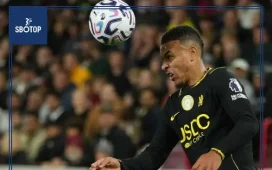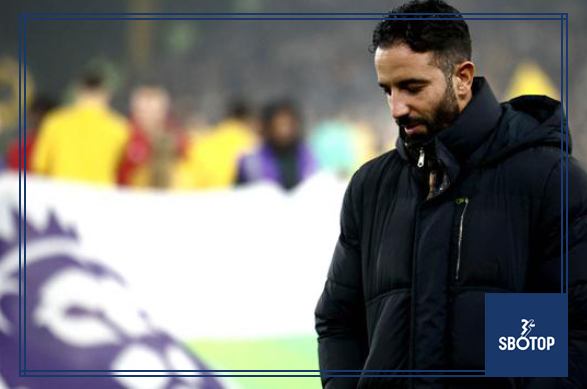
Amorim arrived at Manchester United with a strong reputation after successfully implementing a 3-4-2-1 system at Sporting CP. However, Premier League supporters are still waiting to see clear evidence that the same structure can work at Old Trafford.
The fundamental issue is simple yet critical: United do not have the right personnel to execute Amorim’s system.
Patrick Dorgu, the only natural wing-back signed under Amorim, has struggled for regular game time. Other players have been forced into roles that do not suit their profiles, causing the entire tactical foundation to collapse.
Jamie Carragher highlighted this flaw during his analysis on Sky Sports:
“The system demands wing-backs who can defend like full-backs and attack like wingers. Amad is a natural winger, so it’s no surprise he struggled defensively.”
Carragher also pointed out the opposite problem with Diogo Dalot:
“Dalot can defend, but he’s not a one-on-one attacker. He cannot consistently beat defenders or deliver high-quality crosses.”
Without real wing-backs, United fail to form a five-man attacking line — a crucial element in Amorim’s structure. Instead, the system functions at half its potential, which explains why United often look disjointed, predictable, and lacking dominance.
Fragile Defensive Structure: United Too Easy to Break Down
The wing-back issue directly influences United’s defensive problems, which have become impossible to ignore. The backline appears uncoordinated, vulnerable, and frequently exposed.
The numbers speak clearly: United have conceded 19.2 expected goals (xG), a worse figure than bottom-placed Wolves. This means opponents consistently find high-quality chances inside United’s penalty area.
Beyond statistics, the defensive organisation looks chaotic:
-
Slow transitions when losing possession
-
Poor communication across defensive lines
-
Centre-backs often left isolated in one-on-one situations
A team with this level of fragility cannot sustain good form in the Premier League, a competition that punishes even the smallest defensive lapses.
Midfield Imbalance and the Bruno Fernandes Dilemma
Bruno Fernandes remains one of United’s most productive players. With 40 chances created — the highest in the league — his creativity is undeniable. Yet his role has become a major tactical dilemma for Amorim.
Bruno thrives in the final third, not as part of a defensive midfield partnership. When he plays deeper, he helps build attacks but leaves huge gaps behind him. Casemiro or Ugarte cannot compensate for the defensive workload that Bruno naturally neglects.
Gary Neville explained the issue bluntly:
“The midfield is a major problem. Ugarte isn’t good enough in possession, and Bruno cannot play as a defensive midfielder in a double pivot.”
Amorim’s system has forced Bruno into roles that limit his influence and weaken United structurally. His best position remains clear: a free attacking role behind the striker, not a deeper midfield function that compromises the team’s overall balance.
Striker Problems: Sesko and Zirkzee Yet to Deliver
United’s issues in front of goal are also concerning. Benjamin Sesko and Joshua Zirkzee, expected to lead the line this season, have combined for only three Premier League goals so far.
Their average of one goal every 319 minutes is far below the standard required for a top-four contender. Without a reliable goalscorer, United struggle to convert dominance into victories and frequently drop points from winning positions.
Set-Piece Defending Still a Persistent Weakness
Manchester United’s vulnerability from set pieces remains unsolved. Since the start of last season, only West Ham have conceded more goals from corners than United (15).
The latest example came against West Ham, where Soungoutou Magassa exploited poor marking and weak organisation to score the late equaliser.
Interestingly, United are strong offensively from set pieces — only Arsenal and Chelsea have more set-piece goals. But defensively, the lack of discipline and communication continues to cost them valuable points.
The Kobbie Mainoo Controversy: A Talent Being Wasted
One issue that has angered fans the most is the handling of Kobbie Mainoo. Considered one of the Premier League’s brightest young midfield prospects under Erik ten Hag, Mainoo’s progress has stalled dramatically this season.
He has played just 171 Premier League minutes and has not started a single match. The lack of opportunity has intensified speculation that he might leave in January — a move that could prove disastrous for United long-term.
A player of Mainoo’s profile should be a central piece of United’s rebuild, not an unused squad member.
Conclusion
Ruben Amorim faces a complex set of tactical and structural problems that must be addressed urgently:
-
A flawed system lacking proper wing-backs
-
Weak defensive organisation
-
Midfield imbalance
-
Ineffective strikers
-
Ongoing set-piece issues
-
Poor management of young talent like Mainoo
If these problems persist, United’s season — and Amorim’s future at Old Trafford — will remain in serious jeopardy.
ALSO READ :