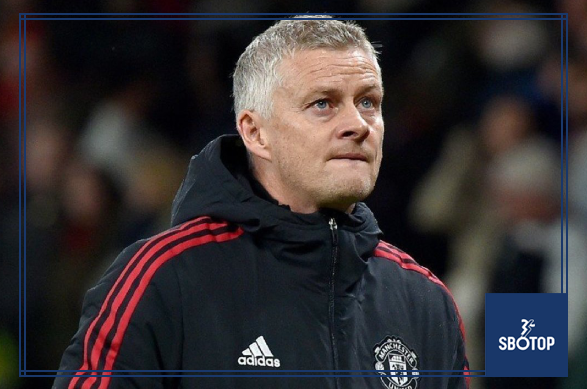
The debate surrounding Ole Gunnar Solskjaer’s time at Manchester United continues to resurface, even several years after his departure. With the benefit of hindsight and the club’s ongoing struggles for stability, a growing number of former players and observers now argue that Solskjaer deserved more time to complete the project he began at Old Trafford.
Solskjaer spent nearly three years in charge of Manchester United before being dismissed early in the 2021/2022 season. The decision followed a run of disappointing results that ultimately convinced the club’s hierarchy a change was necessary. At the time, expectations were sky-high, and patience was in short supply.
However, as United continue to search for a consistent identity in the post-Solskjaer era, voices from within the club’s recent past are offering a more nuanced assessment of his tenure.
Nemanja Matic Defends the Solskjaer Era
One of the strongest defenses has come from Nemanja Matic, who played an important role during Solskjaer’s reign. The Serbian midfielder believes the Norwegian coach was judged too harshly and that the team’s achievements during that period deserve greater context.
“We finished second and third under him,” Matic said. “There was a feeling within the team that finishing second wasn’t enough. But when you look at where the club is now, what we achieved back then was actually very good.”
Matic’s comments highlight a shift in perspective. During Solskjaer’s tenure, finishing as runners-up in the Premier League was seen as a disappointment rather than progress. In hindsight, those league positions now appear more impressive given United’s subsequent inconsistency.
European Nights That Defined Belief
Matic also recalled one of the defining moments of Solskjaer’s early spell in charge: the dramatic UEFA Champions League comeback against Paris Saint-Germain in 2019.
That famous victory, secured over two legs in Solskjaer’s first months as interim manager, helped restore belief within the squad and reconnected the club with its traditional identity of resilience and fearlessness on the European stage.
According to Matic, moments like that illustrated the direction the team was heading under Solskjaer—a direction that was cut short before it could fully mature.
Judged on Results, Not the Process
Matic suggested that Solskjaer’s dismissal was driven largely by short-term results rather than a broader evaluation of the work being done behind the scenes.
“I think the decision was made because of the last few results,” he explained. “But the coaching staff were on the right path to bring Manchester United back to where it belongs.”
That assessment echoes a recurring theme in modern football: the tension between long-term rebuilding and immediate success. Solskjaer, tasked with reshaping the squad and restoring culture after years of turbulence, was arguably attempting to do both simultaneously.
Praise for the Coaching Staff
Beyond Solskjaer himself, Matic reserved special praise for members of the coaching team, including Michael Carrick and Kieran McKenna. He credited their football knowledge, attention to detail, and training methods as key strengths during that period.
“When I talk about Ole, I also want to mention his staff,” Matic said. “They were moving in the right direction. They understood football, the training sessions were excellent, and every detail was prepared.”
Such comments challenge the narrative that Solskjaer’s regime lacked tactical sophistication. Instead, they paint a picture of a coaching team laying solid foundations, even if results occasionally fluctuated.
A Manager Who United the Squad
On a personal level, Matic spoke warmly about Solskjaer’s man-management. Despite not always being a guaranteed starter, the midfielder said he never felt alienated or undervalued.
“I was sad when Ole was sacked because he’s a great person, and we were building something important,” Matic admitted. “I wasn’t his first choice in midfield, and no player likes not playing.”
Yet he made a telling distinction.
“Ole was the first coach I never had a problem with, even when I wasn’t in the starting XI. He brought together the players who weren’t playing. He understood the club, and the fans loved him.”
That ability to maintain unity within the squad is often overlooked, but it is a critical factor in long-term success—particularly at a club as demanding as Manchester United.
Legacy Reconsidered
Solskjaer’s legacy at Old Trafford remains complex. He did not deliver a major trophy, but he stabilized the club after a turbulent period, guided United to consistent top-four finishes, and reintroduced a sense of optimism.
In the years since his departure, United’s ongoing search for direction has prompted many to reassess whether patience might have yielded greater rewards.
Football rarely allows time for reflection in the moment. Decisions are made under pressure, driven by results and expectations. But as Nemanja Matic’s comments suggest, the story of Ole Gunnar Solskjaer at Manchester United may deserve a fairer, more balanced verdict.
For some, he was a transitional figure. For others, he was a manager whose project ended just as it was beginning to take shape. What is clear is that the conversation about his time at Old Trafford is far from over—and with each passing season, the argument that he deserved more time grows stronger.
ALSO READ :