Talk of crisis at Anfield has gradually faded. Liverpool have rediscovered their footing through a run of positive results that lifted the mood inside the dressing room and eased pressure on head coach Arne Slot.
Yet a 2–1 away victory over Tottenham Hotspur offered a sobering reminder that recovery does not equal stability. Behind the precious three points at Tottenham Hotspur Stadium, a chaotic final 17 minutes exposed lingering fragility. The crisis narrative may be over, but the London test confirmed Slot’s work is far from finished—real progress paired with a warning that cannot be ignored.
Liverpool’s Revival and Credit for Arne Slot
Liverpool arrived in north London with confidence restored. Six matches unbeaten across all competitions reshaped a story that had looked bleak toward the end of November. From the last 15 available league points, the Reds collected 11, bolstered further by a convincing Champions League away win against Inter.
That momentum marked a sharp contrast to the recent past. A heavy 1–4 home defeat to PSV Eindhoven, followed by frustrating results against Nottingham Forest and Manchester City, had triggered serious doubts.
Slot responded with pragmatism. The Dutchman was willing to make difficult calls, including benching Mohamed Salah after the attacker publicly expressed frustration. Slot also tweaked Liverpool’s structure to reduce spaces between the lines, prioritizing compactness over spectacle. The effect was immediate: calmer performances, improved results, and a sense of direction.
Numerical Advantage That Went to Waste
The warning signs surfaced when the match reached its critical phase. Liverpool enjoyed a numerical advantage from the 33rd minute after Xavi Simons was sent off for a reckless challenge on Virgil van Dijk. With 65 percent possession, the visitors were expected to slow the tempo and manage the contest.
Instead, control proved elusive. Tottenham defended with resolve and continued to threaten in transition. When Richarlison pulled one back in the 83rd minute, Liverpool’s composure evaporated. The closing moments should have been routine; instead, they became frantic.
Even more concerning was the added-time sequence. After Cristian Romero also departed, Spurs were reduced to nine men. Yet Liverpool, rather than calming the game, appeared panicked—ceding territory, misplacing passes, and losing their defensive shape.
Late Chaos and Touchline Frustration
Slot did not hide his frustration after the final whistle. His post-match assessment focused squarely on Liverpool’s inability to retain the ball when it mattered most.
“The most painful thing for me is that out of nine minutes of added time—which became ten—I think they had 95 percent of the ball,” Slot said. “Every time we got it, we gave it away. It’s hard to believe we couldn’t keep the ball a little longer.”
The Liverpool coach described a surreal reversal: “It felt like we were the team with nine men and they had eleven, because the pressure kept coming.”
Poor game management was evident. Loose clearances and unnecessary fouls invited wave after wave of Spurs attacks. Slot urged his side to push up and relieve pressure, but the message was only partially executed as Liverpool sank deeper.
A Symbolic Moment of Disarray
One episode captured the anxiety of the closing stages. Jeremie Frimpong went down after a collision, clutching his mouth. Though he was capable of continuing, Slot opted to substitute him for Federico Chiesa to avoid a temporary numerical disadvantage.
“I didn’t want to play with ten men for 30 seconds,” Slot explained. “This is probably the only country where a player must leave the pitch for 30 seconds, or even 45 with a head injury. We were already struggling despite having an extra man.”
The decision underlined the tension. Liverpool were protecting a lead, yet confidence in their control was fragile enough to justify precautionary changes.
Positives Amid the Problems
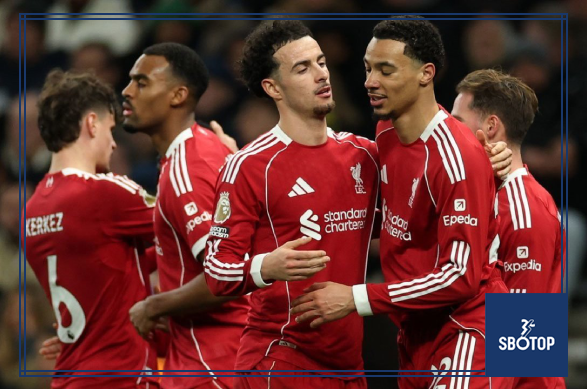
Despite the late turmoil, there were encouraging signs. The opening goal came from an expensive partnership beginning to click: Florian Wirtz combined with Alexander Isak to produce their first Premier League goal together. It was a glimpse of the attacking potential Slot aims to unlock consistently.
However, that joy was tempered when Isak later suffered an injury following a heavy collision with Micky van de Ven. His fitness will be monitored closely, adding another layer of concern for the weeks ahead.
Progress, But a Clear Warning
Liverpool left north London with three points and a sense that the darkest period has passed. Slot deserves credit for stabilizing the side, restoring belief, and steering results back on track. Yet the Spurs match served as a reality check.
No longer in crisis, Liverpool remain fragile. The final minutes showed that controlling games—especially with numerical superiority—remains a work in progress. For Slot, the lesson is clear: progress must be matched by composure. If the Reds are to turn recovery into consistency, the hard truths from Tottenham cannot be ignored.
ALSO READ :