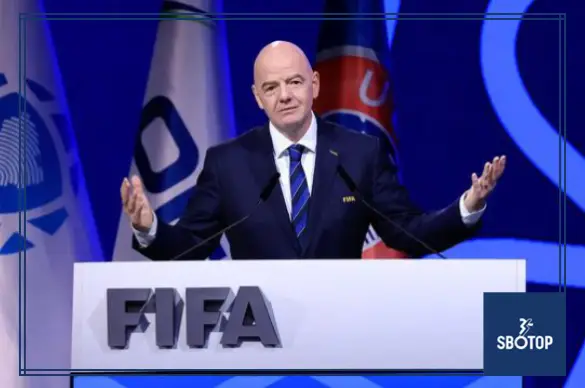
FIFA President Gianni Infantino has drawn sharp criticism after claiming that 150 countries would have no football without FIFA. The remark came in defense of the skyrocketing ticket prices for the 2026 World Cup, which have sparked a worldwide backlash among fans.
Critics argue that FIFA’s ticket pricing policy represents corporate greed and alienates loyal supporters, particularly fans who have supported their teams for decades.
Infantino’s Controversial Statement
Speaking at the World Sports Summit in Dubai, Infantino proudly stated:
“Without FIFA, there would be no football in 150 countries around the world. Football exists because of, and thanks to, the revenue we generate from the World Cup, which we reinvest globally.”
The statement immediately triggered a strong reaction from football supporters worldwide, including in Scotland, where fans have been vocal in defending the sport’s grassroots traditions.
Paul Goodwin, founder of the Scottish Football Supporters Association (SFSA), condemned Infantino’s claim as arrogant and dismissive of football history, emphasizing that supporters—not FIFA—are the true lifeblood of the game.
“This insults every country and fan who has nurtured football for generations,” Goodwin said. “Most fans will now view FIFA as an organization solely focused on money rather than the sport itself.”
Questioning Transparency and Legacy
While acknowledging that some FIFA revenue has been used for development programs, Goodwin criticized the lack of transparency in fund allocation:
“It’s true some money goes to good causes, but we will never know the exact proportion that supports grassroots football,” he noted.
He also reminded fans that football existed long before FIFA, evolving organically in communities across the world.
“Football wasn’t created by FIFA; it has always found a way to grow, independent of any organization,” Goodwin added.
2026 World Cup Ticket Prices Spark Fury
The backlash intensified due to the exorbitant ticket prices for the 2026 World Cup. Tickets for group-stage matches, including Scotland’s fixtures against Haiti, Morocco, and Brazil, are three times more expensive than the 2022 edition. Even the cheapest final tickets reach £3,129, pricing out many working-class fans.
Goodwin described FIFA’s dominance as a result of television broadcasting monopolies:
“FIFA’s monopoly is frustrating. There’s no transparency, no accountability, and fans have no real voice. They don’t allow meaningful collaboration or communication with supporters.”
He further criticized the influence of wealthy club owners and sportswashing scandals, arguing that fans have had little power to challenge FIFA’s financial and political control over the sport.
Limited Affordable Tickets
Although FIFA promised a small number of tickets at £45 each, they reportedly account for only 10% of total allocations, with fewer than 400 tickets available for Scotland.
Goodwin highlighted the financial strain on supporters, saying:
“Scotland hasn’t qualified for the World Cup in 28 years, so many fans are going to extreme lengths to attend. I’ve heard of hotel rooms being offered at £6,000 for six nights in Boston—it’s absurd.”
He also expressed concern over US entry rules, fearing that outspoken critics of FIFA could face travel restrictions, noting:
“I’m personally concerned I might be denied entry because I openly criticize FIFA.”
Infantino Shows Off FIFA’s Financial Clout
Despite the global backlash, Infantino emphasized FIFA’s financial strength during the Dubai summit:
“We have six to seven million tickets sold, and within 15 days we received 150 million ticket requests. That’s 10 million per day. It shows the World Cup’s incredible power. In nearly 100 years, FIFA has sold 44 million tickets. In two weeks, we could fill 300 years’ worth of World Cup tickets. It’s insane.”
Fans Demand Accountability
For Goodwin, the central issue remains clear:
“FIFA claims all this revenue as theirs, but in reality, the money comes from the fans. Supporters deserve to know how these funds are used.”
The controversy underscores a growing disconnect between FIFA and the global football community. While Infantino portrays FIFA as the savior of football, critics insist that the sport’s heartbeat has always been its fans, whose passion and commitment have sustained the game long before the organization existed.
Conclusion
Infantino’s remarks have ignited a global debate over FIFA’s role, governance, and accountability, particularly as the 2026 World Cup approaches. Fans argue that the organization risks alienating its core supporters through high ticket prices, opaque spending, and a perceived prioritization of profits over the game.
The reaction from supporters, especially in Scotland, highlights the ongoing tension between football’s governing bodies and the communities that give the sport life, raising questions about how FIFA can balance commercial success with the interests of fans worldwide.
ALSO READ :