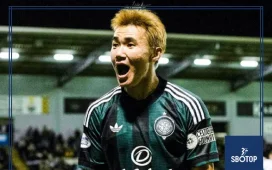
Speculation surrounding Kyogo Furuhashi and a potential return to Celtic has once again captured the attention of Scottish football fans. However, former Celtic manager Martin O’Neill has moved to temper expectations, suggesting that a reunion with the Japanese striker during the January transfer window is “unlikely.” His comments have added clarity to a debate that has been gathering momentum, especially among supporters nostalgic for Kyogo’s electrifying impact during his previous spell at Parkhead.
While transfer windows are notoriously unpredictable, O’Neill’s assessment carries weight given his deep understanding of Celtic’s structure, philosophy, and recruitment approach. His remarks prompt a broader discussion about Celtic’s current squad needs, Kyogo’s career trajectory, and whether a mid-season reunion would genuinely benefit either party.
Kyogo’s Legacy at Celtic
Kyogo Furuhashi remains one of the most beloved attacking players in Celtic’s recent history. His pace, intelligent movement, and clinical finishing made him a nightmare for defenders and a fan favourite almost instantly. Kyogo Furuhashi ability to find space in crowded penalty areas and score decisive goals in high-pressure matches cemented his status as a cult hero.
During his time in Glasgow, Kyogo was more than just a striker. He symbolised a shift in Celtic’s recruitment strategy—embracing technical, mobile forwards who thrive in high-intensity systems. His goals in domestic competitions and memorable performances in Old Firm clashes ensured his name would endure in Celtic folklore.
It is precisely this legacy that fuels ongoing speculation whenever Celtic face attacking challenges or enter a transfer window.
Martin O’Neill’s Perspective
Martin O’Neill’s comments regarding Kyogo’s potential return were measured but clear. He suggested that while Kyogo remains highly regarded, a January move back to Celtic is improbable. O’Neill highlighted several factors, including the club’s current squad composition, financial considerations, and the realities of mid-season transfers.
As a manager who understands the importance of long-term planning, O’Neill implied that nostalgia alone is rarely a sufficient reason to pursue a transfer. His perspective reflects a pragmatic approach—one that prioritises balance, sustainability, and forward planning over emotional decision-making.
Celtic’s Current Attacking Options
Celtic’s attacking unit has evolved since Kyogo’s departure. The club has invested in new forwards, each offering different attributes and tactical possibilities. While consistency has occasionally been an issue, the overall depth and variety within the squad suggest that a dramatic intervention may not be necessary.
Reintroducing Kyogo mid-season could disrupt existing dynamics, particularly if it alters established roles or expectations. O’Neill’s comments hint that Celtic’s management may prefer to back their current options rather than seek short-term solutions.
Furthermore, January signings often require time to adapt, especially in a league as physically demanding as the Scottish Premiership. Even a player familiar with the environment would need to reintegrate tactically and physically.
Financial and Strategic Considerations
Modern football decisions are increasingly influenced by financial strategy. Celtic, like many clubs, operate within a carefully structured budget designed to balance competitiveness with long-term stability.
A January move for Kyogo would likely involve a significant transfer fee and wage commitment. O’Neill suggested that such an investment may not align with Celtic’s priorities, particularly if the club believes its resources could be better deployed elsewhere or saved for the summer window.
January transfers often carry inflated prices, driven by urgency rather than value. Celtic’s recruitment model has traditionally favoured calculated, data-driven decisions—an approach that may discourage a costly mid-season reunion.
Kyogo’s Career Path and Ambitions
From Kyogo’s perspective, a return to Celtic must also make sense professionally. The striker has continued his career elsewhere, seeking new challenges and opportunities. A mid-season move back to Scotland could be viewed as a step backward unless it clearly enhances his prospects.
Players at Kyogo’s level often weigh factors such as playing time, tactical fit, and long-term ambition. While emotional ties to Celtic remain strong, professional considerations tend to take precedence, particularly during peak playing years.
O’Neill’s comments indirectly acknowledge this reality, suggesting that both parties may see limited incentive in revisiting the past at this stage.
The January Transfer Window Reality
January transfer windows are unique in their complexity. Clubs are reluctant to sell key players mid-season, while buyers face inflated prices and limited options. As a result, January moves often focus on loans, emergency cover, or targeted reinforcements rather than marquee signings.
O’Neill’s assessment reflects this reality. Even if Celtic admire Kyogo and value his qualities, the logistical and financial hurdles of a January deal make it an unlikely proposition.
Instead, clubs often use the winter window to address specific gaps rather than overhaul attacking structures that are already functioning reasonably well.
Fan Sentiment and Nostalgia
Supporter sentiment plays a powerful role in transfer speculation. Kyogo’s popularity ensures that any suggestion of availability sparks excitement. For many fans, his return represents comfort, familiarity, and a proven solution.
However, O’Neill’s comments serve as a reminder that football decisions cannot be driven solely by emotion. While fan enthusiasm is important, successful clubs must balance sentiment with strategy.
History is filled with examples of emotional reunions that failed to replicate past success. Celtic’s leadership appears keen to avoid such pitfalls.
Tactical Fit Under the Current System
Celtic’s tactical approach has evolved since Kyogo last wore the green and white hoops. The demands placed on forwards—whether in pressing intensity, link-up play, or physical robustness—may differ from those of his previous tenure.
O’Neill hinted that even a familiar player must suit the current system to justify a move. Without a clear tactical necessity, re-signing Kyogo could create more questions than answers.
Managers often prefer players who align seamlessly with their vision, particularly during the congested mid-season period.
Media Speculation Versus Reality
Transfer speculation thrives on possibility rather than probability. Media narratives often amplify rumours, particularly when they involve popular former players. Kyogo’s name naturally attracts attention, regardless of the likelihood of a deal.
O’Neill’s comments help separate speculation from reality. By framing the situation as “unlikely,” he has grounded the discussion, encouraging fans and pundits to view the situation through a more realistic lens.
Such interventions are valuable in an era where transfer rumours can overshadow on-pitch performances.
Lessons from Past Returns
Football history offers mixed outcomes when it comes to players returning to former clubs. Some reunions reignite old magic, while others struggle under the weight of expectation.
O’Neill, drawing on his extensive managerial experience, appears cautious about romanticising returns. His stance suggests that Celtic should focus on future growth rather than revisiting past successes.
This perspective aligns with modern club-building principles, which emphasise progression over nostalgia.
Also Read:
- SBOTOP: Martinelli Escapes Further Sanctions After Incident with Injured Liverpool Defender Conor Bradley
- SBOTOP Real Madrid Silenced by Barcelona: Alonso Says “Disappointed, But Extremely Proud”
- SBOTOP: Rangers Hit by Injury Blow as Connor Barron Faces 8–12 Week Layoff Sterling Also Ruled Out for Aberdeen Clash