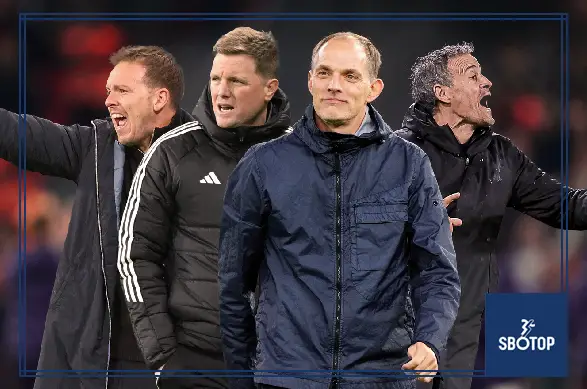
Manchester United are once again standing at a familiar crossroads. Old Trafford, a stadium steeped in history and expectation, is searching for a sense of direction that has too often been lost in the post-Sir Alex Ferguson era. When former Liverpool defender and respected pundit Jamie Carragher publicly named Luis Enrique, Julian Nagelsmann, and Thomas Tuchel as ideal candidates to take charge of Manchester United, it reignited a debate that cuts to the heart of the club’s ongoing identity crisis.
This is not merely a discussion about managerial résumés. It is about philosophy, culture, authority, and the brutal reality of managing one of the most scrutinized football institutions in the world. Carragher’s picks reflect three different paths United could take—each offering promise, risk, and a radically different vision for the future.
A Club Still Searching for Its Post-Ferguson Identity
More than a decade after Sir Alex Ferguson’s retirement, Manchester United are still haunted by inconsistency. Managers have come and gone, each arriving with hope and leaving under clouds of disappointment or unfinished business. From pragmatism to possession football, from star-driven rebuilds to youth-centric projects, United have tried nearly everything—except patience paired with a clear long-term vision. The pressure cooker environment at Old Trafford makes managerial success extraordinarily difficult. Every defeat becomes a crisis. Every tactical tweak is dissected. Every transfer is judged not just on performance, but symbolism. Whoever takes the job next must be more than a coach—they must be a leader, a communicator, and a figure capable of reshaping the club’s mentality.
Carragher’s shortlist suggests that Manchester United need someone with elite pedigree, tactical clarity, and the personality to impose authority on both players and hierarchy.
Luis Enrique Authority Control and Total Commitment
Luis Enrique represents the most uncompromising option of the three. A former Barcelona and Spain manager, he is known for his intensity, emotional leadership, and unwavering belief in proactive football. At Barcelona, Luis Enrique delivered immediate success, winning a historic treble while blending individual brilliance with collective structure. His approach was demanding, but effective. Players were expected to press aggressively, maintain positional discipline, and contribute equally in attack and defense. There were no sacred cows.
At international level with Spain, Enrique oversaw a generational transition, prioritizing technical control and high pressing even when results were inconsistent. He remained stubbornly loyal to his philosophy, believing that short-term pain was necessary for long-term progress.
For Manchester United, Enrique would bring clarity and discipline. He would not compromise his ideas to accommodate reputations. Players unwilling to meet physical and tactical demands would be moved on. Training intensity would rise. Standards would be non-negotiable.
However, this rigidity could also be a risk. United’s dressing room has historically struggled with managers who demand absolute control. Enrique’s confrontational style might clash with senior figures or club politics. But for a club desperate for a hard reset, that very edge could be precisely what is needed.
Julian Nagelsmann Innovation Youth and Tactical Evolution
If Luis Enrique is the disciplinarian, Julian Nagelsmann is the visionary. Still remarkably young for a manager with elite experience, Nagelsmann has already coached at the highest levels in Germany and Europe, earning a reputation as one of the most innovative tactical minds in modern football.
Nagelsmann’s teams are flexible, fluid, and analytically driven. He is comfortable switching formations mid-match, adjusting pressing triggers, and tailoring systems to opponents. At Hoffenheim and RB Leipzig, he maximized limited resources through intelligent structure and player development. At Bayern Munich, despite mixed results, he showed flashes of elite coaching amid immense pressure.
For Manchester United, Nagelsmann offers something the club has lacked for years: a coherent long-term project built around youth. He excels at developing young players, integrating academy prospects, and modernizing training methods.
Yet his youth could also be his biggest challenge. Old Trafford is unforgiving, and the Premier League demands emotional intelligence as much as tactical brilliance. Managing high-profile egos, handling relentless media attention, and navigating internal politics would test even the most experienced managers.
Still, Nagelsmann’s adaptability and intelligence make him an attractive option for a club seeking to future-proof its football identity rather than chase short-term fixes.
Thomas Tuchel Structure Detail and Elite Game Management
Thomas Tuchel is arguably the safest choice of the three—at least in terms of immediate competitive credibility. A proven winner with Paris Saint-Germain and Chelsea, Tuchel is renowned for meticulous preparation, defensive organization, and elite match-to-match management.
Tuchel’s Chelsea side famously conquered Europe through tactical discipline and adaptability, neutralizing superior opponents with compact shapes and intelligent pressing. He is a coach who thrives in knockout football, understands elite dressing rooms, and demands tactical obedience.
For Manchester United, Tuchel could deliver instant structure. Defensive solidity would improve quickly. Players would understand their roles. Tactical naivety would be eliminated. In a league where fine margins decide seasons, Tuchel’s attention to detail could be transformative.
However, his history also raises concerns. Tuchel’s relationships with club executives have often deteriorated over time. His intense personality and desire for control can create friction, particularly in environments with complex power dynamics. United’s boardroom structure may not align seamlessly with Tuchel’s working style.
Still, for a club craving stability and tactical intelligence, Tuchel represents a proven solution—if the hierarchy is willing to fully support him.
Carragher’s Perspective A Call for Elite Standards
Jamie Carragher’s endorsement of these three managers is telling. He is not advocating for sentimental appointments or nostalgic returns to “United DNA.” Instead, he is urging the club to think elite—to appoint a manager who commands respect across Europe, not just within England.
Carragher has frequently criticized Manchester United for drifting without direction, making reactive decisions rather than strategic ones. His shortlist reflects a belief that United must accept discomfort and change if they are serious about returning to the top.
All three candidates share key traits: tactical sophistication, experience at the highest level, and the confidence to impose authority. None would accept the job without guarantees. None would tolerate half-measures.
What Manchester United Truly Need Right Now
Beyond individual names, the debate highlights a deeper truth: Manchester United’s problems cannot be solved by a manager alone. Recruitment strategy, sporting structure, and internal alignment must support whoever takes charge.
The next manager must be backed unequivocally. Transfers must suit the system. Youth pathways must be protected. Short-term panic must give way to long-term planning.
Whether it is Enrique’s intensity, Nagelsmann’s innovation, or Tuchel’s structure, success will depend on the club’s willingness to commit fully to a chosen vision.
The Risk of Standing Still
Perhaps the biggest danger for Manchester United is not choosing the wrong manager—but failing to choose decisively. In modern football, hesitation is fatal. Rivals evolve relentlessly. Tactical trends shift rapidly. Clubs that stand still fall behind.
Carragher’s suggestions should be seen as a challenge to United’s leadership: aim higher, think smarter, and stop settling for compromise.
Old Trafford does not need another caretaker of decline. It needs an architect of renewal.
Also Read:
- SBOTOP: Manchester City Land Marc Guéhi in £20m Deal as Year-Long Spending Surge Hits £425m
- SBOTOP: Scotland Confirm World Cup Warm-Ups Against Japan and Curaçao at Hampden as Clarke’s Countdown Begins
- SBOTOP: Senegal’s ‘Shameful’ Walk-Off Clouds AFCON Victory Over Morocco Sadio Mane Condemns ‘Sad’ Incident