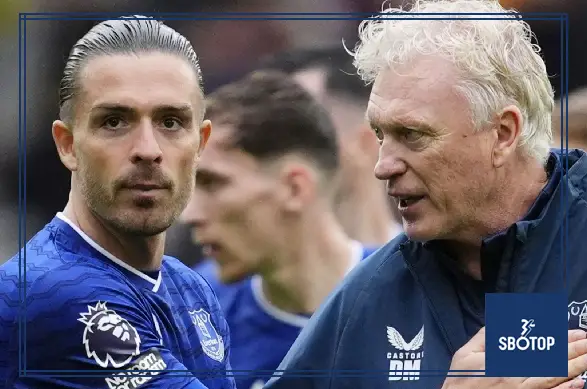
Jack Grealish’s season appears to be over after undergoing surgery, with Everton manager David Moyes confirming that the England international is likely to miss the remainder of the campaign. The news delivers a significant blow not only to Grealish himself, but also to the broader Premier League narrative, as one of English football’s most recognizable and creative figures is forced into an extended spell on the sidelines.
While injuries are an unavoidable part of the modern game, the timing and severity of Grealish’s setback have intensified debate around workload, recovery management, and the physical demands placed on elite players. As clubs navigate congested fixture lists and rising expectations, Grealish’s situation offers a sobering reminder of how quickly momentum can be interrupted.
A Sudden Halt to a Difficult Season
For Jack Grealish, this season had already been challenging before surgery entered the picture. Limited continuity, physical setbacks, and interrupted rhythm made it difficult for him to establish the consistency that has defined the best periods of his career. The confirmation that surgery was required marked a turning point, transforming uncertainty into clarity—but also closing the door on any immediate comeback.
According to Moyes, the procedure was necessary to address an issue that could no longer be managed conservatively. While specifics surrounding the injury have been kept deliberately vague, the implication is clear: continuing to play would have risked long-term damage.
In elite football, the decision to opt for surgery is never taken lightly. It represents a balance between immediate availability and long-term health. In Grealish’s case, the scales tipped firmly toward protection of his future.
Moyes’ Perspective Realism Over Optimism
David Moyes is known for his pragmatic approach, and his comments reflected that realism. Rather than offering false hope or vague timelines, he acknowledged the likelihood that Grealish’s season is effectively finished.
From a managerial standpoint, clarity is valuable. It allows the club to plan, adjust tactics, and redistribute responsibility within the squad. For players, it provides certainty—an opportunity to focus fully on recovery without the mental strain of rushed deadlines.
Moyes’ stance also underscored the seriousness of the injury. When experienced managers speak openly about season-ending scenarios, it usually reflects medical advice that leaves little room for short-term optimism.
The Physical Cost of Grealish’s Playing Style
Jack Grealish’s game is built on bravery. He thrives in tight spaces, invites contact, and draws fouls through close control and relentless forward intent. This style has made him effective and entertaining—but it also exposes him to repeated physical punishment.
Defenders often resort to tactical fouling to stop his progress. Over time, those knocks accumulate. Even minor injuries, when layered over a demanding schedule, can develop into chronic problems requiring surgical intervention.
Modern football increasingly rewards players who can absorb contact and recover rapidly, yet Grealish’s situation highlights the fine line between resilience and overload. His absence reignites discussions about how creative players are protected—and whether current systems do enough to safeguard them.
Tactical Implications for His Team
Grealish’s absence forces tactical recalibration. While he may not always dominate statistical metrics, his influence on team structure is significant. He offers ball retention under pressure, progression through dribbling, and an outlet that relieves defensive pressure.
Without him, teams lose a reliable conduit between midfield and attack. Possession patterns shift, attacking emphasis changes, and opponents adjust their defensive strategies accordingly.
Managers often compensate by spreading creative responsibility across multiple players rather than replacing Grealish like-for-like. This can make attacks more unpredictable—but it can also dilute clarity in the final third.
Impact on Squad Dynamics
Beyond tactics, Grealish’s absence affects dressing-room dynamics. Senior players with strong personalities often contribute off the pitch as much as on it. They set standards in training, lift morale, and offer leadership during difficult periods.
An extended layoff removes that presence from daily routines. Younger players may be asked to step into larger roles, accelerating their development but also increasing pressure.
Clubs must manage this transition carefully, ensuring expectations remain realistic and collective responsibility replaces individual reliance.
The England Question
Grealish’s injury also carries implications at international level. While the immediate focus remains club football, extended absences inevitably affect international planning.
For England, competition for attacking midfield roles is intense. Consistent availability is often the deciding factor in selection decisions, and long layoffs can disrupt international momentum.
Even if Grealish returns fully fit next season, rebuilding rhythm, confidence, and sharpness takes time. International football allows little margin for gradual reintegration.
This absence could open doors for others—but it also removes an experienced option capable of influencing major tournaments.
Recovery A Different Kind of Challenge
Surgery marks the start of a different battle. Recovery is as much psychological as physical. Players accustomed to daily competition must adjust to slower routines, repetitive rehabilitation, and long periods away from the spotlight.
For creative players like Grealish, patience is key. Rushing recovery risks recurrence; caution risks frustration. Striking the right balance requires trust between player, medical staff, and coaching teams.
Modern rehabilitation programs emphasize holistic recovery—strength, mobility, mental resilience, and gradual reintegration into competitive intensity. Success depends not on speed, but on sustainability.
The Mental Toll of Long-Term Absence
Extended injuries can test even the most resilient athletes. Identity, routine, and confidence are closely tied to performance, and prolonged absence disrupts all three.
Players often speak about the difficulty of watching matches from the sidelines—feeling simultaneously connected and powerless. Maintaining motivation during this phase is critical.
Support networks play a vital role. Family, teammates, coaches, and medical staff must provide structure and reassurance. Clubs increasingly invest in psychological support, recognizing that recovery is incomplete without mental wellbeing.
What Comes Next for Grealish
While this season may be lost, the long-term outlook remains more hopeful. Surgery, while disruptive, often offers a definitive solution rather than ongoing uncertainty.
A full preseason, structured rehabilitation, and managed reintegration could allow Grealish to return refreshed rather than rushed. Many players have used enforced absences as turning points—resetting physically and mentally before strong comebacks.
The challenge will be rediscovering rhythm. Match sharpness cannot be replicated in training alone. Patience—from player, club, and supporters—will be essential.
Lessons for the Modern Game
Grealish’s situation is emblematic of broader trends in elite football. The calendar grows ever denser, physical demands intensify, and the margin for recovery shrinks.
Clubs must balance competitiveness with care. Short-term gains achieved through overuse often carry long-term costs. Grealish’s surgery may serve as a case study reinforcing the importance of load management.
Protecting creative players is not about reducing contact—it’s about smarter rotation, clearer officiating, and medical decisions driven by long-term thinking rather than immediate pressure.
Also Read:
- SBOTOP Premier League Pulse: Arsenal Thrive Under Title Pressure Chelsea’s Depth Delivers Again and Leeds Enter a Defining Week
- SBOTOP: Arsenal’s Rising Star Max Dowman Set to Sign First Pro Deal Upon Turning 17 in December
- SBOTOP: Aston Villa Rally to 3-2 Europa League Win Over Red Bull Salzburg Despite Ollie Watkins Injury Jimoh-Aloba Stars