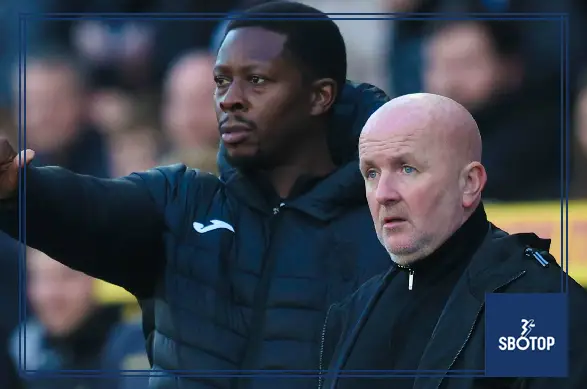
Livingston Football Club have taken a decisive step toward reshaping their future by announcing a significant leadership overhaul. Following a run of results described internally as “terrible,” the club confirmed that long-serving manager David Martindale has been appointed sporting director, while former captain Marvin Bartley steps into the role of first-team manager.
The move marks the end of an era on the touchline and the beginning of a new chapter in Livingston’s ongoing battle for stability, identity, and competitiveness. Rather than opting for a complete break from the past, the club has chosen continuity with recalibration—retaining Martindale’s influence while empowering a new voice to lead from the dugout.
A Club at a Crossroads
Livingston’s decision did not emerge in isolation. The club’s recent form had placed mounting pressure on the board, players, and supporters alike. Performances lacked consistency, confidence appeared fragile, and results failed to reflect the standards Livingston had set in previous seasons.
The phrase “terrible run” was not used lightly. It reflected not only points dropped but also a sense that the team had lost its tactical clarity and emotional edge. In such moments, clubs are often forced to choose between radical change and measured reform. Livingston opted for the latter.
Rather than dismissing Martindale outright, the club redefined his role, acknowledging both his contributions and the need for fresh leadership at pitch level.
David Martindale’s Legacy at Livingston
David Martindale’s journey with Livingston is deeply woven into the club’s modern history. Known for his pragmatic approach, tactical discipline, and motivational edge, David Martindale guided Livingston through some of their most competitive periods.
Under his management, Livingston became known as a difficult opponent—organized, aggressive, and unafraid of disrupting more established sides. His teams were often greater than the sum of their parts, built on work rate, structure, and belief.
However, football is relentlessly cyclical. What works one season can lose effectiveness the next. Opponents adapt, players change, and momentum shifts. Livingston’s recent struggles suggested that the message from the touchline, however valid, was no longer resonating in the same way.
Why a Sporting Director Role Makes Sense
Martindale’s move into the sporting director position reflects a broader trend in modern football governance. Clubs increasingly recognize the value of separating long-term strategy from short-term match management.
As sporting director, Martindale will oversee:
- Recruitment strategy
- Squad planning and development
- Alignment between youth and senior teams
- Long-term football philosophy
This role allows him to apply his deep understanding of the club, the league, and its operational realities without the week-to-week pressure of results. It also enables Livingston to preserve institutional knowledge rather than discard it.
For Martindale, the transition offers a chance to influence the club’s direction from a strategic vantage point—a shift from firefighting to future-building.
Enter Marvin Bartley From Captain to Manager
Few appointments feel as organic as Marvin Bartley’s promotion. A former Livingston captain, Bartley embodies the club’s identity: resilient, hardworking, and grounded in collective effort.
His leadership on the pitch was never about flair but about accountability. Teammates respected him for his honesty, professionalism, and willingness to shoulder responsibility in difficult moments.
Stepping into management, Bartley faces a steep learning curve—but one softened by familiarity. He knows the dressing room culture, understands the demands of the league, and carries credibility among the players.
This appointment is not about celebrity or external appeal; it is about trust, continuity, and belief in internal leadership.
A New Voice in the Dressing Room
Sometimes, change does not require a new philosophy—just a new voice. Livingston’s players have worked under Martindale for years, absorbing his principles and expectations. Over time, even effective messages can lose impact.
Bartley’s arrival represents a psychological reset. Training sessions, team talks, and matchday communication will inevitably feel different. Small shifts in tone and approach can have significant effects on confidence and responsiveness.
As manager, Bartley is expected to balance authority with relatability, demanding standards while fostering belief. His challenge will be to inspire renewed hunger without discarding the discipline that has defined Livingston’s approach.
Tactical Evolution or Tactical Reset
One of the key questions surrounding Bartley’s appointment is whether Livingston will undergo a tactical transformation or simply refine their existing model.
Under Martindale, Livingston favored:
- Compact defensive structures
- Direct transitions
- Physical duels in midfield
- Set-piece efficiency
Bartley may retain these principles while introducing subtle variations—greater flexibility in possession, more fluid movement in attack, or a higher pressing line in specific matches.
Rather than a revolution, the club appears to be pursuing evolution. Incremental changes, aligned with the squad’s strengths, may offer the best route back to consistency.
The Board’s Calculated Gamble
Leadership changes always carry risk, particularly when appointing a first-time manager. Livingston’s board, however, appears confident that Bartley’s understanding of the club outweighs his lack of managerial experience.
Crucially, the new structure provides support. With Martindale overseeing football operations, Bartley will not be isolated. Recruitment, long-term planning, and squad balance will be managed collaboratively.
This dual leadership model allows Livingston to spread responsibility rather than concentrate pressure on a single figure—a safeguard against instability.
Player Reactions and Dressing Room Dynamics
Initial reactions from within the squad suggest cautious optimism. Bartley’s promotion has been met with respect rather than skepticism. Players who once looked to him as a captain will now see him as the primary decision-maker.
This transition is not without challenges. Managing former teammates requires emotional intelligence, clear boundaries, and decisiveness. Bartley must establish authority without alienation—a delicate balance.
Early signals indicate that communication will be central to his approach, ensuring players understand expectations while feeling invested in the process.
Short-Term Objectives Stabilization First
Livingston’s immediate priority is straightforward: stabilize performances and halt negative momentum. Results matter, but so do indicators of improvement—intensity, structure, and belief.
Bartley’s early matches will be closely scrutinized, but the club appears prepared to allow a bedding-in period. Avoiding panic and resisting knee-jerk reactions will be essential.
In the short term, Livingston will focus on:
- Defensive solidity
- Improved consistency
- Rebuilding confidence
- Maximizing home advantage
Success will not be measured solely by wins, but by signs of renewed identity.
Long-Term Vision Under the New Structure
Beyond immediate results, the reshuffle signals a shift toward long-term planning. Martindale’s sporting director role suggests Livingston want greater coherence across recruitment, development, and tactical philosophy.
The aim is sustainability—building squads that align with the club’s financial reality while remaining competitive. Younger players, data-driven recruitment, and clearer pathways from development squads may become more prominent.
Bartley, as a manager molded by the club’s culture, fits neatly into this vision. His success would validate Livingston’s commitment to internal progression.
Supporters’ Perspective Cautious Hope
Among supporters, reactions have ranged from concern to guarded optimism. Martindale’s contributions are widely respected, but many fans acknowledged the need for change after recent struggles.
Bartley’s appointment has resonated emotionally. As a familiar figure, he represents continuity rather than disruption. Supporters understand the risks but appreciate the logic behind the decision.
Ultimately, results will shape sentiment. If performances improve and the team shows renewed spirit, patience is likely to follow.
Lessons from the “Terrible” Run
Livingston’s recent slump offers important lessons:
- Tactical rigidity can become predictable
- Confidence is fragile in tightly contested leagues
- Leadership fatigue is real
- Structural clarity matters
By responding with restructuring rather than dismissal, the club has shown self-awareness and adaptability—qualities essential for survival in modern football.
Pressure Points Ahead
Bartley’s biggest tests will include:
- Managing high-pressure fixtures
- Handling setbacks without experience to fall back on
- Making tough selection decisions involving former peers
- Balancing short-term results with long-term development
Meanwhile, Martindale must adapt to a role that influences without commanding. The success of this partnership will depend on communication, trust, and clarity of responsibility.
Also Read: