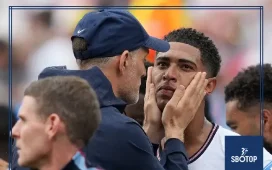
Defeat often exposes more than tactical flaws — it reveals the emotional undercurrents running through a football club. Following Newcastle United’s painful loss to Brentford, head coach Eddie Howe stood before reporters at St James’ Park and delivered an unusually candid admission: he is not doing his job well enough.
In a profession where managers frequently deflect scrutiny or highlight mitigating factors, Howe’s words resonated. The defeat to Brentford was not merely another setback — it symbolized a deeper concern about Newcastle’s trajectory, consistency, and identity.
This moment may prove pivotal, not just for Howe personally, but for Newcastle United as a whole.
A Night That Intensified the Spotlight
The loss to Brentford was dramatic, controversial, and emotionally draining. Defensive lapses, VAR interventions, and squandered opportunities combined to leave Newcastle supporters frustrated. Yet it was Howe’s post-match reflection that captured headlines.
Rather than cite officiating decisions or individual errors, he internalized responsibility. “I’m not doing my job well enough,” he admitted — a statement that underscores both accountability and mounting pressure.
For a club with rising expectations, such honesty signals recognition that standards have slipped below acceptable levels.
Rising Expectations Shrinking Margins
Newcastle’s resurgence in recent seasons elevated ambitions. Investment, squad depth, and tactical organization positioned the club as a serious competitor domestically and in Europe.
With that progress came heightened scrutiny. Success recalibrates expectations; consistency becomes non-negotiable.
Recent results, however, have been uneven. Defensive fragility, difficulty managing leads, and lapses in concentration have undermined momentum. Against Brentford, these issues resurfaced at critical junctures.
Howe’s acknowledgment suggests awareness that incremental regression can quickly snowball into systemic instability.
Tactical Concerns Beneath the Surface
While Newcastle have often dominated possession and territory, their vulnerabilities lie in transitional defense and game management.
-
Defensive Transitions
Brentford exploited space left behind advancing full-backs. Quick counterattacks repeatedly exposed Newcastle’s backline, highlighting the delicate balance between aggression and caution.
-
Emotional Disruption
VAR reviews disrupted rhythm and focus. While external factors influence any match, elite teams must maintain composure regardless of controversy.
-
Closing Out Matches
Even when level or ahead, Newcastle have struggled to impose control in decisive phases. Managing tempo and defensive positioning remains an area requiring refinement.
Howe’s candid assessment likely stems from these recurring patterns.
Leadership Through Accountability
Public self-criticism is a calculated risk. It can strengthen unity or amplify scrutiny. Howe’s statement appears rooted in leadership philosophy rather than self-preservation.
By assuming responsibility, he:
- Shields players from excessive blame.
- Reinforces a culture of accountability.
- Signals intent to address shortcomings proactively.
Such transparency can galvanize dressing rooms when interpreted as commitment rather than vulnerability.
The Psychological Toll of Consecutive Setbacks
Repeated narrow defeats strain confidence. Players begin questioning decision-making in critical moments. Margins feel thinner, pressure heavier.
Howe’s task extends beyond tactical tweaks; he must rebuild psychological resilience.
That involves:
- Reinforcing belief in the system.
- Maintaining unity under criticism.
- Preventing frustration from eroding cohesion.
St James’ Park remains a fortress of passionate support, but expectations can quickly transform encouragement into impatience.
Brentford as a Mirror
Brentford’s victory offered a stark contrast. Organized, clinical, and composed, they capitalized on opportunities despite less possession.
Newcastle’s dominance in certain phases was insufficient. Efficiency, not control, decided the outcome.
For Howe, this contrast underscores the importance of translating territorial advantage into tangible security.
Public Perception and Media Narratives
Modern football amplifies narratives instantly. Howe’s admission became a focal point across broadcasts and social platforms.
Interpretations varied:
- Some praised his honesty.
- Others viewed it as an admission of systemic decline.
- Critics questioned tactical stubbornness.
Yet context matters. Leaders acknowledging imperfection often demonstrate growth-oriented mindset.
The Dressing Room Response
Internally, player reaction will define the statement’s impact.
If interpreted as collective responsibility, it can unify effort. Training intensity may rise. Tactical adherence may sharpen.
If misinterpreted as uncertainty, confidence could waver.
Howe’s communication skills — often praised for clarity and empathy — will be critical in framing this moment constructively.
Long-Term Vision Versus Short-Term Results
Newcastle’s project has always balanced patience with ambition. Sustainable progress requires measured evolution rather than reactionary upheaval.
However, football’s ecosystem rewards immediacy. Points dropped accumulate consequences.
Howe must align long-term philosophy with immediate corrective measures:
- Refining defensive organization.
- Adjusting pressing triggers.
- Ensuring fitness levels support tactical demands.
The Brentford defeat magnifies urgency.
Supporter Sentiment
Newcastle supporters are deeply invested in the club’s resurgence. Passion fuels both unwavering backing and sharp criticism.
Post-match reactions reflected frustration but also recognition of Howe’s past achievements. Many fans value his integrity and project continuity.
However, football memory can be short. Consistent improvement is required to sustain trust.
Tactical Adjustments Ahead
Possible strategic recalibrations may include:
- More conservative full-back positioning in high-risk matches.
- Increased midfield screening during transitions.
- Emphasis on retaining possession after scoring.
Small shifts can yield significant defensive stability.
The Role of Experience
Experienced leaders within the squad must step forward. Communication on the pitch can mitigate transitional chaos.
Howe’s responsibility includes empowering senior players to organize defensive shape during high-pressure sequences.
Pressure as a Catalyst
Pressure, while uncomfortable, can catalyze growth. Howe’s candid reflection may represent the first step in recalibration.
Elite managers often evolve through adversity. Tactical innovation and mental resilience frequently emerge from moments of public doubt.
The Broader League Landscape
Competition within the league remains fierce. Marginal differences in goal difference and head-to-head records can determine standings.
Each defeat tightens the race. Newcastle’s ambitions require swift course correction.
Historical Perspective
St James’ Park has witnessed managerial scrutiny before. Yet Howe’s tenure has largely been characterized by upward momentum.
Acknowledging shortcomings does not erase progress. It contextualizes it within a dynamic season.
Potential Turning Point
Moments of vulnerability can define leadership arcs. If Newcastle respond positively in subsequent fixtures, Howe’s admission will be viewed as a catalyst for resurgence.
If struggles persist, critics may revisit this statement as evidence of deeper issues.
The coming weeks will clarify which narrative prevails.
The Human Element
Managers are often reduced to tactical diagrams and results. Yet they operate within emotional ecosystems.
Howe’s honesty reflects self-awareness and personal investment. Such transparency humanizes leadership in a results-driven industry.
Also Read:
- SBOTOP Newcastle United 2-3 Brentford: Dango Ouattara Shines in VAR-Heavy Classic as Pressure Mounts on Eddie Howe
- SBOTOP: Viktor Gyokeres Reaches New Heights at Arsenal as Mikel Arteta Praises Striker’s Peak Form
- SBOTOP Birmingham City 2-1 Leicester City: Jay Stansfield Fires Late Winner as Blues Punish 10-Man Foxes