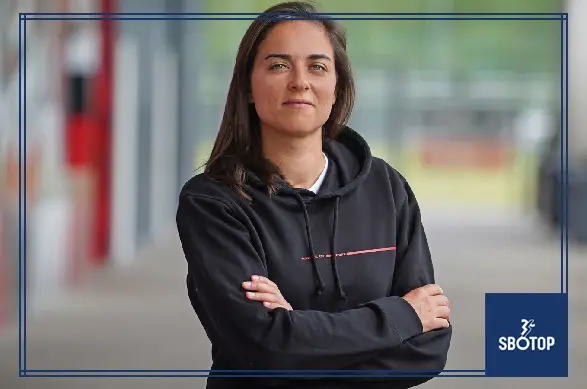
In a historic milestone for German football, Sabrina Wittmann has etched her name into the record books as the first woman to take charge as head coach in Germany’s top three professional leagues. Her journey is not only a story of personal perseverance but also a symbol of breaking barriers in a traditionally male-dominated sport. In an exclusive interview, Wittmann opened up about the fears, hopes, and opportunities that have shaped her career, offering an inspiring insight into what it takes to lead at the highest level.
Breaking New Ground
Wittmann’s appointment marks a turning point in German football. While women have played an increasingly influential role in coaching youth and women’s teams, the professional men’s leagues have historically remained closed to female head coaches.
Speaking about the historic nature of her role, Wittmann reflected:
“It’s a responsibility I carry with pride, but also with humility. I know that I am not just coaching a team; I am representing what is possible for women in football.”
Her presence at the helm is a testament to years of dedication, tactical acumen, and resilience. For young women aspiring to careers in football management, Wittmann’s achievement is both symbolic and motivational—a sign that the barriers are not insurmountable.
Facing Fear and Doubt
Despite her accomplishments, Sabrina Wittmann admits that stepping into such a high-profile role was not without fear. The skepticism she faced was both internal and external:
“I often questioned whether I was ready,” she confessed. “In this environment, where no woman has held this position before, you feel the weight of expectations. You’re constantly aware that every decision is being scrutinized more intensely.”
For Wittmann, fear was a dual challenge. It was both a motivator to refine her skills and a psychological hurdle to overcome. She emphasizes that embracing fear, rather than ignoring it, was key to developing the mental fortitude required for professional coaching.
Tactical Philosophy
Wittmann’s coaching philosophy combines rigorous tactical discipline with an emphasis on adaptability and player empowerment. She believes that understanding the nuances of individual players is as important as orchestrating team strategy.
“Football is not just about formations or systems,” she explains. “It’s about understanding how players think, how they react under pressure, and how you can bring out the best in them collectively.”
Her teams are characterized by:
- Fluid attacking play: Encouraging positional rotation to exploit defensive gaps.
- Structured defense: Maintaining organization and communication, particularly under pressing situations.
- Player autonomy: Allowing players to make in-game decisions based on situational awareness.
This approach reflects a balance of control and freedom, aimed at fostering both strategic coherence and individual creativity.
Building Trust in a Male-Dominated Environment
One of Wittmann’s most significant challenges has been establishing authority and trust within a locker room historically unaccustomed to female leadership.
“Initially, there’s always a layer of skepticism,” she admits. “Some players question whether you can handle the intensity, the pressure, and the scrutiny that comes with this level. But trust is built through consistency, preparation, and results.”
She emphasizes that mutual respect is earned over time, and that leadership is less about asserting dominance and more about demonstrating competence, empathy, and resilience.
The Role of Mentorship
Wittmann credits much of her growth to mentorship and networking within football. Coaches, former players, and peers have provided guidance, offered constructive feedback, and shared insights on handling challenges unique to high-level management.
“Mentorship has been invaluable,” she notes. “Having someone to guide you through tough decisions or to help you navigate political dynamics in football is crucial, especially when you are charting a new path.”
By seeking mentorship, Wittmann also reinforces the idea that leadership is not a solitary endeavor—it requires collaboration, learning, and humility.
Achieving Work-Life Balance
Another dimension Wittmann discusses is the challenge of maintaining balance amid the relentless pressures of professional coaching.
“Football is all-consuming,” she says. “You live, breathe, and sometimes sleep the sport. But it’s important to step back, recharge, and maintain perspective. Burnout is real, and I’ve learned to respect my own limits.”
She has developed routines to manage stress, including physical training, meditation, and engaging in hobbies outside of football. This holistic approach allows her to remain focused, resilient, and present for her team.
The New Contract A Symbol of Recognition
Recently, Wittmann signed a contract extension with her club, affirming the organization’s confidence in her vision and leadership.
“The new contract is more than a professional agreement,” she explains. “It’s an acknowledgment of what I’ve achieved and a commitment to continue pushing boundaries, not just for myself but for the wider community of women in football.”
The extension also provides stability, enabling Wittmann to implement long-term strategies and cultivate a team culture aligned with her tactical philosophy.
Overcoming Public Scrutiny
High-profile appointments inevitably attract public attention. Wittmann acknowledges that being the first female head coach in Germany’s top three leagues brings additional scrutiny, both from media and fans.
“Every decision is analyzed, sometimes unfairly,” she admits. “Mistakes are magnified, and successes are often compared to male counterparts. But over time, I’ve learned to focus on what I can control—my preparation, my strategy, and my interactions with the players.”
She emphasizes that resilience is built through experience and reflection, and that public scrutiny, while challenging, can be an opportunity to grow stronger and more self-assured.
Inspiring the Next Generation
A key aspect of Wittmann’s role is inspiring young women to pursue careers in football management. She has become a visible figure for aspiring coaches, frequently participating in seminars, workshops, and mentorship programs.
“Representation matters,” she says. “When young women see someone breaking into spaces traditionally closed to them, it signals that their dreams are valid and achievable.”
By embracing visibility, Wittmann hopes to accelerate cultural change within football, demonstrating that leadership is about capability, dedication, and vision—not gender.
The Importance of Resilience
Throughout the interview, Wittmann emphasizes the centrality of resilience in her career. She has faced skepticism, societal expectations, and professional pressures, yet her focus on continuous learning and self-belief has allowed her to persist.
“Resilience is not just about enduring setbacks,” she notes. “It’s about learning from them, adapting, and using them as fuel to improve. In football, every challenge is an opportunity to grow.”
This mindset has not only contributed to her personal success but has also influenced the culture within her team, instilling determination, confidence, and a collective belief in shared goals.
Ambitions and Goals
Wittmann’s ambitions extend beyond maintaining her position in the league. She envisions a future where women are represented at all levels of football management in Germany, and where talent, not gender, determines opportunity.
“My long-term goal is to leave a legacy,” she says. “I want to prove that women can thrive as head coaches in men’s football and pave the way for others to follow. Success for me is not just measured in wins, but in the doors we open for the next generation.”
She also plans to continue refining her tactical approach, focusing on innovation and adaptability, ensuring that her teams remain competitive at the highest levels.
Challenges Remain
While Wittmann’s achievements are groundbreaking, she acknowledges that challenges remain. Resistance to change, entrenched gender biases, and limited pathways for female coaches still exist within professional football.
“There’s still work to be done,” she reflects. “Cultural change takes time, but every step forward counts. Being the first is just the beginning; the goal is to make it normal, not exceptional.”
Her perspective underscores the broader significance of her appointment: it is both a personal achievement and a catalyst for systemic change.
Also Read:
- SBOTOP: Police Scotland Make Arrests Following Pitch Invasion During Celtic’s Victory Over Rangers Amid ‘Despicable’ Fan Conduct
- SBOTOP: Middlesbrough Dominate QPR 4-0 at Loftus Road to Strengthen Automatic Promotion Bid
- SBOTOP: Leeds Cruise Past Norwich 3-0 as Daniel Farke’s Team Ends 20-Year Wait for FA Cup Quarter-Final Return