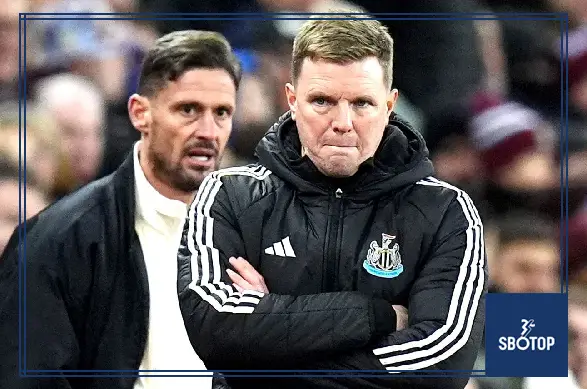
The leadership of Newcastle United has entered a defining phase, with chief executive David Hopkinson stepping forward to address some of the most pressing talking points surrounding the club: the long-term future of manager Eddie Howe, ongoing speculation around midfielder Sandro Tonali, and the announcement of record-breaking financial revenues that signal a new era of stability and ambition at St James’ Park.
As the club continues its transformation both on and off the pitch, Hopkinson’s comments provide a clearer picture of where Newcastle stands—and where it intends to go next.
A Club in Transition and Rapid Growth
Few clubs in European football have experienced such rapid evolution as Newcastle United in recent years. Backed by strong investment and a long-term strategic plan, the club has shifted from mid-table uncertainty to genuine competitive ambition in both domestic and continental competitions.
The latest financial report, which reveals record revenues, highlights just how far the club has come commercially. Increased matchday income, global sponsorship expansion, and growing international fan engagement have all contributed to a new financial baseline.
David Hopkinson emphasised that this growth is not accidental but the result of structured planning aimed at building long-term sustainability.
Eddie Howe’s Future Stability at the Core
One of the central topics addressed by Hopkinson was the future of manager Eddie Howe, who has been instrumental in Newcastle’s transformation on the pitch.
Since his arrival, Howe has implemented a clear tactical identity built on discipline, high-intensity pressing, and structured attacking transitions. Under his leadership, Newcastle United have become a more consistent and competitive force in domestic football.
Hopkinson’s message was clear: stability is a priority.
He praised Howe’s leadership qualities, his connection with the squad, and his ability to align sporting performance with the club’s broader vision. While speculation often surrounds managerial positions at ambitious clubs, Hopkinson’s comments strongly suggested that Newcastle view Howe as a long-term figure central to their project.
The club’s hierarchy reportedly sees continuity as essential to sustaining progress, especially during a period of rapid commercial and sporting expansion.
Building a Competitive Identity Under Howe
Under Eddie Howe, Newcastle United have developed a clear identity on the pitch.
The team’s style is built around:
- High pressing in midfield zones
- Quick transitions from defence to attack
- Strong defensive organisation
- Physical intensity combined with technical discipline
This structure has allowed Newcastle to compete effectively against top-tier opposition while also maintaining consistency in league performances.
Hopkinson noted that the club’s footballing philosophy is aligned with Howe’s approach, reinforcing the idea that managerial continuity is key to long-term success.
Sandro Tonali Talent Uncertainty and Long-Term Planning
Another major topic addressed was the future of Sandro Tonali, whose name has been the subject of ongoing speculation in transfer discussions across Europe.
The Italian midfielder remains one of the most technically gifted players in the squad, known for his passing range, tactical awareness, and ability to control tempo from deep positions. His presence is considered vital in Newcastle’s midfield structure when fully available.
Hopkinson acknowledged the external noise surrounding Tonali but stressed that the club remains focused on internal planning rather than speculation.
For Newcastle United, Tonali represents both present value and long-term potential. His development within the squad is seen as an important part of the club’s evolution into a consistent top-level competitor.
Managing Expectations in the Transfer Market
Transfer speculation is inevitable for ambitious clubs, and Newcastle United are no exception.
However, Hopkinson’s comments suggest a more controlled and strategic approach to squad building moving forward. Rather than reacting to rumours, the club aims to focus on:
- Long-term squad balance
- Financial sustainability
- Development of existing players
- Strategic recruitment aligned with Howe’s system
In the case of Sandro Tonali, this means evaluating his role within the squad structure rather than responding to external transfer chatter.
Record Revenues Signal a New Era
Perhaps the most significant development discussed by Hopkinson was the announcement of record-breaking revenues for Newcastle United.
This milestone reflects several key areas of growth:
- Increased Premier League commercial revenue
- Expansion of global sponsorship deals
- Higher matchday income driven by demand and stadium atmosphere
- Growth in international fan engagement and media rights
These financial gains are crucial for long-term competitiveness, particularly in an era of strict financial regulations.
Hopkinson emphasised that financial strength is not just about spending power, but about sustainability and responsible growth.
Financial Strength and Competitive Ambition
The rise in revenue allows Newcastle United to operate with greater flexibility in the transfer market while still adhering to financial rules.
This balance is essential for maintaining competitiveness without risking long-term stability.
Hopkinson highlighted that the club’s goal is to ensure that financial growth translates into sporting progress, but in a controlled and strategic manner.
In practical terms, this means Newcastle can:
- Retain key players more effectively
- Invest in infrastructure and academy development
- Strengthen the squad gradually over multiple windows
- Compete for high-level talent without financial overreach
Eddie Howe’s Role in Long-Term Planning
The success of Eddie Howe is closely tied to Newcastle’s broader strategy.
His ability to integrate new players, develop existing talent, and maintain a strong dressing room culture has made him a central figure in the club’s evolution.
Hopkinson’s remarks reinforce the idea that Howe is not just a short-term manager but a long-term architect of the club’s football identity.
For Newcastle United, this alignment between sporting and executive leadership is seen as essential for sustained success.
Squad Development and Future Planning
Beyond individual names like Sandro Tonali, Newcastle’s squad development strategy focuses on balance and progression.
The club aims to build a team capable of competing across multiple competitions while maintaining depth and flexibility.
Key focus areas include:
- Midfield creativity and control
- Defensive depth and injury resilience
- Attacking consistency and goal output
- Youth development integration
This structured approach reflects a shift from reactive spending to long-term squad architecture.
Fan Expectations and Growing Pressure
As the club continues to rise, expectations among supporters of Newcastle United have increased significantly.
Fans now expect not just competitive performances, but sustained challenges for European qualification and domestic honours.
Hopkinson acknowledged this growing pressure, noting that ambition must be matched with patience and structure.
While financial growth has raised hopes, the club leadership remains focused on ensuring that progress is sustainable rather than rushed.
The Balance Between Ambition and Stability
One of the central themes of Hopkinson’s message is balance.
For Newcastle United, the challenge is to remain ambitious while avoiding instability. Rapid success without structure can lead to long-term setbacks, something the club is determined to avoid.
This philosophy is reflected in decisions around managerial continuity, player development, and transfer strategy.
Both Eddie Howe and Sandro Tonali sit within this broader framework of controlled growth and strategic planning.
Also Read:
- SBOTOP: Thomas Tuchel Reflects on Phil Foden and Cole Palmer’s Struggles as England Fall 1-0 to Japan at Wembley
- SBOTOP: Thomas Tuchel Hails John Stones as Crucial England Figure Despite Injury Worries Ahead of World Cup Campaign
- SBOTOP: Tottenham Gamble on Survival as Igor Tudor Exit Marks Turning Point in Premier League Relegation Fight