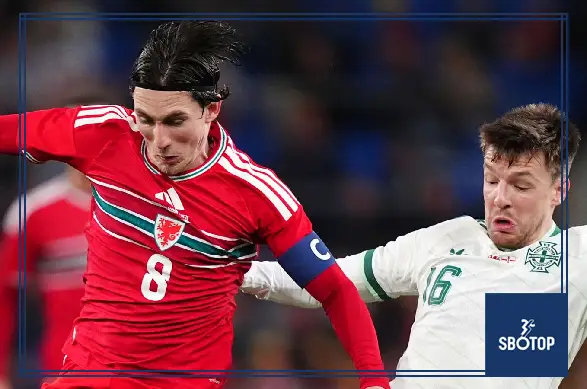
Wales and Northern Ireland played out a competitive 1-1 draw in a tightly contested international friendly that offered flashes of quality, moments of frustration, and valuable lessons for both sides. The match saw an early breakthrough from Northern Ireland through Jamie Donley, before Wales responded in the second half with an equaliser from Sorba Thomas to ensure the spoils were shared.
While the fixture carried no competitive stakes, it provided an important testing ground for emerging talents, tactical experimentation, and squad depth assessment ahead of upcoming qualification campaigns.
A Bright Start from Northern Ireland
Northern Ireland began the match with energy and intent, immediately pressing Wales high up the pitch and forcing early errors in possession. Their aggressive approach paid off within the opening stages as they struck first through Jamie Donley.
Donley’s goal came after a well-worked attacking move that exposed gaps in the Welsh defensive structure. Timing his run perfectly, he found space inside the box and finished calmly beyond the goalkeeper, giving Northern Ireland an early and deserved lead.
The goal reflected Donley’s growing confidence at international level, showcasing his awareness, positioning, and composure in front of goal.
Wales Struggle to Find Rhythm Early On
Following the early setback, Wales found themselves under pressure. Their passing rhythm lacked fluidity, and Northern Ireland’s structured pressing made it difficult to build attacks from the back.
Several attempted forward moves broke down in midfield, as Northern Ireland closed passing lanes effectively and forced Wales into long balls that were easily dealt with.
Despite having experienced players on the pitch, Wales struggled to assert control in the opening half-hour, highlighting ongoing challenges in their attacking cohesion.
Northern Ireland’s Tactical Discipline
Northern Ireland’s first-half performance was built on organisation and discipline. Their midfield compactness limited Wales’ ability to play through the centre, while their defensive line remained alert to cover wide threats.
Key elements of their approach included:
- High-intensity pressing in midfield zones
- Compact defensive spacing
- Quick transitions after winning possession
- Direct attacking movements toward Donley in advanced areas
This structure allowed them to not only defend effectively but also pose a consistent threat on the counterattack.
Wales Gradually Grow Into the Game
As the first half progressed, Wales began to find more control in possession. Their midfield started to dictate tempo, and they slowly pushed Northern Ireland deeper into their own half.
Wing play became a key outlet for Wales, as they looked to stretch the opposition defence and create crossing opportunities.
However, despite improved control, Wales still lacked the final pass needed to break down a well-organised Northern Ireland defence.
The first half ended with Northern Ireland deservedly ahead, but with Wales showing signs of recovery.
Second Half Tactical Adjustments
After the break, Wales made noticeable tactical adjustments. Their pressing became more coordinated, and they increased the speed of ball circulation in midfield.
This shift began to unsettle Northern Ireland, who were forced to defend deeper than they had in the first half.
The introduction of fresher attacking options also gave Wales more unpredictability in the final third.
Gradually, momentum began to swing in their favour.
Sorba Thomas Restores Balance
The breakthrough for Wales came through Sorba Thomas, who delivered a composed and important equaliser to bring his side level.
The goal was the result of sustained pressure, with Wales probing down the flanks before creating space in the attacking zone. Thomas found himself in the right position at the right time and finished confidently to restore parity.
His equaliser reflected Wales’ growing dominance in the second half and rewarded their improved attacking structure.
Beyond the goal itself, Thomas provided width, creativity, and energy throughout the match, consistently troubling the Northern Ireland defence.
Momentum Shifts After the Equaliser
Following the equaliser, Wales appeared more confident and began to control possession for extended spells. Northern Ireland, meanwhile, shifted slightly deeper and focused on maintaining defensive stability.
The match became more balanced, with both teams creating half-chances but lacking precision in the final third.
Wales came close to taking the lead on a couple of occasions, but poor finishing and solid goalkeeping prevented a second goal.
Northern Ireland also threatened on the break, reminding Wales that the match remained finely poised.
Jamie Donley’s Influence Beyond the Goal
Although Jamie Donley’s early goal was the standout moment of the first half, his overall contribution went beyond just scoring. His movement off the ball consistently created space for teammates, and his ability to link play added structure to Northern Ireland’s attacking transitions.
Donley demonstrated:
- Intelligent positioning in attacking zones
- Composed finishing under pressure
- Awareness in counterattacking situations
- Strong off-the-ball movement
His performance will be seen as another encouraging step in his international development.
Midfield Battle Defines the Match
One of the most important aspects of the game was the midfield battle. Both teams fought for control, with neither side fully dominating for long periods.
Wales relied on structured passing and width, while Northern Ireland focused on compactness and quick transitions.
Key midfield dynamics included:
- Frequent turnovers in central areas
- Strong physical duels
- Tactical fouls to break rhythm
- Shifts in momentum based on pressing intensity
Ultimately, neither team managed to fully control the match, contributing to the fair final result.
Defensive Performances Under Pressure
Both defensive units experienced challenging moments throughout the match.
Wales’ defence had to deal with early pressure and quick counterattacks, while Northern Ireland’s back line was forced into deeper positions as the second half progressed.
Despite conceding once each, both teams showed resilience and organisation in key moments.
Clearances, blocks, and interceptions played a major role in preventing further goals.
Attacking Efficiency Still Lacking for Both Sides
While both teams created opportunities, neither displayed consistent efficiency in front of goal.
Common issues included:
- Final passes lacking accuracy
- Shots fired from low-percentage positions
- Miscommunication in attacking moves
- Strong defensive pressure reducing clarity
These inefficiencies prevented either side from securing a winning goal.
Tactical Lessons for Wales
For Wales, the match highlighted several key areas for improvement:
- Stronger starts needed in future matches
- Greater creativity in central attacking zones
- Improved finishing in key moments
- Faster transitions from defence to attack
However, the second-half response will be seen as a positive sign of adaptability.
Positive Signs for Northern Ireland
Despite not holding onto their early lead, Northern Ireland can take encouragement from their disciplined performance.
Key positives include:
- Strong defensive organisation
- Effective counterattacking structure
- Early attacking sharpness
- Emerging young talent contributions
The ability to compete effectively against a strong opponent like Wales will boost confidence moving forward.
A Fair Result in the End
As the final whistle blew, the 1-1 scoreline felt like a fair reflection of the match. Both teams had periods of control, both created chances, and both showed areas of strength and weakness.
While Wales will feel they had more control in the second half, Northern Ireland will point to their strong start and disciplined defensive structure.
Also Read:
- SBOTOP: Italy Suffer Third Consecutive World Cup Absence After Penalty Shootout Defeat to Bosnia and Herzegovina in High-Stakes Play-Off Thriller
- SBOTOP: Republic of Ireland Held to Goalless Draw by North Macedonia as Troy Parrott Denied Twice in Controversial Stalemate
- SBOTOP: England U21 Dominate Moldova 4-1 as Arsenal Pair Ethan Nwaneri and Myles Lewis-Skelly Power Young Lions to Impressive Win