In the vast landscape of Brazilian football, where giants like Flamengo, Palmeiras, and São Paulo dominate headlines and trophies, smaller clubs often struggle to break through the ceiling of expectation. Yet every once in a while, a story emerges that reshapes belief itself. Mirassol Futebol Clube, a modest team from the interior of São Paulo, has become one such phenomenon.
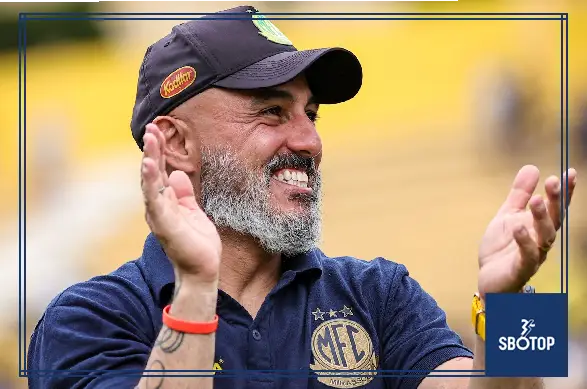
Under the leadership of Rafael Guanaes, Mirassol has transformed from a quietly ambitious side into one of Brazil’s most fascinating football stories. What makes their rise even more intriguing is the unusual inspiration behind it—Football Manager, the popular football simulation game that has shaped tactical thinking for millions of fans worldwide.
Now, with their eyes firmly set on Copa Libertadores qualification, Mirassol’s journey has evolved into something more than sport. It is a story of innovation, belief, and the power of modern football thinking meeting traditional Brazilian passion.
The Beginning A Club Built on Patience and Identity
Mirassol was never designed to be a giant. Founded in 1925, the club spent decades navigating regional competitions, often overshadowed by bigger neighbors. However, what Mirassol Futebol Clube lacked in history, it made up for in structure.
Unlike many smaller Brazilian clubs, Mirassol invested heavily in youth development, scouting networks, and long-term planning. Their philosophy was simple: build slowly, develop talent, and never chase unrealistic shortcuts.
This stability created the perfect foundation for a modern coach like Rafael Guanaes, who arrived with ideas that would soon reshape the club’s destiny.
Rafael Guanaes The Tactical Thinker With a Digital Edge
Rafael Guanaes is not your traditional Brazilian coach. While many managers rely heavily on instinct and experience, Rafael Guanaes blends analytical thinking with tactical creativity.
Before taking charge at Mirassol, he had already developed a reputation as a forward-thinking coach in Brazil’s lower divisions. However, what truly set him apart was his openness to unconventional learning methods.
One of those methods was Football Manager, the globally popular simulation game that allows users to manage clubs, build tactics, and develop players in a virtual football ecosystem. While some dismiss it as entertainment, Guanaes saw something deeper: a tactical laboratory.
He often studied formations, player roles, and statistical outcomes inspired by patterns he observed in the game. For him, Football Manager was not fantasy—it was a sandbox for experimentation.
This mindset would soon become the foundation of Mirassol’s transformation.
The Philosophy Structure Over Chaos
When Guanaes arrived at Mirassol, he did not promise trophies. Instead, he promised structure.
His philosophy centered on three pillars:
- Positional discipline
- Data-informed decision-making
- Collective movement over individual brilliance
Brazilian football is traditionally associated with flair and improvisation. However, Guanaes introduced a system where every movement had purpose.
Players were taught not just where to be on the pitch, but why they should be there. Training sessions focused heavily on spatial awareness, pressing triggers, and transition phases.
This disciplined approach initially faced resistance. Some players struggled with the rigidity. Fans questioned whether the “beautiful game” was being sacrificed. But results slowly began to shift opinions.
The Turning Point When Everything Clicked
Every great football story has a turning point. For Mirassol, it came during a crucial state championship run.
The team began defeating stronger opponents with surprising consistency. They were no longer just defending—they were controlling matches. Midfield dominance became their signature, and their pressing system frustrated even the most experienced sides.
What stood out was not just winning, but how they won. Mirassol played with identity.
Opponents found it difficult to break them down, while Mirassol’s attacking transitions became increasingly efficient. The system built by Guanaes was no longer theoretical—it was working in real competition.
The Football Manager comparisons began to surface more frequently in media discussions, but now they carried respect rather than skepticism.
Tactical Blueprint The Invisible Machine
At the heart of Mirassol’s success lies a carefully engineered tactical system.
Guanaes often deploys a flexible 4-3-3 formation that shifts into a 4-2-3-1 during defensive phases. The key lies in fluid transitions rather than static positioning.
Key Tactical Features:
- High pressing structure: Forcing opponents into wide areas
- Compact midfield triangle: Controlling central space
- Fast vertical transitions: Turning defense into attack within seconds
- Rotational attacking roles: Wingers and midfielders constantly interchanging positions
This system is not built on star power but on synchronization. Every player understands their role within a larger mechanism.
Much like in Football Manager, where tactical instructions dictate team behavior in detail, Mirassol’s real-life version operates like a finely tuned machine.
Player Development The Engine of Progress
One of Guanaes’ most impressive achievements has been player development.
Rather than relying on expensive transfers, Mirassol has focused on improving existing talent. Young players have flourished under structured guidance, with clear development pathways.
Midfielders have learned to dictate tempo with maturity beyond their years. Defenders have improved positional awareness dramatically. Even forwards, often isolated in smaller clubs, now benefit from coordinated attacking systems.
This internal growth has not only strengthened the squad but also increased the club’s financial stability, as several players have attracted interest from larger teams.
The Psychological Shift Belief as a Weapon
Perhaps the most underrated aspect of Mirassol’s rise is psychological transformation.
Before Guanaes, Mirassol often entered matches as underdogs. Now, they enter with expectation.
The players believe they can compete with anyone. This confidence is not arrogance—it is built on consistency. Repeated success has reshaped the club’s identity.
Even more importantly, the squad has developed resilience. Late goals, tactical adjustments, and in-game adaptability have become hallmarks of their performances.
Copa Libertadores Dream A Real Possibility
For decades, the Copa Libertadores represented an almost unreachable dream for clubs like Mirassol. The competition is reserved for South America’s elite.
But now, that dream feels closer than ever.
With strong league performances and increasing tactical maturity, Mirassol has positioned itself as a legitimate contender for qualification spots.
Guanaes has remained cautious in public statements, emphasizing focus over ambition. However, internally, the belief is clear: Mirassol is no longer just participating—they are competing for something bigger.
Media Attention and Growing Pressure
As Mirassol’s performances improve, media attention has intensified.
Journalists frequently highlight the “Football Manager-inspired revolution,” framing the club as a modern football experiment that is succeeding in real time.
While this attention brings recognition, it also increases pressure. Opponents now analyze Mirassol more deeply. Matches are becoming more tactical and less forgiving.
Guanaes understands this challenge. Adaptation, he insists, will be key to sustaining success.
Challenges Ahead Staying Grounded
Despite the optimism, Mirassol’s journey is far from complete.
Several challenges lie ahead:
- Squad depth limitations
- Financial constraints
- Increased tactical scrutiny from opponents
- Maintaining consistency across long seasons
Brazilian football is notoriously demanding, with constant travel, fixture congestion, and emotional pressure. Maintaining performance levels will require discipline and adaptability.
Guanaes knows that one successful season does not define a dynasty. Sustainability is the real test.
The Bigger Picture A New Model for Brazilian Football?
Mirassol’s rise is not just a club story—it may represent a broader shift in football thinking.
The integration of data, simulation-based learning, and structured tactical planning reflects a new generation of coaching philosophy. While Football Manager may seem like an unconventional influence, it symbolizes something larger: the democratization of tactical knowledge.
Today, young coaches around the world analyze football in ways that were once reserved for elite professionals. Mirassol is living proof of this evolution.
Also Read:
- SBOTOP: Hull City and Coventry City Share Goalless Stalemate as Sky Blues Edge Closer to Premier League Promotion
- SBOTOP: Chelsea Strike Late to Edge Spurs and Book FA Cup Semi-Final Clash with Manchester City After Dramatic Win
- SBOTOP: Swansea City and Middlesbrough Share Four-Goal Thriller as Tommy Conway Penalty Salvages Point but Boro Miss Chance to Reclaim Second Place