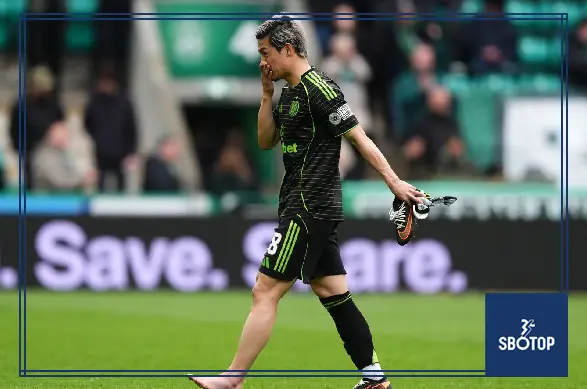
A win is always welcome, but not all victories bring complete satisfaction. That was the case as Celtic F.C. secured a narrow 2-1 triumph over Hibernian F.C. in a match that highlighted both resilience and recurring concerns. While the result delivered three valuable points, the performance raised questions about efficiency in front of goal and the fitness of key player Daizen Maeda. Manager Martin O’Neill now faces a balancing act—maintaining momentum while addressing underlying issues.
It was a match that encapsulated the complexity of football: success on paper, but challenges beneath the surface.
First Half Celtic Start Strong but Wasteful
Celtic began the match with energy and purpose. Their attacking movement was fluid, and their pressing disrupted Hibernian’s attempts to build from the back.
Early chances came quickly. The midfield created openings through quick passing combinations, and the forwards found space in dangerous areas. However, finishing proved to be a problem.
Despite controlling possession and territory, Celtic struggled to convert opportunities into goals. Shots were either off target, blocked, or lacked the precision needed to beat the goalkeeper.
Eventually, their persistence paid off with a breakthrough goal, but the sense remained that the scoreline could—and should—have been more comfortable.
Hibernian’s Response Resilience and Opportunism
Hibernian F.C. showed commendable resilience. Despite being under pressure for much of the first half, they remained organised and waited for opportunities to counterattack. Their equaliser came as a reminder of football’s unpredictability. A moment of defensive lapse from Celtic allowed Hibernian to capitalise and bring the match level.
This goal shifted momentum and injected belief into the home side. Suddenly, the game felt far more balanced.
Daizen Maeda’s Influence and Concern
Daizen Maeda played a crucial role in Celtic’s attacking structure. His pace, pressing, and movement created constant problems for Hibernian’s defence.
However, concerns arose regarding his fitness during the match. Any potential injury or fatigue issue could have significant implications for Celtic’s attacking dynamics.
Maeda’s style relies heavily on intensity and physical output, making his fitness a key factor in the team’s overall performance.
Manager Martin O’Neill will be closely monitoring his condition in the coming days.
Second Half Celtic Regain Control
The second half saw Celtic reassert control over the match. Adjustments in midfield allowed them to dictate tempo more effectively, limiting Hibernian’s ability to counter.
Celtic’s second goal came through a well-constructed attacking move, showcasing their ability to break down organised defences when executing with precision.
At 2-1, Celtic had regained the lead, but the earlier missed chances meant the game remained tense.
Finishing Woes Continue to Frustrate
One of the most significant takeaways from the match was Celtic’s continued struggle with finishing. Despite creating numerous chances, they failed to convert enough of them into goals.
Key issues included:
- Lack of composure in front of goal
- Poor shot selection in key moments
- Failure to capitalise on defensive errors
- Inconsistent final passes
In tighter matches, such inefficiency can prove costly.
Hibernian’s Late Push
As the match entered its final stages, Hibernian pushed forward in search of an equaliser. Their approach became more direct, with increased emphasis on crosses and set-pieces.
Celtic’s defence was tested, but they managed to hold firm. Clearances, interceptions, and disciplined positioning ensured that Hibernian’s efforts did not result in another goal.
The closing minutes were tense, reflecting the narrow margin between victory and dropped points.
Tactical Analysis Strengths and Weaknesses
Celtic’s performance highlighted both strengths and weaknesses:
Strengths:
- Strong midfield control
- Effective pressing in advanced areas
- Ability to create multiple scoring opportunities
Weaknesses:
- Inefficiency in finishing
- Occasional defensive lapses
- Over-reliance on key attacking players
Addressing these weaknesses will be essential moving forward.
Martin O’Neill’s Challenge Moving Forward
For Martin O’Neill, the challenge is clear. While results remain positive, performances must improve to ensure long-term success.
Key priorities include:
- Improving finishing efficiency
- Managing player fitness, particularly Daizen Maeda
- Maintaining defensive consistency
- Enhancing decision-making in the final third
Balancing these factors will be crucial as the season progresses.
The Importance of Clinical Finishing
At the highest level of football, clinical finishing often separates good teams from great ones. Creating chances is only part of the equation—converting them is what ultimately determines results.
Celtic’s inability to consistently finish opportunities could become a significant issue against stronger opponents.
Improvement in this area could transform narrow victories into dominant performances.
Psychological Impact of Narrow Wins
While a 2-1 victory secures three points, it also carries psychological implications. Players may feel both relief and frustration—relief at winning, but frustration at not finishing the game more comfortably.
Maintaining confidence while addressing performance issues is a delicate balance.
Squad Depth and Rotation Considerations
With concerns over Daizen Maeda’s fitness, squad depth becomes increasingly important. Rotating players effectively can help maintain performance levels while reducing injury risk.
Celtic will need contributions from across the squad to sustain momentum.
Hibernian’s Positives Despite Defeat
Despite the loss, Hibernian can take positives from their performance. Their resilience, organisation, and ability to capitalise on opportunities demonstrate potential for growth.
Competing closely with a strong side like Celtic provides valuable experience and confidence for future matches.
Maintaining Momentum
For Celtic F.C., the focus now shifts to maintaining momentum while addressing key issues.
Upcoming matches will test their ability to:
- Convert chances more efficiently
- Manage player fitness
- Maintain defensive stability
- Handle pressure in tight contests
Consistency will be key.
Also Read:
- SBOTOP: Manchester City Edge Liverpool 1-0 as Rebecca Knaak’s Late Strike Moves Them Within Touching Distance of WSL Glory
- SBOTOP: Chelsea Triumph 3-1 Over Leicester as Sam Kerr Breaks WSL Scoring Record and Secures Champions League Qualification
- SBOTOP: Bruno Fernandes Reveals Why He Rejected Summer Move to Stay Loyal to Manchester United