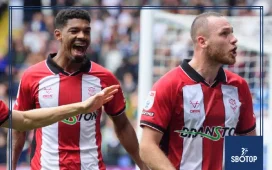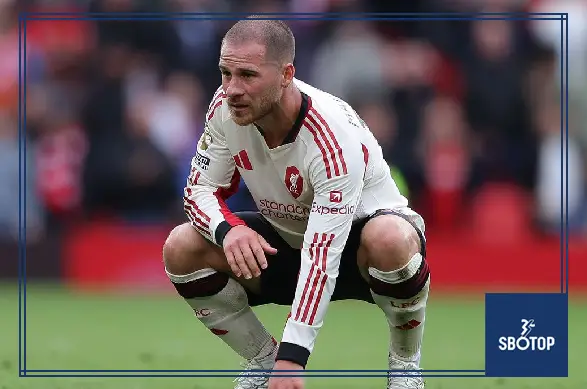
When Liverpool rebuilt their midfield, expectations were clear: more control, more stability, and more tactical intelligence in the centre of the pitch. The arrival of Alexis Mac Allister was supposed to be a key piece in that evolution. A World Cup winner with Argentina, technically gifted, press-resistant, and calm under pressure, he looked tailor-made for a side transitioning into a new tactical era.
Yet, as the season has progressed, debates have emerged around his consistency and effectiveness in certain matches—particularly those where intensity, speed, and physical duels dominate the rhythm. This has led to a recurring question among analysts and supporters alike: is Mac Allister’s form at Liverpool being affected by the physical demands of the Premier League?
At the same time, other midfield profiles across Europe—such as Conor Gallagher and Merlin Rohl—offer contrasting case studies of physicality, energy, and adaptability in modern football. Together, they provide a useful lens through which to understand what elite midfield performance now demands.
This debrief explores those themes in depth.
Alexis Mac Allister at Liverpool Control vs Intensity
Mac Allister arrived at Liverpool with a reputation built at Brighton and on the international stage. He is a midfielder who thrives in structured possession systems, capable of dictating tempo, progressing the ball through tight spaces, and making intelligent positional decisions.
At Liverpool, however, the midfield environment is different. Even under a more controlled tactical structure, the Premier League still demands relentless intensity—especially in transition phases. Games often swing on second balls, duels, and rapid counterattacks.
Mac Allister’s strengths are not in question:
- Excellent ball retention under pressure
- Sharp passing range between the lines
- Tactical awareness in build-up phases
- Calmness in tight midfield zones
But the question is whether those strengths are sometimes neutralised when games become physically chaotic.
-
The Physicality Question
The “physicality issue” surrounding Mac Allister is not about strength in isolation. He is not physically weak. Instead, the discussion revolves around duel frequency, repeated high-intensity actions, and resistance to constant pressing environments.
In matches where Liverpool dominate possession, Mac Allister often looks comfortable and influential. However, in games that become end-to-end battles, his impact can appear reduced.
This raises a broader tactical question: is he being asked to cover too much ground in systems that still transition aggressively, even under a more controlled structure?
Tactical Role Where He Fits Best
To understand his form properly, it is important to break down his typical roles:
-
Deep-lying controller
When positioned deeper, Mac Allister acts as a rhythm-setter. He receives under pressure, turns away from markers, and connects defence to attack. This role suits him well when Liverpool control possession.
-
Advanced midfielder
In more advanced positions, he operates between the lines, linking with forwards and creating passing combinations. This role highlights his creativity but exposes him more in defensive transitions.
-
Hybrid midfielder in transition-heavy matches
This is where challenges emerge. Liverpool’s structure often requires midfielders to sprint back, press aggressively, and engage in repeated physical duels. In these matches, energy management becomes crucial.
Mac Allister’s effectiveness can dip when the game becomes too fragmented, not necessarily due to lack of ability, but due to system demands.
Is It Really a Physical Limitation
Labeling this as purely a physical problem would be overly simplistic. Instead, it is more accurate to describe it as a contextual mismatch between player profile and match rhythm.
Several factors influence perception:
-
High-intensity Premier League tempo
The league demands constant transitions. Even technically strong midfielders must adapt to chaotic phases.
-
Liverpool’s pressing identity
Liverpool still operate with aggressive pressing triggers, meaning midfielders must recover quickly after offensive phases.
-
Partner balance in midfield
Mac Allister’s performance often depends heavily on who plays alongside him. If paired with a more physically dominant or defensively secure midfielder, he appears more liberated.
In short, the issue is not that he cannot cope with physicality—it is that his optimal conditions are highly specific.
Comparative Lens Conor Gallagher’s Profile
To better understand modern midfield demands, Conor Gallagher provides an interesting contrast.
Conor Gallagher is widely recognised for his relentless energy, pressing intensity, and ability to cover large areas of the pitch. Whether at club level or internationally, his game is defined by:
- High work rate across 90 minutes
- Aggressive pressing in advanced areas
- Strong duelling in midfield transitions
- Direct running with and without the ball
Gallagher represents the archetype of the modern “engine room” midfielder.
-
What Gallagher Brings Differently
Where Mac Allister prioritises control, Gallagher prioritises disruption. He breaks opposition rhythm rather than dictating his own.
In matches where tempo is chaotic, Gallagher often thrives because:
- He thrives in repeated duels
- He maintains intensity late in matches
- He is comfortable in physical midfield battles
However, his technical ceiling in tight possession systems is not as refined as Mac Allister’s. This highlights the trade-off in midfield design: control versus energy.
Merlin Rohl The Emerging Hybrid Profile
Another useful comparison is Merlin Röhl, a younger midfielder whose profile blends technical ability with physical presence.
Röhl represents a growing trend in European midfield development:
- Taller, more physically robust midfielders
- Comfortable in both defensive and attacking phases
- Capable of progressing the ball under pressure
- Strong aerial and duel presence
-
Why Röhl Is Interesting in This Debate
Röhl sits somewhere between Mac Allister and Gallagher. He is not purely a destroyer, nor purely a playmaker. Instead, he reflects the modern demand for midfield versatility.
In systems like Liverpool’s, a player like Röhl could theoretically:
- Help absorb physical pressure
- Maintain ball progression under duress
- Add structural balance in transitions
This type of profile is increasingly valuable in elite European football.
Liverpool’s Midfield Identity Problem
The real issue is not individual performance alone, but collective balance.
Liverpool’s midfield over the years has oscillated between:
- High-energy pressing units
- Technical possession rebuilds
- Hybrid transitional systems
Mac Allister fits best in controlled environments. But Liverpool’s matches often do not stay controlled for long periods.
This creates a recurring tactical tension:
- If Liverpool slow the game down, Mac Allister thrives
- If the game becomes chaotic, energy players take over
The ideal solution is not replacing one type of player, but balancing the mix.
Physicality vs Intelligence The Modern Midfield Debate
Modern football often frames midfielders in binary terms: physical or technical. But elite teams now require both attributes across the unit.
Mac Allister’s situation highlights a key truth:
- Intelligence without physical support can be neutralised
- Physicality without intelligence limits control
- Balance between both is essential for elite competition
Liverpool’s challenge is ensuring that Mac Allister is not isolated in high-intensity phases.
What the Data and Eye Test Suggest
From a tactical observation perspective:
Strengths remain consistent:
- Ball retention under pressure
- Forward passing accuracy
- Positional awareness in build-up
Challenges appear situational:
- Reduced influence in high-transition games
- Occasional physical mismatches in midfield duels
- Dependency on partner structure
This suggests form issues are not permanent, but context-driven.
The Bigger Picture Squad Construction Matters
Elite clubs do not build midfields around one profile. They build ecosystems.
Liverpool’s current midfield evolution requires:
- A controller (Mac Allister type)
- A runner/pressing engine (Gallagher type)
- A hybrid physical-technician (Röhl type)
When these roles complement each other, individual weaknesses are masked.
When they are misaligned, even top players can appear inconsistent.
Also Read:
- SBOTOP: Benfica Starlet Gianluca Prestianni Faces Global Suspension Blow That Could Rule Him Out of Opening World Cup Matches
- SBOTOP: Phil Foden Set to Extend Manchester City Future with New Four-Year Agreement Ahead of Contract Expiry Concerns
- SBOTOP: Rangers Defender Dujon Sterling Handed Ban and Fine Following Drink-Driving Admission After Old Firm Victory Over Celtic