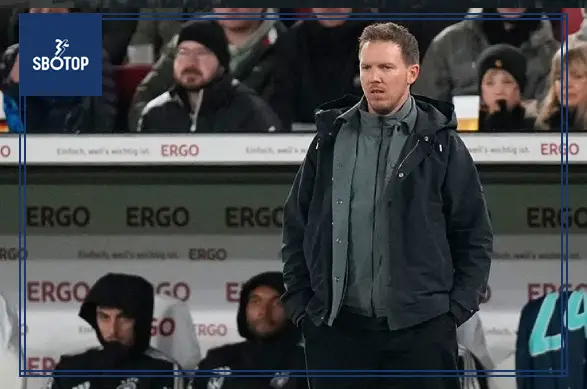
Manchester United’s search for a new permanent manager has taken an unexpected turn, with reports suggesting the club has decided to withdraw from pursuing Julian Nagelsmann. The German national team coach was previously viewed as one of the leading candidates to take charge at Old Trafford, but recent developments indicate that the Premier League giants are now shifting their focus elsewhere ahead of a crucial summer rebuild.
The decision marks a significant change in United’s managerial planning, as the club continues to evaluate long-term solutions following ongoing uncertainty in the dugout. While Nagelsmann remains highly respected within European football, several key concerns have reportedly influenced United’s reassessment of his suitability for the role.
Manchester United Reconsider Julian Nagelsmann Due to Timing Issues
One of the main reasons behind Manchester United’s decision to step back from Nagelsmann is believed to be related to timing. According to reports, the club is concerned that his potential availability may not align with their pre-season preparations.
Nagelsmann is currently set to lead Germany at the FIFA World Cup 2026, and if the national team progresses deep into the tournament, his earliest availability would likely be late July or early August. This timeline would leave Manchester United with very limited time to prepare for the 2026/2027 Premier League season.
With the English top flight expected to begin in mid-August, such a delay could significantly disrupt pre-season planning, squad integration, and tactical preparation. As a result, United are understood to be prioritizing candidates who can take charge earlier in the summer and work closely with the squad from the start of pre-season.
Nagelsmann Viewed as Talented but Not the Priority Option
Despite stepping back from negotiations, Manchester United still hold Julian Nagelsmann in high regard. The German coach is widely considered one of the most tactically advanced managers of his generation, having built strong reputations at RB Leipzig, Bayern Munich, and with the German national team.
His ability to implement dynamic systems, develop young players, and adapt tactically has made him one of the most sought-after coaches in Europe. However, Manchester United are reportedly not placing him at the top of their managerial shortlist for the upcoming season.
Club officials are said to be cautious about appointing a manager without Premier League experience, particularly after recent struggles with foreign coaches adapting to English football. The Premier League’s intensity, scheduling demands, and competitive balance have proven challenging for several managers in recent years.
United’s recent experiences with managers such as Louis van Gaal, Erik ten Hag, and Ruben Amorim have reportedly reinforced the belief that adaptation time can significantly impact early results.
Premier League Experience Becomes a Key Factor in Decision Making
Manchester United’s current approach suggests a shift in recruitment philosophy, with greater emphasis placed on Premier League familiarity and proven adaptability in English football.
The club is believed to be prioritizing candidates who already understand the demands of the league, including its physical intensity, tactical variability, and congested fixture schedule. This marks a notable change from previous strategies that focused heavily on emerging European coaching talents.
While Nagelsmann fits the profile of a modern tactical innovator, concerns remain over whether he would require a lengthy adaptation period before delivering consistent results in England.
Michael Carrick Emerges as Leading Internal Candidate
As United reassess their external options, attention is also turning toward internal solutions. Reports suggest that Michael Carrick has emerged as a strong candidate to take over as permanent manager if he meets key performance targets during his interim spell.
Carrick, who has previously served in various coaching roles at the club, is currently in charge on a temporary basis. His familiarity with the squad and the club’s structure is seen as a potential advantage, particularly during a transitional period.
According to reports, Manchester United may consider promoting Carrick permanently if he is able to guide the team into the UEFA Champions League for the 2026/2027 season. Such an achievement would strengthen his case significantly and provide continuity within the squad.
Strategic Shift as Manchester United Plan Long-Term Stability
The decision to move away from Julian Nagelsmann reflects a broader strategic shift at Manchester United. Rather than pursuing high-profile appointments based solely on reputation, the club appears to be focusing more heavily on timing, stability, and immediate readiness for the upcoming season.
This approach suggests that United are aiming to avoid disruptions that could impact pre-season preparation, which has been a recurring issue in recent managerial transitions. The priority now is to ensure that the next manager is fully integrated into the club’s structure before competitive fixtures begin.
At the same time, internal development and continuity are becoming increasingly important factors, as demonstrated by the growing support for Carrick’s potential promotion.
Conclusion: Manchester United Prioritize Stability Over Star Names
Manchester United’s decision to step back from Julian Nagelsmann highlights a more cautious and structured approach to their managerial search. While the German coach remains one of Europe’s most highly regarded tacticians, concerns over timing, Premier League adaptation, and long-term planning have led the club to reconsider their pursuit.
Instead, United are shifting their focus toward candidates who can provide immediate stability and align with pre-season requirements. The emergence of Michael Carrick as a serious internal option further reflects the club’s willingness to consider continuity and familiarity as key pillars for future success.
As the summer transfer window approaches, Manchester United’s final decision on their next permanent manager will be crucial in shaping the direction of the club. Whether they opt for internal promotion or an alternative external appointment, the priority remains clear: building a stable foundation capable of restoring competitiveness in the Premier League and European football.
ALSO READ :