Adrien Rabiot believes France have every reason to feel confident before their 2026 World Cup semi-final against Spain, but the experienced midfielder has warned that confidence must never become entitlement.
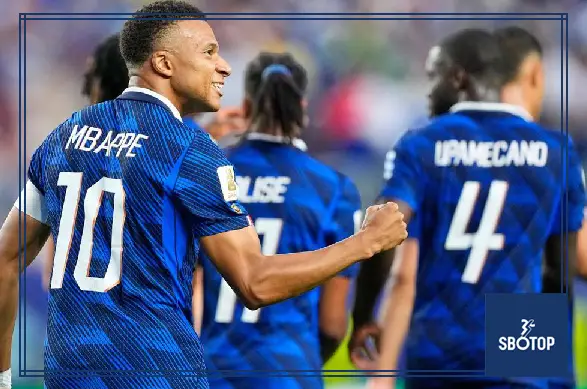
France have arrived in the final four after another commanding tournament run. Didier Deschamps’ side have not trailed in a single match and have outscored their opponents 14-2. Kylian Mbappé has led the attack with eight goals, while France’s defensive organisation has allowed them to control difficult periods without losing their composure.
Those achievements make France one of the strongest remaining contenders. They do not, however, guarantee anything against the reigning European champions.
Rabiot stressed that the outcome will be determined by what happens on the pitch rather than France’s reputation, statistics or previous World Cup success. He said the squad trust the journey that has carried them into the semi-final, but must preserve the humility that has defined their campaign from the opening match.
It is a message shaped by experience. France understand what it takes to reach the closing stages of a major tournament, but they also know how quickly one poor spell can end a campaign.
Against Spain, concentration will have to be complete.
France Stand One Victory from History
The semi-final offers France an opportunity to enter an exclusive group in World Cup history.
Les Bleus are attempting to reach a third consecutive final after winning the competition in 2018 and finishing runners-up to Argentina in 2022. Only Brazil and Germany have previously reached three successive World Cup finals. France would join them with victory over Spain.
That possibility reflects the extraordinary consistency France have developed under Deschamps. Since taking charge in 2012, the coach has built teams capable of adapting to different opponents, absorbing injuries and handling the pressure surrounding elite players.
France have reached five semi-finals in their last eight World Cup appearances and four of the previous seven finals. Their reputation as a tournament specialist has been earned over decades rather than created by one successful generation.
Yet Rabiot’s warning is particularly relevant because history can become a distraction. Thinking about a third successive final before defeating Spain would be dangerous. France cannot enter the match believing their experience will automatically carry them through.
Spain have their own history to create. La Roja are seeking their first World Cup final since winning the trophy in 2010, and their young squad have already shown that they are comfortable confronting heavyweight opponents.
France’s record deserves respect, but it will provide no protection once the semi-final begins.
Spain Have Hurt France Before
Humility is also necessary because France know exactly how dangerous Spain can be.
Spain defeated France 2-1 in the semi-finals of Euro 2024 before going on to lift the trophy. Lamine Yamal scored a spectacular equaliser in that match, demonstrating that he could influence the highest-pressure occasions despite being only 16 at the time.
The teams met again in the 2025 Nations League semi-final, when Spain survived a dramatic French comeback to win 5-4. Yamal was influential once more as Spain eliminated France from another competition.
Those results add psychological weight to the World Cup meeting. France are not preparing for an unfamiliar opponent. They are facing a team that have defeated them in two recent semi-finals and understand how to create problems for Deschamps’ system.
Rabiot and his teammates will not want the past to dominate their thinking. The squads have changed, the setting is different and each tournament develops its own rhythm. Nevertheless, the previous defeats provide valuable evidence.
France cannot afford to become passive when Spain control possession. They cannot allow Rodri and the Spanish midfield to dictate the entire match, nor can they focus so heavily on Yamal that other attackers receive freedom.
The recent meetings should not create fear, but they should reinforce Rabiot’s call for respect.
No Special Plan for Yamal
Much of the pre-match discussion has centred on Yamal and whether France require a specialised tactical plan to stop him.
Rabiot dismissed the idea of an individual “anti-Yamal” strategy. He explained that France are preparing to face the Spanish team as a complete unit rather than building their entire defensive approach around one winger.
That position does not underestimate Yamal. France recognise his dribbling, creativity and ability to find dangerous spaces near the penalty area. Their concern is that Spain possess several other players who can punish an unbalanced defensive structure.
If France send too many players toward Yamal, Spain can switch possession into the opposite channel. If a central midfielder moves too far wide to assist the full-back, Rodri, Pedri or Fabián Ruiz may exploit the space created inside.
Spain’s combination play makes the challenge collective. The player confronting Yamal directly will need support, but that support must arrive without destroying France’s compactness.
Rabiot could play a significant role in those defensive rotations. His physical range allows him to cover wide areas, challenge for second balls and recover when Spain move possession quickly. He must simultaneously remain connected to France’s central midfield.
Stopping Yamal is therefore not one defender’s responsibility. It begins with pressure on the passer, continues through midfield cover and depends on communication across the entire French block.
The Midfield Battle Could Decide the Match
The semi-final may be promoted through the star power of Mbappé and Yamal, but control of midfield could determine which attacker receives the better opportunities.
Spain want to establish long possession sequences, move France from side to side and create gaps between the defensive lines. Rodri provides structure from deep, while Spain’s advanced midfielders can receive in narrow spaces and combine around the penalty area.
France need to interrupt that rhythm without losing their shape.
Rabiot offers the experience and tactical discipline required for such an assignment. He can press forward, protect the full-back or drop closer to the centre-backs depending on the phase of play. His ability to carry the ball also gives France a route out of pressure when Spain attempt to counter-press.
France’s midfield must make good decisions about when to challenge. Pressing too aggressively could allow Spain to play through the first line and attack an exposed defence. Remaining too deep could give La Roja the time required to dominate possession.
The objective will be to identify the correct moments to step forward. A poor touch, backward pass or isolated receiver could become a pressing trigger.
When France win possession, their first pass will be crucial. Spain commit numbers to their attacks, and any turnover could release Mbappé, Ousmane Dembélé or Michael Olise into open space.
Rabiot’s performance will therefore influence both France’s defensive stability and their ability to counterattack.
Unity Has Become France’s Hidden Strength
France’s preparation extends beyond formal tactical meetings.
Rabiot revealed that the players regularly analyse matches together in small groups during their downtime at the team hotel. These conversations take place away from the coaching staff and allow the squad to exchange observations, question one another and take collective responsibility for solving problems.
That habit suggests France are not relying entirely on Deschamps to provide every answer. The coaching staff establish the main structure, but players also share what they see and feel during matches.
A full-back may explain where an opponent is creating an overload. A midfielder may identify a passing route that is being blocked. An attacker may recognise when pressing from a different angle could force a mistake.
Rabiot described a squad united by the same objective and capable of communicating openly. Jules Koundé similarly emphasised that France’s defensive work begins with the attackers and depends on every line pressing together.
That unity will be tested by Spain. There may be periods when France spend extended time without possession or struggle to escape Spanish pressure. Players must remain connected rather than becoming frustrated.
Rabiot’s comments indicate that the group have built relationships strong enough to survive those moments. France’s tactical discipline is supported by trust developed away from the stadium.
Mbappé Leads a Powerful Attack
France’s humility should not obscure the extraordinary attacking talent available to them.
Mbappé entered the semi-final with eight goals in the tournament and 20 across 20 World Cup appearances. His pace, finishing and movement make him a constant threat, particularly when opponents defend with a high line.
Spain’s desire to dominate possession may create the precise situations in which he is most dangerous. A single French interception could leave Mbappé accelerating toward a retreating defence before Spain have time to reorganise.
Dembélé adds unpredictability from wide areas, while Olise can operate between midfield and attack. France can also introduce fresh pace from the bench, allowing Deschamps to change the character of the contest during the second half.
However, the forwards must contribute without the ball. France’s strong defensive record has been built through collective pressure rather than the work of the back four alone. Koundé noted that effective pressing from the first Spanish pass would make the defenders’ responsibilities easier.
That effort will require sacrifice. France’s attackers cannot remain disconnected while waiting for counterattacking opportunities. They must close passing lanes, track movement and help prevent Spain from settling into a comfortable tempo.
The balance between defensive work and attacking explosiveness could become France’s greatest weapon.
Deschamps’ Final Tournament Adds Emotion
France are also carrying a powerful emotional motivation.
Deschamps has announced that the 2026 World Cup will be his final tournament as national-team coach, ending a reign that began in 2012. He led France to the 2018 title and another final four years later, while also establishing the team as one of international football’s most consistent competitors.
The tournament has been personally difficult for Deschamps following the death of his mother during the group stage. Rabiot said those circumstances brought the squad closer together and strengthened their desire to give everything for the coach in his final campaign.
That emotion can become a source of energy, but France must manage it carefully. Players cannot allow the desire to create a perfect farewell to make them tense or impatient.
The best tribute to Deschamps would be a performance reflecting the principles that have defined his tenure: organisation, resilience, adaptability and collective responsibility.
Rabiot’s call for humility fits that legacy. Deschamps’ France have often been comfortable allowing opponents to dominate discussion while they concentrate on winning matches.
The semi-final is not a ceremony marking the end of an era. It is another demanding assignment that must be approached with discipline.
Only after the final whistle can France consider what the result means for their coach.
France Must Respect Spain’s Defensive Record
Spain’s attacking quality receives enormous attention, but their defensive performance has been equally impressive.
La Roja conceded only once on their route to the semi-finals. Goalkeeper Unai Simón established a tournament record by going 650 minutes without allowing a goal before Belgium scored during the quarter-final.
Breaking down such a disciplined team will require patience.
France may not receive many clear chances. Spain’s ability to control possession reduces the amount of defending they have to do, while their counter-press can stop attacks before they develop. When opponents do advance, Spain close central spaces and attempt to force play toward less dangerous areas.
France must avoid wasting possession immediately after winning it. Long, hopeful passes could return the ball to Spain and create another extended defensive phase.
Rabiot and his midfield partners may need to slow the game occasionally, complete several passes and give the attacking players time to move into better positions.
Set pieces could also become important. In a match where open-play opportunities are limited, corners and free kicks may provide France with a chance to use their physical strength.
Rabiot’s aerial ability makes him a possible target in those situations. France’s centre-backs can also threaten Spain inside the penalty area.
Humility means accepting that victory may require patience rather than a spectacular attacking performance.
Also Read: