Jude Bellingham has played in Champions League finals, title-deciding matches and some of international football’s most emotionally charged occasions. Yet few moments involving the England midfielder have generated as much instant curiosity as his tense exchange with Lionel Messi during the World Cup semi-final between England and Argentina.
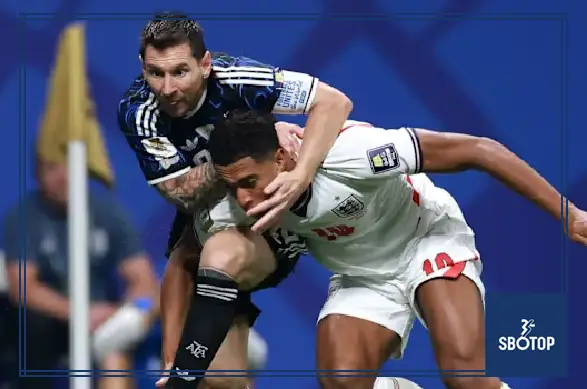
Television cameras captured the two players standing face to face during a fiercely contested first half in Atlanta. Bellingham spoke animatedly, Messi stared back and the conversation appeared to end with the Argentina captain responding dismissively. Within minutes, clips of the incident had spread across social media, accompanied by speculation about insults, intimidation and a possible clash between two generations of global football royalty.
The reality, according to Bellingham, was far less dramatic.
The England midfielder explained after the match that the disagreement concerned two separate challenges. Bellingham believed England should previously have received a foul, while Messi responded by referring to a challenge made against him. Bellingham’s reply was essentially that the Argentina captain was strong enough to cope with the contact.
There was no personal hostility, Bellingham insisted. It was simply an argument between two competitive players during a physical World Cup semi-final. He later described facing Messi as a privilege and made clear that his admiration for the Argentine remained unchanged.
That explanation may have reduced the mystery, but it did not make the moment insignificant. The confrontation captured the mood of a match filled with tension, tactical fouls and historical weight. It also provided a striking image: Bellingham, one of the defining players of football’s emerging generation, refusing to step away from a dispute with arguably the greatest player the sport has produced.
A Simple Disagreement Becomes a Global Talking Point
Bellingham described the incident as a discussion about a foul rather than a serious confrontation. In his version of events, he complained about an earlier challenge, Messi raised another incident involving himself, and Bellingham responded that the Argentine was physically capable of handling it.
The England player dismissed the idea that there had been anything malicious behind the exchange. He suggested that observers would inevitably exaggerate the moment because of the identities involved, but maintained that it had been nothing more than a normal disagreement during a heated match.
His explanation was consistent with the broader nature of the semi-final.
England and Argentina committed 26 fouls between them, with 19 arriving during the opening half. That first-half total was reported as a World Cup record, reflecting how frequently the game was interrupted by physical challenges, tactical contact and arguments over refereeing decisions. Argentina committed 15 fouls and received three yellow cards, while England were penalised 11 times and collected one booking.
In that environment, a verbal exchange between two influential players was almost inevitable.
The significance came from the names involved. Had the same words been exchanged between less famous team-mates, the footage might have attracted little attention. Bellingham and Messi, however, carry enormous symbolic importance.
Messi represents achievement, longevity and an era that transformed modern football. Bellingham represents the next generation: confident, physically powerful and already accustomed to being treated as a central figure for club and country.
The sight of them confronting each other created a story larger than the actual disagreement.
The First Half Was a Footballing Battle
The argument did not occur in isolation. It developed within a first half that was more of a contest for emotional and physical control than a display of flowing attacking football. Both teams understood the stakes. England were attempting to reach their first World Cup final since 1966, while defending champions Argentina were chasing a second consecutive final. The historical rivalry between the nations added another layer of pressure.
The opening period produced few chances. The expected-goals figures were extremely low, with neither side able to create a clear opening through structured possession. Instead, the match was shaped by duels, blocked passing lanes and attempts to disrupt key opponents before they could turn towards goal.
England’s Elliot Anderson was given particular responsibility for limiting Messi. When the Argentine escaped several challenges during one first-half run, Anderson stopped him with a body check and received a yellow card. It was one of many moments in which players accepted the risk of conceding a foul to prevent a more dangerous attack.
Bellingham was also targeted physically.
Argentina’s midfielders were determined not to allow him to accelerate through central areas or combine comfortably with Harry Kane and England’s wide players. Contact arrived early and often, creating the frustration that eventually contributed to his conversation with Messi.
Bellingham is rarely a passive figure in major matches. He communicates constantly, challenges opponents and reacts visibly when he believes a decision has gone against his team. His willingness to engage with Messi therefore reflected his normal competitive personality rather than an attempt to manufacture controversy.
What Bellingham Actually Said
Bellingham’s account removed the more sensational interpretations that appeared online.
He said the players were discussing a foul. Bellingham believed one challenge should have been penalised, while Messi questioned why the England player was complaining when the Argentine had also experienced contact. Bellingham responded by telling Messi, in effect, that he was strong enough to take the challenge.
The phrase most widely reported from the exchange was: “You’re strong enough to take it.”
That line helps explain Messi’s visible reaction. The Argentine appeared to respond with a look and a small movement of the head, as though dismissing the argument rather than attempting to extend it.
There is no evidence that the discussion included a personal insult. Bellingham explicitly said there was nothing bad behind it and later emphasised his respect for Messi.
His comments are important because short video clips often create false certainty. Viewers see facial expressions, gestures and body language, then construct dialogue that matches the story they expect.
A young England star confronting Messi in a World Cup semi-final is naturally presented as a battle of egos. The real conversation was about refereeing and physical contact—the kind of disagreement that occurs repeatedly in elite football.
Respect Did Not Disappear During the Argument
Bellingham’s admiration for Messi remained clear despite England’s painful defeat.
After the match, he called it a privilege to share the pitch with the Argentina captain and described him as one of football’s greatest players. Bellingham acknowledged the disappointment of being on the losing side but separated that emotion from his respect for his opponent.
That distinction is an important part of elite competition.
Players can admire each other before and after a match while still arguing, tackling and attempting to dominate one another during it. Respect does not require politeness throughout every minute of a World Cup semi-final.
In fact, treating Messi with excessive admiration during the match would have been a mistake. England needed to confront him as an opponent, not observe him as an icon.
Bellingham’s willingness to speak back reflected that approach. He did not behave as though Messi’s reputation placed him beyond challenge. At the same time, his post-match comments showed that the competitive exchange had not become personal.
The two attitudes are not contradictory. They are part of the mentality required at the highest level.
A Meeting Between Two Football Generations
The confrontation became compelling partly because it appeared to represent a symbolic transfer between football generations.
Messi entered the 2026 World Cup as a 39-year-old captain attempting to defend the title Argentina won four years earlier. His role had evolved. He no longer needed to dominate every phase through constant dribbling or movement, but he retained an extraordinary ability to identify and decide the most important moments.
Bellingham, by contrast, was 23 and already established as one of England’s most influential players. His game is built around power, timing, technical confidence and an ability to affect both penalty areas.
One player stood near the end of an historic international career. The other was expected to shape the next decade.
Their brief disagreement was therefore interpreted as more than an argument about a foul. It looked like a young challenger refusing to defer to the old master.
Yet the match also demonstrated why Messi’s influence remained so difficult to replace.
England restricted him successfully for long periods, and Bellingham’s team eventually took the lead through Anthony Gordon. However, Argentina recovered late. Enzo Fernández equalised before Lautaro Martínez scored the winner, with Messi heavily involved in the decisive attacking sequence and credited with creating both goals in the comeback. Argentina won 2-1 and advanced to face Spain in the final.
Bellingham may have matched Messi’s competitive intensity during the confrontation, but the Argentine ultimately shaped the result.
England’s Lead Changed the Match
The semi-final appeared to be moving in England’s favour when Gordon scored shortly after half-time.
Morgan Rogers supplied the cross, Gordon finished from close range and the Three Lions moved within sight of a first World Cup final appearance in 60 years. Their tactical plan had largely worked: Messi had been restricted, Argentina had created little and England remained dangerous when they moved forward.
Thomas Tuchel then attempted to protect the advantage by changing to a more defensive structure.
Gordon was replaced by Ezri Konsa as England shifted towards a back five. The decision reduced their counter-attacking threat and invited Argentina to dominate the closing stages.
England dropped closer to their own penalty area, struggled to retain possession and stopped forcing Argentina’s defenders to consider the space behind them. Fernández’s equaliser had been coming before it finally arrived, while Martínez’s stoppage-time winner completed the turnaround.
For Bellingham, the tactical change created a difficult situation.
He had spent the first half competing in an intense midfield battle. Once England retreated, he was required to operate increasingly close to his own box. His ability to carry the ball, attack space and combine around Kane was reduced.
The match became less about Bellingham’s influence and more about England’s attempt to withstand repeated pressure.
When Argentina equalised, the Three Lions were poorly positioned to rediscover their earlier attacking identity.
Messi Had the Final Answer
Football often gives meaning to incidents only after the final score is known.
Had England protected their lead, the confrontation might have been remembered as evidence of Bellingham’s fearlessness. It could have become an image of the young England midfielder standing up to the greatest player of Argentina’s generation before helping eliminate the defending champions.
Argentina’s comeback changed the interpretation.
Messi did not respond to Bellingham through another argument. He responded by influencing the moments that decided the semi-final.
The Argentina captain had been frustrated and physically contained for much of the evening, but England’s deeper positioning eventually gave him greater freedom. He found more time to receive the ball, assess the defensive structure and deliver passes into dangerous areas.
His late influence reinforced one of the defining qualities of his career: the ability to remain relevant even when he is not dominating the entire contest.
Bellingham’s confrontation showed courage. Messi’s closing contribution showed control.
That does not make the England player’s behaviour foolish or disrespectful. It simply illustrates the difference between winning a verbal exchange and winning a football match.
Why Social Media Magnified the Incident
The clip spread because it contained every ingredient required for a modern football story.
It featured two globally recognised players. Their facial expressions were clear. The match carried enormous stakes. The dialogue could not initially be heard, allowing supporters to invent explanations.
Some viewers praised Bellingham for refusing to be intimidated. Others accused him of showing insufficient respect. Messi supporters treated the Argentine’s eventual victory as the perfect response, while England fans focused on their player’s willingness to confront an opponent of any reputation.
Much of that debate said more about existing loyalties than about the incident itself.
Bellingham’s explanation revealed how ordinary the disagreement had been. He complained about a foul, Messi challenged the complaint and both defended their positions.
This is a useful reminder that football footage without audio is open to manipulation. A look can be presented as anger, mockery or surprise depending on the caption attached to it.
The viral version of the Bellingham-Messi exchange became a dramatic confrontation between generations. The participants themselves described it as a minor disagreement.
Also Read: