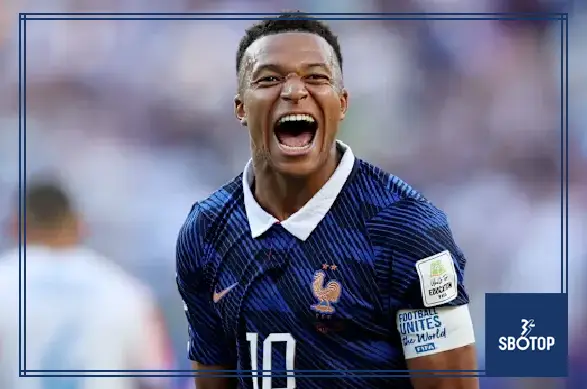
Didier Deschamps has once again shown why leadership in football is not only about tactics, formations, or substitutions. It is also about protecting players when the noise around them becomes personal, unfair, and unacceptable. After racist remarks from Paraguayan senator Celeste Amarilla were directed at Kylian Mbappe following France’s World Cup victory over Paraguay, Deschamps stepped forward to defend his captain and make clear that the forward remained mentally strong, focused, and ready for the next challenge.
For France, the controversy arrived at a sensitive point in their World Cup campaign. The team had advanced past Paraguay with a narrow 1-0 win in the round of 16, with Mbappe’s penalty proving decisive. Instead of the conversation focusing only on France’s progress, the aftermath was overshadowed by racist and xenophobic comments made by Amarilla, which sparked widespread condemnation from football authorities, public officials, and Mbappe’s own club, Real Madrid.
The incident placed Mbappe in an unwanted spotlight. As one of the world’s most recognizable athletes, he is used to pressure, criticism, and intense scrutiny. But there is a clear line between sporting debate and racist abuse. The remarks crossed that line, turning what should have been a football story into a larger conversation about racism, political responsibility, and the duty of the football world to protect players from hate.
Deschamps Protects His Captain
Deschamps’ response was calm but firm. He did not allow the controversy to grow into a distraction inside the French camp. Instead, he reassured supporters that Mbappe was doing well and remained in a good mental place before France’s quarter-final against Morocco. His message was simple: the outside noise had not broken his captain’s focus.
That matters because a World Cup dressing room is a delicate environment. Every player is dealing with pressure, fatigue, expectation, and the emotional weight of representing a nation. When a star player is targeted by racist comments, the issue can easily affect not only that individual but the atmosphere around the entire squad. Deschamps understood the need to address it quickly, clearly, and with authority.
By backing Mbappe publicly, Deschamps sent several messages at once. He told Mbappe that the team stood behind him. He told the rest of the squad that racism would not be ignored. He told France supporters that their captain remained ready. And he told the wider football world that such comments should never be normalized as part of rivalry or post-match emotion.
Mbappe’s Strength in the Spotlight
Mbappe’s career has been built under constant attention. Since his teenage years, he has been treated as a symbol of France’s football future. Every major tournament, every performance, every penalty, every interview, and every gesture is analyzed. Yet the burden of being a superstar is not only sporting. It also means becoming a target for those who use fame as an excuse to spread abuse.
The incident involving Amarilla was especially disturbing because it came from a political figure rather than an anonymous online account. That made the comments even more serious. Political representatives hold influence, and when public figures use language that dehumanizes or targets athletes based on race and identity, the damage goes beyond one player. It helps feed a broader culture of intolerance.
Mbappe’s response showed that he was not willing to let the comments pass without challenge. Reports said he condemned the remarks strongly, while the French Football Federation also reacted with outrage and indicated legal action would be pursued.
For a player in the middle of a World Cup campaign, speaking out carries its own pressure. Mbappe had to balance personal dignity with professional focus. He needed to defend himself without allowing the controversy to consume France’s preparation. Deschamps’ support helped make that balance easier.
Real Madrid’s Strong Statement of Support
Real Madrid also issued a public statement standing behind Mbappe, condemning the racist and xenophobic remarks and describing football and sport as platforms for equality and solidarity. The club’s statement framed the issue not only as a defense of their player, but as part of a wider rejection of hatred in society.
That support was important. A player of Mbappe’s stature represents multiple communities at once: his national team, his club, his supporters, and millions of young fans who see him as a role model. When abuse is directed at him, silence from major institutions would be damaging. Real Madrid’s response added weight to the condemnation and made clear that the issue could not be dismissed as ordinary post-match provocation.
Clubs have an important role in these moments. They cannot control every public comment made about their players, but they can control how strongly they respond. By supporting Mbappe, Real Madrid reinforced the idea that racism must be challenged at every level, whether it comes from the stands, social media, media commentary, or political circles.
France Must Stay Focused
The timing of the controversy created another challenge for France. Tournament football does not pause for emotional storms. France still had to prepare for Morocco, a quarter-final opponent with quality, confidence, and motivation. Deschamps had to protect Mbappe while also ensuring that the squad remained focused on the next match.
This is where Deschamps’ experience becomes valuable. He has managed France through huge finals, crushing defeats, injury problems, public debates, and dressing-room pressure. He understands that distractions are part of major tournaments. The task is not to pretend they do not exist, but to manage them without letting them control the team’s rhythm.
His comments about Mbappe’s condition were part of that management. He did not turn the press conference into a long emotional discussion. He did not allow uncertainty to grow. He offered reassurance, defended his player, and shifted attention back toward football. That is often the most effective response from a national-team coach.
Racism Has No Place in Football
The Mbappe incident is another reminder that racism remains a serious problem in football and around the sport. Abuse does not always come from stadium chants. It can appear online, in interviews, through political rhetoric, and in public statements that attempt to reduce players to stereotypes rather than human beings. The platform may change, but the harm remains the same.
Football often presents itself as a universal language, a game that brings people together across cultures and borders. At its best, that is true. A World Cup can unite strangers, celebrate diversity, and showcase athletes from every background. But the sport’s global reach also means that racist abuse can spread quickly and loudly.
That is why strong reactions matter. Condemnation is not symbolic noise when it is consistent and backed by action. It tells victims that they are not alone. It tells offenders that racism will be challenged. It tells younger fans that success does not make a person immune from hatred, but it also shows them that hatred can be confronted.
Deschamps’ Role as a Shield
A national team manager often acts as a shield for players. The public sees team selection and tactics, but behind the scenes, coaches must protect players from pressure that can damage concentration. Deschamps’ defense of Mbappe fits that responsibility perfectly.
Mbappe is France’s captain and most high-profile player. When he is targeted, the whole team feels the impact. Deschamps had to ensure the issue did not isolate him. By speaking publicly, he made the controversy a collective matter rather than leaving Mbappe alone to absorb the attention.
This is one reason players often value experienced coaches. In difficult moments, they need someone who understands not only football but people. Deschamps knows when to be firm, when to be brief, and when to remove uncertainty. His support gave Mbappe space to remain focused on his job: leading France on the pitch.
The Pressure of Being Mbappe
Being Kylian Mbappe means living with extraordinary expectations. Every World Cup match becomes part of a larger legacy. Every goal is compared with past icons. Every missed chance is magnified. Every public response is judged. Few players carry that level of attention.
The racist remarks from Amarilla added a different kind of burden. Sporting criticism can be part of football. Players accept that performances will be judged. But racist language attacks identity rather than performance. It is not analysis. It is not rivalry. It is not passion. It is abuse.
That distinction matters because athletes are often told to ignore everything and focus only on the game. But ignoring racism is not always possible or fair. Players should not have to silently absorb hatred to prove professionalism. Mbappe’s ability to respond, then continue preparing, showed emotional strength.
Deschamps’ role was to make sure that strength was recognized rather than taken for granted.
France’s Squad Unity Becomes Crucial
Moments like this can test a squad’s unity. A team can either allow external controversy to divide attention, or it can use the moment to become more connected. France’s response suggested the latter. Deschamps stood behind Mbappe, the player remained focused, and the group continued preparing for the next round.
Squad unity matters deeply in knockout football. Teams that go far in tournaments often have more than talent. They have shared purpose. They absorb setbacks together. They protect one another from unnecessary noise. They understand that every player’s emotional state affects the collective.
Mbappe may be the star, but France cannot win with one player alone. The team needs its midfielders, defenders, forwards, substitutes, medical staff, and coaching team all moving in the same direction. Protecting the captain is part of protecting the campaign.
Also Read: