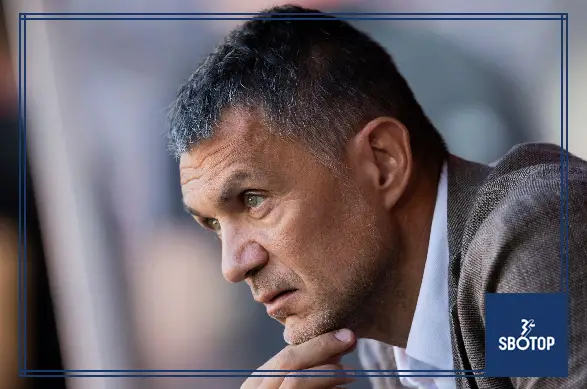
Italian football has been plunged into another period of uncertainty following Paolo Maldini’s resignation as technical director of the Italian Football Federation after only 16 days in the position.
Maldini’s departure would have been significant under any circumstances. He remains one of the most respected figures in Italian football history, having represented AC Milan and the national team with distinction across more than two decades. However, the timing and context of his resignation have made the situation especially damaging for the federation.
Maldini had been appointed on July 11, 2026, as part of an ambitious attempt to rebuild the Italian national-team structure after the country failed to qualify for a third consecutive World Cup. Leonardo, the former Brazil international and experienced sporting executive, joined the project as Maldini’s adviser. Both men have now resigned after the proposed appointment of Andrea Pirlo as Italy head coach collapsed.
The resignations have left the federation without the leadership team that had been expected to shape a long-term sporting recovery. They have also intensified questions about decision-making, internal authority and the future direction of the national team.
For Italian supporters, the latest crisis feels painfully familiar.
A country with four World Cup titles and one of football’s richest traditions is once again dealing with institutional instability rather than preparing confidently for its next competitive cycle.
A Rebuilding Project That Lasted Just 16 Days
Maldini’s appointment was supposed to represent a fresh beginning. Italy’s repeated failure to reach the World Cup had created enormous pressure for structural change. The national team had not appeared at the tournament since 2014, and its third successive qualification failure was widely viewed as evidence that Italian football required more than another short-term coaching change.
The federation therefore turned to Maldini.
His arrival carried symbolic and practical importance. Few individuals understand the expectations surrounding the Azzurri better than a former captain who earned 126 international appearances and participated in four World Cups.
Maldini also possessed executive experience from his time at AC Milan, where he played an important role in rebuilding the club’s sporting department and helping restore it to domestic prominence.
The intention appeared clear.
Italy wanted a respected football figure to provide direction, select the next head coach and develop a broader strategy capable of restoring the national team’s competitive identity.
Leonardo’s appointment as an adviser strengthened that impression. He had worked in senior football roles at AC Milan and Paris Saint-Germain and brought extensive knowledge of recruitment, management and international football.
Together, Maldini and Leonardo were expected to lead a project extending far beyond the appointment of one coach.
Instead, the partnership ended before it had an opportunity to begin meaningful work.
Pirlo Emerges as Maldini’s Preferred Candidate
The immediate cause of the crisis was the search for a new national-team head coach. Maldini and Leonardo initially explored the possibility of appointing a globally established manager. Pep Guardiola was contacted after leaving Manchester City, but he reportedly declined the opportunity because he wanted a break from football. Carlo Ancelotti was also approached, although his commitment to Brazil made an agreement impossible.
Attention then turned toward Andrea Pirlo.
Pirlo’s playing career made him an appealing candidate from a cultural and symbolic perspective. He was a central figure in Italy’s 2006 World Cup victory and remains closely associated with the technical intelligence, composure and tactical sophistication traditionally celebrated in Italian football.
His coaching career, however, had produced mixed results.
Pirlo managed Juventus during the 2020/21 season, winning the Coppa Italia and Supercoppa Italiana but failing to retain the Serie A title. He later worked at Fatih Karagümrük, Sampdoria and Dubai United.
Despite his uneven record, Maldini reportedly considered Pirlo the right figure to lead the next phase of Italy’s development. An agreement was believed to be close before controversy surrounding Pirlo’s commercial relationship with Russian betting company Fonbet disrupted the process.
The Controversy That Changed Everything
Pirlo’s connection to Fonbet quickly became the central issue.
He had served as an ambassador for the Russian betting company while coaching in Dubai. The relationship attracted political and regulatory attention because of Russia’s continued international isolation following the invasion of Ukraine and Italy’s restrictions concerning betting advertising.
What initially appeared to be a commercial arrangement developed into a major public controversy.
Federation president Giovanni Malagò reportedly became unwilling to approve Pirlo’s appointment because of the potential reputational and political consequences. Pirlo was subsequently removed from consideration despite Maldini and Leonardo having backed him for the role.
Pirlo defended himself publicly, insisting that his connection to the company had been commercial and sporting rather than political. He expressed disappointment that the situation had damaged his reputation and prevented him from being considered for a position he regarded as a major honour.
Nevertheless, the proposed appointment was abandoned.
That decision created an immediate conflict within the federation.
Maldini had apparently been given the authority to identify and select the next head coach. When his preferred candidate was rejected at the final stage, his position became difficult to sustain.
His resignation, followed by Leonardo’s, suggested that both men believed the sporting project no longer offered the independence they had expected.
A Serious Question of Authority
The most damaging aspect of the episode may not be the failure to appoint Pirlo.
Federations change coaching candidates frequently. New information can emerge, political concerns may develop, and negotiations can collapse.
The deeper problem is the apparent uncertainty over who possessed final decision-making power.
Maldini had been appointed to provide technical leadership. If he was authorized to choose the new coach, the federation should have established all necessary approval processes before negotiations reached an advanced stage.
Commercial relationships, legal concerns and reputational risks should have been investigated before Pirlo became the leading candidate.
Instead, the disagreement became public after an appointment appeared close.
That sequence made Maldini’s authority look limited and the federation’s internal structure appear disorganized.
Technical directors cannot function effectively if their decisions can be overturned without a clear and previously agreed process.
Equally, federation presidents cannot simply approve every sporting recommendation without considering legal, political and commercial consequences.
Successful organizations require clearly defined responsibilities.
The rapid collapse of Maldini’s project suggests that those responsibilities were not sufficiently understood.
Why Maldini’s Exit Matters So Much
Maldini is not merely another former player working in administration.
His name carries enormous influence throughout Italian football.
He spent his entire club career at AC Milan, won seven Serie A titles and lifted the European Cup or Champions League five times. He also captained Italy and became internationally respected for his consistency, professionalism and leadership.
His involvement gave the federation credibility at a time when trust was desperately needed.
Supporters who had become frustrated with repeated failures could view Maldini as someone whose decisions would be based on football knowledge rather than internal politics.
His departure after just over two weeks has therefore produced damage beyond the loss of one executive.
It risks reinforcing the belief that even highly respected football figures cannot introduce meaningful change within the existing structure.
That perception could make it more difficult for the federation to recruit Maldini’s replacement.
Any future technical director will want detailed assurances about authority, responsibilities and the limits of presidential intervention.
Leonardo’s Resignation Deepens the Leadership Vacuum
Leonardo’s simultaneous exit has made the situation even more serious.
Had Maldini resigned alone, the federation might have retained Leonardo to preserve continuity and continue the head-coach search.
Instead, both architects of the proposed rebuild have left.
Leonardo’s experience was expected to complement Maldini’s standing within Italian football. While Maldini brought deep knowledge of the domestic game and the national team, Leonardo contributed broader executive experience and an international network.
Their departure has removed the entire technical leadership group.
President Malagò must now identify both a new sporting structure and a new head coach while attempting to restore confidence in the federation’s decision-making.
The timing is particularly uncomfortable because international football offers limited preparation periods.
A club can gradually rebuild over multiple transfer windows. A national team has fewer training sessions, fewer matches and less time to introduce new tactical ideas.
Every week of uncertainty reduces the next coach’s opportunity to prepare.
Italy’s World Cup Failure Changed Everything
The crisis cannot be understood without considering Italy’s prolonged World Cup absence.
The Azzurri failed to qualify for the 2018 tournament after losing a playoff against Sweden. They then missed the 2022 World Cup following a shock playoff defeat by North Macedonia.
The third consecutive failure in the 2026 qualification cycle transformed disappointment into a national sporting emergency.
Italy had won the European Championship in 2021, demonstrating that the country still possessed enough talent to compete at the highest level.
However, tournament success did not solve underlying problems.
The national team continued to struggle for consistency, while concerns persisted over youth development, domestic opportunities for Italian players and the federation’s strategic direction.
Missing one World Cup can be treated as a painful accident.
Missing two suggests deeper weaknesses.
Missing three demands structural reform.
Maldini’s appointment was supposed to begin that reform.
His departure has returned the federation to the starting point.
The Failure of the Star-Name Strategy
Italy’s initial approach to the coaching search appeared focused on reputation.
Guardiola and Ancelotti were obvious candidates from a prestige perspective. Both possess extraordinary records and would have generated immediate excitement.
However, neither option was especially realistic.
Guardiola had only recently left Manchester City and reportedly wanted time away from management. Ancelotti was already committed to leading Brazil.
The pursuit of internationally famous coaches may have reflected ambition, but it also consumed valuable time.
National-team appointments require more than selecting the most celebrated available name.
The role demands tactical adaptability, comfort with limited training time, knowledge of the domestic player pool and an ability to manage the emotional pressure surrounding international football.
Pirlo offered a different profile.
He lacked the managerial achievements of Guardiola or Ancelotti but understood the Italian football environment and possessed a strong relationship with the national team’s history.
Maldini may have believed that Pirlo could develop into the role with support from an experienced technical department.
Once that option collapsed, however, the entire project appeared to lose direction.
Was Pirlo the Right Choice?
The controversy surrounding Pirlo’s commercial relationship should not prevent a separate assessment of his coaching credentials.
His playing intelligence is unquestionable.
As a midfielder, he controlled matches through positioning, vision and passing rather than speed or physical dominance. Such qualities often create the impression that a player will become an outstanding manager.
Football history shows that the transition is not always simple.
Pirlo’s season at Juventus produced trophies, but the team struggled for consistency and finished fourth in Serie A. His later coaching positions did not establish him as an obvious national-team candidate.
Selecting him would therefore have represented a significant gamble.
Supporters might reasonably question whether Italy, after missing three consecutive World Cups, needed a more experienced and proven coach.
However, the federation had appointed Maldini to make football decisions.
If officials disagreed with Pirlo on sporting grounds, that debate should have occurred internally before negotiations advanced.
The fact that the appointment collapsed primarily because of an external commercial controversy made the process appear reactive rather than strategic.
Pirlo’s Commercial Ties Required Earlier Examination
Modern football organizations must conduct extensive background checks before appointing senior figures.
These checks should include contractual commitments, sponsorship relationships, political exposure and potential conflicts with federation partners or regulations.
Pirlo’s association with Fonbet was not hidden.
It was publicly known and therefore should have been identified immediately.
The federation needed to determine whether the relationship created a legal barrier, a political problem or simply a reputational risk.
Had those questions been answered at the beginning, Maldini could have chosen whether to continue supporting Pirlo or focus on another candidate.
Allowing the process to reach an advanced stage before rejecting the appointment created avoidable embarrassment for everyone involved.
Pirlo felt his character had been questioned.
Maldini believed his authority had been undermined.
The federation lost both its preferred coach and its newly appointed technical leadership.
This was not merely an unfortunate outcome.
It was a failure of preparation.
Pressure Mounts on Giovanni Malagò
The crisis now belongs to federation president Giovanni Malagò.
He must explain how a restructuring project announced with optimism collapsed in 16 days.
He must also identify a credible new head coach, appoint new technical leadership and convince supporters that the federation still possesses a coherent plan.
Malagò’s reported refusal to approve Pirlo may ultimately have been defensible.
Federation presidents have a responsibility to protect their organizations from legal and reputational risk.
However, leadership is judged not only by the final decision but by the quality of the process leading to it.
If Maldini was promised independence, the limits of that independence should have been clear.
If presidential approval was always required, every candidate should have been fully reviewed before formal negotiations progressed.
The resignation of two senior figures indicates a breakdown in trust.
Restoring that trust will be more difficult than simply announcing another appointment.
Also Read: