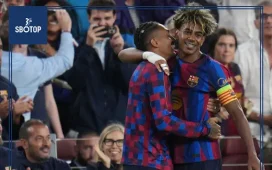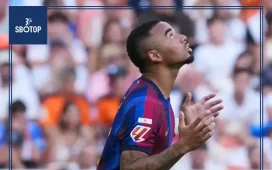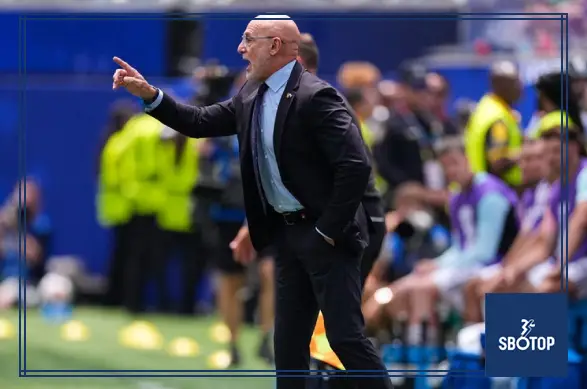
Spain’s unforgettable triumph at the 2026 FIFA World Cup was built on far more than a single winning goal. While Ferran Torres grabbed the headlines by scoring the decisive strike in extra time against Argentina, head coach Luis de la Fuente believes the real difference came from his team’s discipline, tactical intelligence, and collective effort.
La Roja defeated Argentina 1-0 after extra time at New York New Jersey Stadium on Monday, securing Spain’s second FIFA World Cup title. It was a hard-fought final that demanded patience, composure, and flawless execution against one of the tournament’s strongest teams led by Lionel Messi.
Following the historic victory, De la Fuente praised his players for their commitment and revealed the tactical approach that successfully neutralized Argentina’s legendary captain throughout the match.
Spain’s Team Performance Made the Difference
According to Luis de la Fuente, Spain’s success was the result of continuous improvement throughout the tournament rather than one outstanding performance.
The Spanish coach emphasized that every match helped his squad develop into a stronger and more complete team, allowing them to produce their best football when it mattered most.
Despite needing extra time to secure victory, De la Fuente felt Spain deserved to lift the trophy after controlling large portions of the final.
Speaking after the match, the 65-year-old manager praised his players’ resilience.
“We had a fantastic World Cup and learned from every match. We were the better team in the final. It’s unfortunate we couldn’t win earlier, but matches like these are never easy.”
For De la Fuente, victories earned through sacrifice always carry greater meaning than comfortable wins.
“Winning through sacrifice is always the most beautiful feeling.”
Possession Was the Key to Stopping Lionel Messi
One of Spain’s biggest tactical priorities was limiting Lionel Messi’s influence on the game.
Argentina’s captain entered the final hoping to guide his country to another World Cup title, but he rarely found the space needed to dictate the match.
Rather than assigning one defender to mark Messi throughout the game, Spain adopted a collective approach built around maintaining possession.
By controlling the ball for extended periods, Spain minimized Argentina’s attacking opportunities and forced Messi to spend long stretches chasing possession instead of creating chances.
De la Fuente explained the strategy after the match.
“We managed to keep him away from dangerous areas through our possession. We executed our plan extremely well, and the teamwork from every player was outstanding.”
The Spanish manager also described his team’s overall display in glowing terms.
“Our team play was simply sublime.”
Tactical Discipline Defined Spain’s Victory
Spain’s success was not based solely on technical quality.
Every player followed the tactical instructions with remarkable discipline from the opening whistle until the final moments of extra time.
Several elements proved crucial:
- Maintaining possession under pressure.
- Closing passing lanes toward Messi.
- Winning midfield battles consistently.
- Pressing collectively after losing possession.
- Remaining patient throughout the entire match.
Instead of allowing Argentina to dictate the rhythm, Spain imposed their own style and gradually wore down their opponents.
By the time Ferran Torres scored in the 106th minute, Spain had already established control over much of the contest.
A Squad Built Around Collective Strength
Throughout the tournament, Luis de la Fuente consistently emphasized teamwork over individual brilliance.
Although Spain featured several world-class players, the coach repeatedly highlighted the importance of collective responsibility.
Every player understood their role.
Every substitution contributed positively.
Every defensive action reflected months of preparation.
According to De la Fuente, this unity became Spain’s greatest competitive advantage.
He reserved special praise for the players after the final whistle.
“I have extraordinary, brilliant players—the best in the world. They make everything look easier and always give their maximum commitment.”
Rather than relying on a single superstar, Spain functioned as one complete unit.
The Difference Between Great Players and a Great Team
De la Fuente believes there is an important distinction between assembling talented footballers and creating a genuine championship-winning team.
His philosophy has focused on building chemistry, trust, and tactical discipline rather than individual recognition.
He summed up that belief perfectly after lifting the World Cup trophy.
“We have the best team, not simply the best collection of players. The attention to every detail has been extraordinary, and I couldn’t be prouder of my players.”
That mentality has defined Spain’s entire World Cup campaign.
Instead of depending on moments of individual magic, La Roja consistently overwhelmed opponents through organization, intelligent movement, and collective pressing.
Spain’s Tactical Evolution Throughout the Tournament
The World Cup was a journey of continuous growth for Spain.
Each knockout match presented a different tactical challenge, forcing the coaching staff to adapt while maintaining their football identity.
Several aspects of Spain’s evolution stood out:
- Greater defensive organization.
- Improved midfield control.
- More efficient transitions.
- Better squad rotation.
- Increased confidence under pressure.
By the time they reached the final, Spain had developed into arguably the tournament’s most balanced side.
Their victory over Argentina reflected months of preparation and years of work under De la Fuente’s leadership.
Lionel Messi Found Few Opportunities
Containing Lionel Messi is one of football’s most difficult challenges.
Even at the highest level, few teams have managed to limit his influence over an entire match.
Spain achieved that by refusing to chase him individually.
Instead, they focused on controlling possession, compressing space between the defensive and midfield lines, and preventing Argentina from building sustained attacks.
As a result, Messi was forced to operate far away from dangerous areas and rarely received the ball in positions where he could threaten Spain’s defense.
It was a tactical masterclass built on discipline rather than physical dominance.
Spain’s Second World Cup Is a Victory for Team Football
Spain’s 2026 FIFA World Cup triumph will be remembered not only for Ferran Torres’ dramatic winning goal but also for the tactical excellence displayed throughout the final. Luis de la Fuente’s side demonstrated that modern football is often decided by teamwork, discipline, and intelligent game management rather than individual brilliance alone.
By controlling possession, limiting Lionel Messi’s influence, and maintaining their tactical structure for 120 demanding minutes, Spain executed one of the finest performances of the tournament. Their second World Cup title was earned through preparation, sacrifice, and unwavering belief in a collective philosophy.
For Luis de la Fuente, this championship is more than another trophy—it is proof that football’s greatest achievements come from building the best team, not simply collecting the biggest stars. As Spain celebrates another historic World Cup success, their performance against Argentina will be remembered as a textbook example of how unity, discipline, and tactical excellence can conquer even the strongest opponents on the world’s biggest stage.
ALSO READ :
- SBOTOP : Argentina Stunned Again by a Super Sub as Ferran Torres Repeats Mario Götze’s World Cup Heroics
- SBOTOP : Manchester United Hit Hard as Two Stars Go Down at the End of World Cup 2026
- SBOTOP: Shocking Scenes! Leandro Paredes Appears to Grab and Push Spanish Player After Argentina’s World Cup Final Defeat