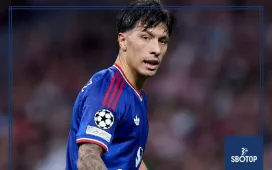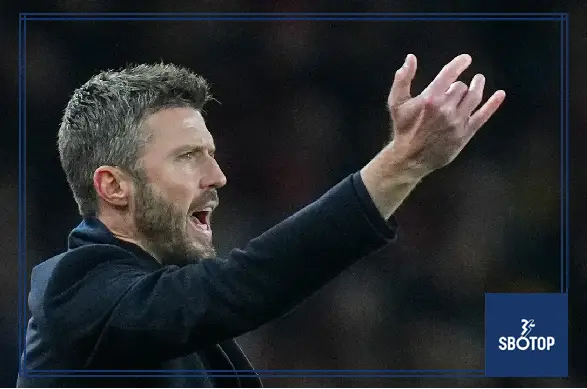
Michael Carrick has reportedly approved the departures of five Manchester United players as the head coach begins reshaping the squad for the 2026/27 season.
Casemiro, Rasmus Højlund, Jadon Sancho, Tyrell Malacia and André Onana are the five names linked with exits from Old Trafford. Some may already be close to securing new clubs, while others remain subject to negotiations over transfer fees, wages and contract conditions.
The decisions underline Carrick’s determination to build a squad that better reflects his preferred playing style. Having initially returned as head coach in January 2026, the former United midfielder earned a permanent contract running until 2028 after guiding the club through the remainder of the campaign. United officially confirmed his continuation in the role on May 22.
Carrick now has the opportunity to oversee a full summer of recruitment, preparation and tactical planning. That also means making difficult choices about established players who may no longer fit the direction of the team.
Reports claim that he has sanctioned the exits of Casemiro, Højlund, Sancho, Malacia and Onana as part of a broader squad overhaul. However, the situation surrounding each player is different, and an approved departure does not necessarily mean a transfer will be completed quickly.
United must find buyers, negotiate acceptable fees and, in several cases, address significant salary commitments. Even so, the message appears clear: Carrick is willing to make decisive changes rather than preserve the squad simply because certain players arrived for large transfer fees or possess major reputations.
Carrick Begins Building the Squad in His Image
Carrick’s permanent appointment changed the nature of United’s summer planning. When he initially took charge during the 2025/26 season, his immediate responsibility was to stabilise results and restore confidence. He inherited a squad assembled under previous managers and had limited opportunity to change the personnel available to him. The summer of 2026 is different. Michael Carrick can now work with the recruitment department to determine which players should remain, which positions require improvement and which members of the squad can be sold to create room for new arrivals.
United’s official profile of Carrick highlights his long association with the club. He made 464 appearances as a player, won five Premier League titles and lifted both the Champions League and Europa League. He later joined the coaching staff before managing Middlesbrough and eventually returning to Old Trafford.
That history gives Carrick a detailed understanding of the standards expected at Manchester United. It does not guarantee success as a coach, but it means he knows the difference between a squad capable of competing occasionally and one prepared to challenge consistently.
Moving on five senior players would be a significant step in establishing his authority.
The reported list includes players from different areas of the team: a goalkeeper, a full-back, a central midfielder, a winger and a striker. This suggests the proposed clear-out is not focused on one tactical problem. Instead, Carrick appears to be reviewing the entire structure of the squad.
Casemiro’s Departure Marks the End of an Era
Casemiro’s possible exit would be one of the most symbolic decisions. The Brazilian arrived from Real Madrid in 2022 with an extraordinary collection of honours and a reputation as one of the finest defensive midfielders of his generation. His leadership, aggression and ability to protect the back line initially gave United greater authority in the centre of the pitch.
He also contributed important goals and brought experience from numerous Champions League-winning campaigns.
However, age, physical decline and the demands of the Premier League gradually became increasingly important considerations. A midfielder in Carrick’s system must cover space, receive the ball under pressure and maintain intensity throughout matches.
Casemiro can still provide intelligence and experience, but United must decide whether his current level and wages fit their longer-term plans.
Carrick may want a younger midfield capable of pressing more consistently and recovering more quickly during transitions. United have already been linked with several midfield additions, reinforcing the impression that the position is being refreshed.
Allowing Casemiro to leave would also reduce the number of senior players carrying substantial salaries. That could provide greater flexibility when negotiating contracts with new signings.
Nevertheless, replacing his mentality should not be treated as a simple task.
Casemiro has spent much of his career competing for major trophies. Younger players can learn from his preparation and composure. If he departs, United will need other leaders to assume greater responsibility.
The decision therefore appears to be based on sporting direction rather than a denial of what the Brazilian has achieved.
Carrick may respect Casemiro’s career while concluding that the team needs a different profile in midfield.
Rasmus Højlund Could Seek a Fresh Start
Rasmus Højlund’s presence on the reported departure list is more surprising because of his age.
The Danish striker was signed as a long-term investment and arrived with the physical tools to develop into a leading Premier League forward. He possesses pace, strength and a willingness to run behind defensive lines.
At his best, Højlund can stretch opponents and provide a direct threat through the centre.
However, his United career has also contained long periods of inconsistency. Strikers at Old Trafford face enormous pressure, particularly when the team struggles to create regular chances.
Højlund has sometimes appeared isolated, receiving the ball with defenders close behind him and limited support nearby. His finishing and link-up play have also been questioned during less productive periods.
Carrick must decide whether those problems can be solved through improved coaching and a more functional attacking structure, or whether both club and player would benefit from a transfer.
United now possess significant competition in attack. Benjamin Šeško has emerged as a central option, while Matheus Cunha and Bryan Mbeumo offer flexibility across the forward line. Recent reporting has also placed Højlund among players whose futures could be affected by United’s evolving attacking depth.
If Højlund is no longer guaranteed meaningful minutes, leaving may be the best way to protect his development.
At his age, he needs regular matches. Spending a season as a secondary option could slow his progress and reduce his market value.
A move to Italy, Germany or another Premier League club might provide an environment with less pressure and a clearer starting role.
United, meanwhile, would seek to recover a substantial portion of their investment. That may complicate negotiations because buying clubs will know he is reportedly available.
Carrick’s willingness to sanction the departure suggests he does not want to retain players solely because the club previously spent heavily on them.
That would represent a more disciplined approach to squad management.
Jadon Sancho’s United Story Appears Close to Its Conclusion
Jadon Sancho’s future has been uncertain for several seasons.
The winger arrived from Borussia Dortmund with a reputation as one of Europe’s most creative young attackers. His Bundesliga numbers suggested he could provide goals, assists and technical quality on either side of United’s attack.
The move never developed as expected.
Sancho struggled to reproduce his Dortmund form consistently, and his relationship with previous management became a major issue. Loan spells provided temporary exits, but they did not create a stable long-term solution.
By 2026, both club and player appear to need finality.
Carrick could theoretically attempt to reintegrate Sancho. The winger still possesses close control, passing ability and intelligence in combination play.
However, rebuilding trust after such a prolonged period of uncertainty would be difficult. United have also recruited and developed other wide players, reducing the necessity of bringing Sancho back into the starting structure.
From a financial perspective, his wages are likely to complicate a permanent move. Clubs interested in signing him may not be willing to match his United salary while also paying a significant transfer fee.
United may therefore need to accept a reduced price, negotiate a wage contribution or consider another temporary arrangement.
A further loan would postpone rather than solve the problem, so a permanent sale would probably be preferred.
Carrick’s reported approval of Sancho’s exit signals that the club are ready to close this chapter.
Sancho’s failure at United cannot be attributed to one factor alone. Tactical instability, managerial changes, confidence and personal circumstances all played roles.
Yet elite clubs cannot preserve uncertainty indefinitely. Squad places and salary resources must be used on players who are clearly part of the plan.
A transfer could allow Sancho to rebuild his career in a more suitable environment, while United would finally gain clarity.
Tyrell Malacia Needs Regular Football
Tyrell Malacia’s situation is different from Sancho’s because injury has been one of the defining factors.
The Dutch left-back initially impressed through his energy, aggression and willingness to compete. He offered an alternative to Luke Shaw and appeared capable of becoming a reliable squad player.
A serious injury interrupted that progress.
Long periods away from competitive football made it difficult for Malacia to regain rhythm and establish a consistent place. By the time he returned, United’s squad structure and tactical requirements had changed.
Carrick must now evaluate whether Malacia can realistically play enough matches to justify remaining.
The club have other options at left-back and left wing-back, including Shaw, Patrick Dorgu and younger players seeking first-team opportunities. Harry Amass has also remained involved around the senior setup during United’s preseason planning.
For Malacia, another season with limited minutes would be unhelpful. At 26, he needs regular football to rebuild his physical confidence and re-establish his career.
A permanent transfer or loan could give him that opportunity.
His departure would not necessarily represent a judgment that he lacks quality. Instead, it may reflect timing, competition and the unfortunate effect of injuries.
Carrick must shape a balanced squad rather than retain multiple players for every position without a realistic route to the team.
If Dorgu and Shaw are ahead of Malacia, while Amass is viewed as a future option, moving the Dutchman on becomes understandable.
United will still need to manage negotiations carefully. Interested clubs may seek reassurance over his fitness record and could prefer a loan before committing to a permanent deal.
Malacia’s own preference will also matter. He may want a move where he is considered the first-choice left-back rather than another position in a rotation.
Also Read: