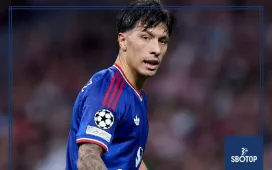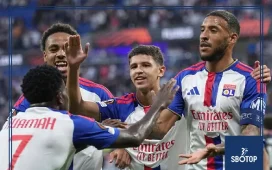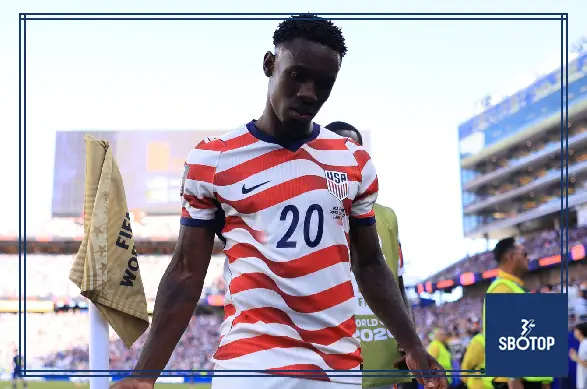
The United States needed a night that felt bigger than encouragement, bigger than promise, and bigger than another brave performance that ended with regret. Against Bosnia and Herzegovina in Santa Clara, they finally found it. A 2-0 victory in the round of 32 sent the co-hosts into the last 16 of the 2026 World Cup, ending a 24-year wait for a knockout-stage win and giving Mauricio Pochettino’s side a defining moment in front of a fiercely partisan crowd. Reuters reported that the win also ended a run of 10 straight U.S. defeats against European opposition and set up a round-of-16 meeting with Belgium in Seattle.
This was not a comfortable procession. It had drama, controversy, tension, and the kind of emotional swing that can shape a tournament identity. Folarin Balogun scored near the end of the first half, then was sent off after the break following a VAR review. With the U.S. down to 10 men and Bosnia searching for a route back, Malik Tillman stepped up with a brilliant late free kick to seal the match and send the home support into celebration.
For the United States, the result was about more than survival. It was proof of competitive maturity. They did not crumble after the red card. They did not retreat into panic. They defended, suffered, reorganized, and then scored again. On a night that could have turned into another painful World Cup lesson, they instead produced one of the most meaningful wins in modern USMNT history.
A Night of Red White and Blue in Santa Clara
The setting mattered. The match was played at San Francisco Bay Area Stadium in Santa Clara, where U.S. Soccer listed the attendance at 68,827. The venue was described as bathed in red, white and blue, and Reuters noted that the match began amid patriotic energy, including a fighter-jet flyover and loud chants from the American crowd.
That atmosphere fed the U.S. early. Pochettino’s team started with attacking intent, moving the ball quickly and trying to overwhelm Bosnia before the game could settle into a slower rhythm. Christian Pulisic returned to the starting lineup and immediately gave the crowd a lift with direct running and aggressive movement, while Balogun looked dangerous every time the Americans found space behind the Bosnian defensive line. Reuters described the U.S. opening as full of speed, grit, intensity, and one-touch attacking moves.
Bosnia, playing their first-ever World Cup knockout match, were more cautious. They defended compactly, looked for long balls toward Edin Dzeko, and tried to frustrate the hosts rather than trade attacks. Dzeko forced an early save from Matt Freese, but Bosnia struggled to generate sustained pressure and spent long stretches trying to close gaps rather than create them.
The match had the feeling of a test from the beginning. The U.S. had the energy and the crowd. Bosnia had discipline and experience. The first goal was always going to reshape the night.
Balogun Breaks the Game Open
Balogun had already been a problem before he scored. His movement forced Bosnia’s defenders to constantly check over their shoulders, and he came close several times before finally finding the breakthrough. The goal arrived in the 45th minute, just before halftime, when he pounced on a loose ball and finished to put the United States ahead. U.S. Soccer’s official scoring summary listed Balogun as the opening scorer in the 45th minute, while Sky Sports described the goal as coming after a defensive error from Stjepan Radeljic.
The timing could not have been better for the hosts. Bosnia had spent most of the first half absorbing pressure, and reaching the interval scoreless would have given them a psychological boost. Instead, Balogun’s goal transformed the stadium. The U.S. entered halftime with belief, control, and the sense that their long knockout drought might finally be ending.
The goal also strengthened Balogun’s individual tournament story. U.S. Soccer noted that he matched Landon Donovan for the second-most USMNT goals in a single FIFA World Cup. That is a major milestone for a striker still building his legacy in the national team shirt.
At halftime, Balogun looked like the hero. Less than 20 minutes after the restart, the narrative changed dramatically.
The Red Card That Changed Everything
The match threatened to boil over in the second half when Balogun challenged Tarik Muharemovic while chasing a loose ball. At first, play continued and there appeared to be no immediate punishment. VAR then instructed the referee to review the incident, and after looking at the pitch-side monitor, the referee produced a straight red card. Sky Sports reported that Balogun’s studs came down Muharemovic’s leg and caught the defender’s ankle, while U.S. Soccer placed the sending-off in the 64th minute.
The decision split opinion. Pochettino said the foul was not intentional, and Reuters reported that Balogun appeared stunned by the dismissal. But whatever the debate around intent, the consequence was immediate: the U.S. had to protect a one-goal lead with 10 men for the remainder of regulation and stoppage time.
This was the moment that defined the match. A less composed team might have collapsed into defensive chaos. A less mature side might have lost shape, invited constant pressure, and allowed Bosnia back into the tie. Instead, the United States reorganized quickly. The midfield tightened. The back line stayed focused. Pulisic and the remaining attackers adjusted their pressing. Every duel suddenly mattered more.
Pulisic later said the team felt they had performed well and did not deserve the red card, but he emphasized the pride in how they defended and fought after going a man down. Reuters quoted him saying the response required a real team effort.
Tillman Turns Pressure Into History
With the U.S. under pressure and Bosnia trying to force the issue, Malik Tillman produced the moment that settled the match. In the 82nd minute, he curled a direct free kick over the wall and beyond goalkeeper Nikola Vasilj to make it 2-0. U.S. Soccer listed Tillman’s goal in the 82nd minute, and Sky Sports described the strike as going up and over the wall before beating the goalkeeper’s outstretched hands.
The goal was more than beautiful. It was perfectly timed. Bosnia had been given hope by Balogun’s red card. Tillman took that hope away with one strike. Instead of spending the final minutes desperately protecting a narrow lead, the United States had breathing space and belief.
The Guardian highlighted the drama around Tillman’s night, reporting that he had played on with a ripped boot and blood-stained sock after being stomped by an opponent. During a hydration break, he changed only his damaged right boot, then later used that same foot to score the free kick that sealed the game.
The goal also entered USMNT World Cup history. The Guardian reported that Tillman became just the second U.S. player to score directly from a free kick at a World Cup, following Eric Wynalda in 1994. For a player who had once fought to establish himself as a regular national-team option, this was a career-defining moment.
Pochettino’s Team Shows Real Tournament Steel
Pochettino’s influence was visible in the way the U.S. handled adversity. The team had already shown attacking promise in the group stage, but knockout football demands something deeper. It demands emotional control. It demands tactical discipline when the match turns against you. Against Bosnia, the United States delivered both.
U.S. Soccer noted that the USMNT played with 10 men for around 36 minutes of regulation and stoppage time, yet still doubled their lead and kept Bosnia scoreless. The clean sheet was the team’s second in four matches at the tournament, and the win made Pochettino the winningest USMNT manager in FIFA World Cup play with three victories.
After the match, Pochettino praised the players as heroes and said they showed the capacity to compete and fight for each other. That reaction was understandable. This was the kind of win that builds trust inside a squad. It was not based only on attacking rhythm or home support. It was based on resilience under pressure.
For the United States, this matters because the next round will be even more difficult. Belgium will punish lapses more ruthlessly than Bosnia. But if the U.S. needed proof that they can suffer together, this was it.
Bosnia Exit With Pride but Few Chances
Bosnia’s tournament ended with frustration, but not embarrassment. Reaching a first World Cup knockout match was already a major achievement, and coach Sergej Barbarez said his players should hold their heads high while continuing to build from the experience.
Still, Bosnia will regret how little they created after the red card. A team facing 10 men for more than half an hour must ask more questions than Bosnia managed. Sky Sports reported that Bosnia finished with only 0.29 expected goals, which underlined how well the U.S. defended and how limited Bosnia’s attacking threat became.
Dzeko’s early effort was one of their few genuinely dangerous moments. After that, Bosnia found it difficult to turn possession into pressure. Their long-ball approach did not unsettle the American defence often enough, and their attempts to crowd out U.S. attacks left them short of creativity when chasing the game.
For Bosnia, the lesson is clear. They showed defensive discipline and tournament toughness, but at this level, survival alone is not enough. When the game opened for them after Balogun’s red card, they lacked the attacking clarity to take advantage.
A Historic Win for the USMNT
The numbers give the victory historical weight. U.S. Soccer called it the USMNT’s first World Cup knockout-stage win since 2002 and only the second knockout win in program history. Reuters also framed the result as ending a 24-year wait for a knockout-stage victory.
That context matters because American men’s soccer has lived for years with the tension between potential and proof. The country has produced better players, built deeper squads, and increased expectations, but knockout success remained elusive. This win does not solve everything, but it changes the tone of the tournament.
It also makes the home World Cup feel alive in a new way. Hosting a tournament creates pressure. Winning a knockout game transforms that pressure into momentum. The United States are no longer simply trying to avoid disappointment. They are now chasing a run that could reshape the way this team is remembered.
The group-stage foundation was already strong. U.S. Soccer reported that the Americans finished first in Group D after collecting six points and scoring eight goals, their best group-stage scoring and points totals in World Cup history. The Bosnia win turned that platform into real knockout progress.
Belgium Await After Their Own Escape
The reward for beating Bosnia is a round-of-16 clash with Belgium in Seattle on July 6. Belgium arrive after a dramatic 3-2 comeback win over Senegal, having trailed 2-0 before turning the match around late and winning after extra time. Reuters reported that Timothy Castagne admitted Belgium must improve and cannot keep relying on late miracles if they want to go further.
That sets up a fascinating contrast. The U.S. are coming off a gritty, emotional win built on resilience after going down to 10 men. Belgium are coming off a chaotic escape that exposed flaws but also showed their ability to survive. Both teams arrive with confidence, but also with questions.
Belgium have elite experience and technical quality. Youri Tielemans scored an 89th-minute equalizer and then converted the winning penalty in the 125th minute against Senegal, while Jeremy Doku returned to training after being substituted in that match. Reuters also reported that Kevin De Bruyne did not join Thursday’s training session, and that several key Belgian players were given recovery time.
For the U.S., the biggest issue is Balogun’s suspension. Sky Sports made clear that the striker will miss the Belgium clash after his red card. That creates a major tactical question for Pochettino: how does he replace his most dangerous finisher in the biggest match of the tournament so far?
Also Read: