Argentina awoke to disappointment after Spain ended La Albiceleste’s hopes of winning consecutive World Cups, yet the reaction across the country’s front pages was marked by gratitude rather than fury.
Lionel Scaloni’s team lost the 2026 final 1-0 after extra time at New York New Jersey Stadium. Ferran Torres scored the only goal in the 106th minute, rewarding Spain for a performance in which they controlled possession, created almost every meaningful chance and prevented Lionel Messi from influencing what may have been his final appearance at the tournament.
Judged purely as a football match, Argentina were second best. They spent long periods defending close to their own penalty area, failed to register an attempt during normal time and relied heavily on Emiliano Martínez to keep the score level. Enzo Fernández’s dismissal in stoppage time made an already difficult assignment even harder before Spain finally broke through.
Instead of responding with hostility, the dominant message from the Argentine media was one of protection.
Clarín, La Nación and Olé acknowledged the pain and the disappointing nature of the performance, but they refused to treat the defeated finalists as failures. Their front pages placed Messi’s tears at the centre of the story and presented the squad’s journey as a source of national pride. The defeat ended a dream, but it did not erase four years of success or the emotional connection between the team and its supporters.
Front Pages Choose Pride Over Punishment
The morning after the final produced a striking contrast between the evidence of the match and the tone of the Argentine coverage.
Spain had dominated. Argentina survived until extra time because Martínez repeatedly stopped shots and the defensive line absorbed pressure. Messi received the ball far from goal, Julián Álvarez became isolated, and the midfield struggled to escape Spain’s pressing structure. La Albiceleste were competitive in spirit but rarely competitive in possession or attacking ambition.
Nevertheless, Clarín selected a photograph of a tearful Messi and declared that the players had given everything, adding that there was nothing for which they should be blamed. La Nación followed a similar emotional direction, describing the team as a source of pride after giving all it had. Olé chose an even more affectionate message, asking that this generation “be eternal.”
Scaloni’s side entered the final as reigning world champions. Their achievements since 2021 had already transformed the national mood: Copa América titles, the 2022 World Cup and a restored bond between Messi and the public. Losing one final, even after an uninspiring performance, was not considered sufficient reason to dismantle that legacy.
Messi’s Tears Become the Defining Image
Lionel Messi’s expression after the final whistle shaped almost every account of the defeat.
The Argentina captain received his runners-up medal with tears running down his face before turning toward the supporters who had remained in the stadium. Spain’s players celebrated nearby, while Messi stood in front of the blue-and-white section and absorbed what appeared to be the closing scene of his World Cup career.
For Argentine newspapers, that image was more powerful than any tactical diagram or statistical comparison. It represented the end of a dream, the vulnerability of the country’s greatest sporting figure and the possible conclusion of an international era.
Messi had previously experienced a painful World Cup final defeat in 2014, when Germany scored in extra time. The difference in 2026 was that his relationship with the national team had already been repaired by triumph. He was no longer the superstar accused of failing to reproduce his club form for Argentina. He was the captain who had delivered the trophy in Qatar and returned four years later to help the country reach another final at the age of 39.
That history changed the tone of the reaction. The press did not demand that Messi explain why he had failed to produce one final act of magic. Instead, it treated his disappointment as a shared national emotion.
Olé focused not only on Messi’s tears but also on Scaloni’s visible distress and uncertainty surrounding the coach’s future. Its coverage framed the final as the possible ending of a successful cycle rather than a humiliation requiring punishment.
A Dismal Display That Could Not Be Ignored
Sympathy did not alter the basic truth: Argentina’s performance was deeply disappointing.
Spain imposed their style from the beginning. Rodri controlled central midfield, the full-backs advanced aggressively, and La Roja recovered possession quickly whenever Argentina attempted to counterattack. Messi and Álvarez had almost no service, while Rodrigo De Paul, Alexis Mac Allister and Fernández spent most of the match protecting the defence.
Argentina became only the second team since detailed records began to complete the first half of a men’s World Cup final without an attempt. Spain eventually reached extra time with 19 shots to Argentina’s zero.
Scaloni reinforced the defence as the contest continued. Leandro Paredes replaced Nicolás González at half-time, reducing Argentina’s direct threat. Later, after Fernández was sent off, defender Marcos Senesi entered for Álvarez. Messi was left almost alone in attack as the team attempted to protect the draw.
Argentina finally moved forward with urgency after falling behind, but it was too late. Their best opportunity came from a Messi corner that Giuliano Simeone sent over the crossbar. The final whistle confirmed a defeat that had been narrow on the scoreboard and comprehensive in the pattern of play.
Martínez Emerges With His Reputation Enhanced
While much of the Argentine attack disappeared, Martínez produced a performance worthy of the occasion.
The goalkeeper made 12 saves, a record for a men’s World Cup final, and repeatedly prevented Spain from converting territorial dominance into a comfortable victory. Without him, the discussion in Argentina might have been far less forgiving.
Martínez’s resistance gave the team hope even when almost nothing was working ahead of him. He denied Spanish efforts in normal time, commanded his penalty area and maintained his concentration while the pressure increased.
His display also reinforced why Argentina appeared willing to gamble on penalties. Reaching a shootout with Martínez in goal would have transformed a one-sided match into a situation in which the defending champions might have felt favoured.
Torres’ finish eventually defeated him from close range, but the goalkeeper could hardly be blamed. He had already done enough to give his teammates an opportunity they were unable to use.
Enzo Fernández and Paredes Draw Harder Questions
The sympathetic response did not mean every individual escaped criticism.
Fernández’s red card was a major turning point. Already booked, the midfielder committed another offence during stoppage time and left Argentina facing extra time with 10 players. His dismissal placed even greater strain on an exhausted defence and removed one of the few players capable of progressing the ball through midfield.
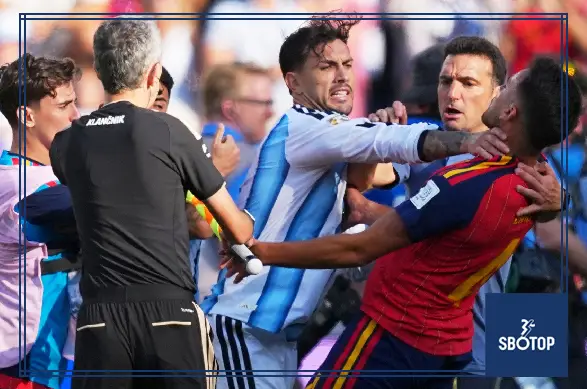
Paredes also attracted criticism for his aggression. He received a booking shortly after entering and was involved in a confrontation after the final whistle. Former England defender Gary Neville described his recent conduct in extremely negative terms while commentating on the match.
Those incidents complicated Argentina’s attempt to present the defeat solely as a noble struggle. Competitive intensity has long been celebrated within the national team, but discipline matters when a World Cup is being decided.
The distinction is important. Argentine newspapers largely defended the group’s character and legacy, yet supporters can still question whether emotional control deserted certain players at decisive moments.
Buenos Aires Responds With Sorrow and Defiance
The supportive newspaper coverage reflected the mood on the streets.
Buenos Aires did not erupt in the extraordinary celebration witnessed after the 2022 triumph, but thousands still travelled to the Obelisk after the final. Fireworks were released, flags were waved and supporters gathered to recognise the team’s journey despite the result.
Some fans admitted Spain had been clearly superior. Others took consolation from Argentina’s run to the final and the semi-final victory over England, a match carrying considerable sporting and historical symbolism.
At the Obelisk, supporters spoke about pride, resilience and Messi’s legacy. One fan admitted the team had been disorganised but argued that reaching extra time demonstrated courage. Another celebrated simply because Argentina had made the final.
The gathering was much smaller than the vast crowds that flooded central Buenos Aires after the 2022 victory, but its symbolism was still significant. Supporters were not celebrating defeat. They were honouring a team that had once again taken them to the final weekend of the World Cup.
The Weight of the Scaloni Era
The protection offered to Argentina’s players is inseparable from Scaloni’s achievements.
When he first took charge, he was viewed by many as an interim figure without the experience required to manage one of international football’s most demanding teams. He gradually created a balanced side, reduced the emotional burden on Messi and built a squad whose identity depended on solidarity.
The results were historic. Argentina ended a long trophy drought, reclaimed continental supremacy and won the World Cup in 2022. The players developed a powerful connection with supporters, presenting themselves not as distant celebrities but as representatives of a shared national cause.
That relationship survived the defeat to Spain.
A different Argentina generation might have been met with accusations of cowardice, tactical failure or betrayal. Scaloni’s group had accumulated enough emotional credit to receive understanding instead.
This does not mean the project can remain unchanged. Several senior players are approaching the end of their international careers, and the coach’s own future became a subject of discussion immediately after the final. Argentina must introduce younger players, develop alternatives to Messi and create a more progressive attacking structure.
But the newspapers’ message was clear: renewal should begin with respect, not rejection.
Messi’s Legacy Is Beyond the Result
Whether the final proves to be Messi’s last appearance for Argentina or only his last World Cup match, his place in the country’s history is secure.
The defeat prevented him from joining the small group of captains to win consecutive World Cups. It also denied him the cinematic ending many supporters imagined. Yet his international career no longer depends on perfection.
Messi had already lifted the Copa América, the Finalissima and the World Cup. He had become Argentina’s record scorer and appearance holder, while producing countless moments that connected different generations of supporters.
Spain’s defensive organisation silenced him in the final, but one quiet match cannot reverse that contribution. The 39-year-old struggled to receive possession in dangerous positions as Spain controlled the ball and surrounded him whenever Argentina attempted to attack.
The Argentine press understood this instinctively. By placing his tears on the front pages, newspapers did not portray Messi as the symbol of failure. They portrayed him as the emotional centre of the country’s disappointment.
The message was not that he had let Argentina down. It was that Argentina hurt because he hurt.
Also Read: