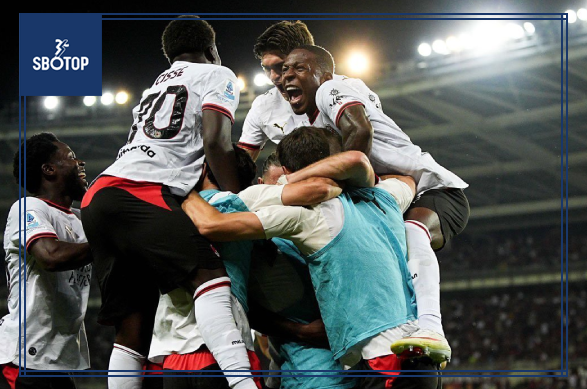
AC Milan have made a winning start to the 2026/2027 Serie A season, defeating Torino 2-1 at the Stadio Olimpico Grande Torino in the early hours of Monday, August 24, 2026.
The Rossoneri produced a decisive spell shortly after halftime, scoring twice within just three minutes through Alphadjo Cisse and Adrien Rabiot. Although Torino managed to pull a goal back and put Milan under significant pressure late in the match, Ruben Amorim’s side ultimately held on to secure all three points.
However, the final scoreline was not the only talking point from Milan’s opening Serie A fixture.
The performance at Torino also provided an early glimpse into the new identity Ruben Amorim is attempting to establish at AC Milan. Compared with the approach seen under previous coach Massimiliano Allegri, the Rossoneri appeared more willing to take the initiative, press forward and create attacking opportunities rather than simply waiting for their opponents to make mistakes.
According to La Gazzetta dello Sport, Milan have become noticeably more proactive and aggressive under Amorim.
Rather than relying solely on defensive organisation and patiently waiting for an opening, Milan are now attempting to manufacture those opportunities themselves. That change could become one of the most important foundations of Amorim’s project at San Siro.
Although the team still showed some weaknesses after taking a 2-0 lead, there were enough positive signs to suggest that Milan’s new tactical direction is beginning to take shape.
AC Milan No Longer Content to Sit and Wait
During Massimiliano Allegri‘s tenure, AC Milan were often associated with a more cautious and reactive approach.
The team could remain patient for long periods, waiting for the right moment or for an opponent to leave space before attempting to launch an attack. It was a strategy built around discipline, patience and exploiting opportunities when they appeared.
Amorim appears to be taking Milan in a different direction.
Against Torino, the Rossoneri were more determined to control the game and actively create situations that could lead to goals. Instead of simply waiting for Torino to make mistakes, Milan consistently attempted to move the opposition’s defensive structure and find spaces themselves.
Interestingly, both teams lined up in a similar 3-4-2-1 formation, but the way they used the system was noticeably different.
Torino initially attempted to play with a more open structure. However, as Milan began to assert control, the home side gradually dropped deeper and adopted something closer to a 5-4-1 formation in an effort to limit the Rossoneri’s attacking threat.
That change allowed Milan to dominate more of the possession and territory.
Chukwueze Provides a Major Threat
One of Milan’s biggest attacking outlets during the first half was Samuel Chukwueze.
Operating from the right side, the Nigerian winger repeatedly caused problems for Torino’s defensive line with his pace, movement and ability to attack defenders directly.
Torino struggled to consistently contain Chukwueze, particularly when he received the ball in advanced areas and attempted to exploit space behind their defensive structure.
His performance was another indication of the more aggressive attacking football Amorim wants to implement.
Rather than keeping their attacking players in rigid positions, Milan frequently looked to move the ball quickly and create numerical or positional advantages in dangerous areas.
However, the Rossoneri still had problems turning their territorial dominance into clear-cut chances during the opening 45 minutes.
Goncalo Ramos Still Needs to Find His Striker Instinct
Another interesting aspect of Milan’s performance was the role of Goncalo Ramos.
The Portuguese forward frequently dropped deeper to participate in the build-up, meaning he sometimes operated more like an attacking playmaker than a traditional centre-forward.
There are obvious benefits to that approach.
Ramos is technically capable of linking play and contributing outside the penalty area, qualities he developed further during his time at Paris Saint-Germain. His movement can create additional space for teammates to attack.
However, Amorim will still want to see more of Ramos’ natural instincts as a striker.
That will be particularly important given the circumstances surrounding his arrival. Ramos joined Milan as the most expensive player in the club’s history, meaning expectations surrounding his goalscoring contribution are understandably high.
Dropping deep and helping construct attacks is valuable, but Milan will ultimately need Ramos to become a consistent threat inside the penalty area.
Milan’s Biggest Concern Came After Going 2-0 Up
Despite the encouraging signs, the match also highlighted an important weakness that Amorim will need to address.
Milan’s biggest problems emerged after they established a 2-0 advantage.
Instead of continuing to play with the same intensity and attacking ambition, the Rossoneri gradually became deeper and allowed Torino to take control of the final stages of the match.
The home side responded by increasing the pressure and creating several opportunities.
For approximately the final 20 minutes, Milan were forced to spend much more time defending than Amorim would have wanted. Torino even created situations that could have resulted in an equaliser.
It was a warning for the new Milan boss.
Taking a two-goal lead should allow a team to manage the match intelligently, but dropping too deep can also invite unnecessary pressure. Amorim will therefore need to find the right balance between protecting a lead and continuing to control the game through possession and aggressive positioning.
Amorim Points to Fitness as One Explanation
Speaking at his post-match press conference, Ruben Amorim offered an explanation for Milan’s drop in intensity during the closing stages.
The Portuguese coach suggested that his players are not yet at 100 percent physically, which has affected their ability to maintain the same level of performance consistently throughout a match.
This is understandable at the beginning of a new season, particularly for a squad adapting to a new tactical system and new demands from its coach.
Amorim’s philosophy requires considerable intensity, movement and tactical discipline. Players must be able to execute pressing patterns, transition quickly and maintain their positioning for long periods.
As the squad’s fitness improves, Milan should theoretically become better equipped to maintain their aggressive style for the full 90 minutes.
A Promising First Step for Ruben Amorim
The victory over Torino was far from perfect, but it provided several encouraging signs for Ruben Amorim and AC Milan.
The Rossoneri showed a greater willingness to take control of the match, attack space and create opportunities rather than simply waiting for mistakes from their opponents.
Samuel Chukwueze demonstrated his attacking value, while the midfield and defensive structure showed signs of adapting to Amorim’s system.
At the same time, there are still areas that require improvement.
Milan must become more clinical in front of goal, Goncalo Ramos needs to rediscover his goalscoring instincts, and the team must learn how to maintain control after taking the lead.
Most importantly, Amorim needs his players to reach peak physical condition so they can sustain his demanding tactical approach throughout an entire match.
For now, however, the direction appears positive.
Ruben Amorim’s AC Milan are beginning to develop a new identity—more proactive, more aggressive and more willing to take control of their own destiny on the pitch. The 2-1 victory over Torino may only be the first step, but it has offered an intriguing preview of what the Rossoneri could become under their new manager.
ALSO READ :