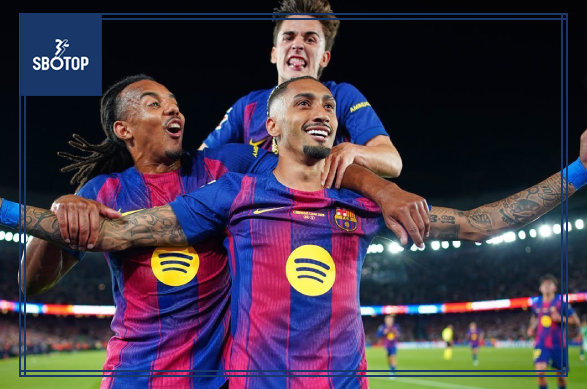
Three years after officially taking charge as Barcelona’s sporting director, Deco has reached a crucial stage in his journey at Camp Nou. His tenure has certainly been accompanied by controversial decisions, transfer debates and financial challenges, but the latest developments suggest that the way his work is being evaluated is beginning to change.
When Deco first stepped into the role, much of the attention surrounding Barcelona’s sporting department focused on transfer spending, squad planning and the club’s complicated financial situation. Some of his decisions quickly came under scrutiny, with the signing of Vitor Roque becoming one of the clearest examples.
Barcelona invested heavily in the Brazilian forward, but his contribution to the first team failed to match the expectations created by the size of the transfer. The situation raised questions about Barcelona’s recruitment strategy and whether the club was making the right decisions in the transfer market.
However, the picture has gradually become more positive heading into 2026.
Barcelona now appear to have a more defined sporting direction. The appointment of Hansi Flick, the gradual improvement of the squad and a greater willingness to sell players at the right moment have all contributed to a different perception of Deco’s work.
It would be premature to describe his three-year tenure as an unquestionable success. Nevertheless, the evolution of Barcelona over this period suggests that Deco’s approach is becoming more structured and increasingly aligned with the club’s long-term objectives.
Rather than being judged solely by individual transfers, his work is now being assessed through the broader development of the squad and the sporting identity Barcelona are attempting to establish.
Hansi Flick Appointment Proves Crucial
One of the most significant decisions of Deco’s tenure came in 2024, when Barcelona appointed Hansi Flick as head coach.
The decision was not universally welcomed at first. Flick had enjoyed tremendous success with Bayern Munich but his spell as Germany head coach had raised questions about whether he was the right person to manage Barcelona.
Deco, however, believed Flick’s tactical philosophy could complement Barcelona’s squad, particularly the club’s emerging generation of young talents.
That decision has subsequently produced significant results.
Flick managed to create an environment where young players could develop alongside experienced members of the squad. Rather than relying exclusively on established stars, Barcelona increasingly gave opportunities to emerging talents while maintaining a competitive structure around them.
By 2026, Flick had reportedly guided Barcelona to five trophies, strengthening the argument that his appointment was one of the most successful decisions made during Deco’s time as sporting director.
More importantly, Flick helped establish a clearer identity for the team.
Barcelona became more aggressive, energetic and tactically flexible, while several young players were given the platform to become important first-team figures.
For Deco, finding a coach capable of combining results with youth development has arguably been one of the most important achievements of his tenure.
Barcelona’s Transfer Strategy Is Becoming More Structured
Another major change can be seen in Barcelona’s approach to the transfer market.
The club has increasingly attempted to recruit players according to specific sporting needs rather than simply pursuing high-profile names. Anthony Gordon, Karim Adeyemi and Jesse Bisiwu have been mentioned as additions designed to strengthen different areas of the squad, while Rodri has emerged as an ambitious target for the midfield.
The potential recruitment of such players reflects a broader strategy in which Barcelona are attempting to build a squad suited to their tactical requirements.
Gordon could provide additional pace and creativity, Adeyemi offers versatility and attacking explosiveness, while Rodri would potentially bring experience, defensive stability and control to the midfield.
However, recruitment is only one part of Deco’s responsibilities.
Barcelona have also become more willing to sell players when the timing is considered appropriate. This represents an important shift for a club that has previously struggled to maximize the value of its squad assets.
Ferran Torres Transfer Highlights New Approach
The departure of Ferran Torres is one of the clearest examples of Barcelona’s changing transfer strategy.
The Spanish forward was reportedly sold for around €50 million, a figure that provided Barcelona with both a significant transfer income and greater flexibility within their wage structure.
From a financial perspective, such deals can be just as important as new signings.
Barcelona have been forced to operate under considerable financial restrictions in recent years, making it essential for the club to generate revenue through player sales while maintaining a competitive squad.
The departures of Ansu Fati for around €11 million and Jofre Torrents for a reported €6 million including variables also formed part of this wider strategy.
Other exits, including those of Inaki Pena and Aron Yaakobishvili, further demonstrated Barcelona’s willingness to make difficult decisions regarding players who no longer fit into the club’s long-term plans.
This approach gives Deco more room to reshape the squad while simultaneously helping the club manage its financial obligations.
Recruitment Must Continue to Match Flick’s Football
Barcelona’s recruitment strategy now appears increasingly connected to Hansi Flick’s tactical demands.
That alignment could prove essential for the club’s continued progress.
Gordon would bring speed and directness to the attack, while Adeyemi could provide flexibility across the frontline. A potential move for Rodri would represent an even bigger statement, as the midfielder could significantly improve Barcelona’s control and balance in the middle of the pitch.
The objective is not simply to sign talented players. Deco must identify footballers who can contribute to the specific style Barcelona are trying to develop under Flick.
That is a considerable responsibility, particularly because Barcelona remain one of the biggest clubs in world football and every major transfer decision receives enormous scrutiny.
Deco Still Has Plenty of Work Ahead
Despite the progress made, Deco cannot afford to become complacent.
Barcelona still face several important squad-building challenges, particularly in attack. The club need to plan for life after key forwards, with Robert Lewandowski and Ferran Torres no longer guaranteed to remain central to the team’s long-term plans.
Finding a suitable attacking replacement will not be straightforward. Julian Alvarez has been mentioned as a potential target, but securing the Argentine forward is expected to be extremely difficult.
Barcelona must also make decisions regarding several young players before the transfer window closes. The club needs to determine which prospects are ready for regular first-team football, which players require another loan spell and which individuals should be sold to create space within the squad.
These decisions could have a major impact on Barcelona’s sporting and financial future.
Three Years of Deco: A Work in Progress
Deco’s first three years as Barcelona’s sporting director have undoubtedly contained moments of criticism and controversy.
The Vitor Roque transfer remains an example of a recruitment decision that did not produce the expected results, while the club’s financial restrictions have made virtually every major transfer decision more complicated.
Yet the developments seen in 2026 suggest that Barcelona are gradually moving toward a more calculated model.
The appointment of Hansi Flick has produced strong sporting results, young players have been given greater opportunities, the squad is becoming more balanced and player sales are being handled with greater attention to timing and financial value.
Deco therefore remains a work in progress rather than a finished success story.
The next phase of his tenure could ultimately determine how his three-year period at Camp Nou is remembered. If Barcelona can continue building a competitive squad around Flick while maintaining financial discipline, Deco may finally establish himself as the architect of a sustainable new era for the Blaugrana.
For now, the direction is becoming clearer. Barcelona still have challenges to overcome, but the club appear to have a more coherent sporting plan than they did at the beginning of Deco’s tenure. The coming transfer windows and seasons will reveal whether that progress can be transformed into long-term success.
ALSO READ :