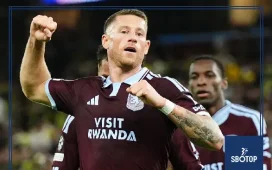


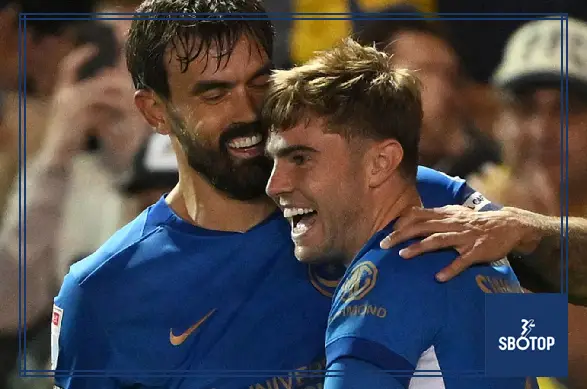
Ebou Adams struck in the 89th minute to give Portsmouth a dramatic 3-2 victory over Sheffield United at Fratton Park on Wednesday, 14 October 2026, rescuing an evening that had threatened to become deeply frustrating for the hosts.
Pompey led through Zak Swanson and Adrian Segecic, while Hamza Choudhury’s dismissal left the visitors facing the second half with 10 men. Yet Sheffield United recovered through Japhet Tanganga and Tom Cannon, erasing a two-goal deficit before Adams supplied the decisive finish.
The result brought Portsmouth their third Championship victory of the campaign and a response to their south coast derby defeat against Southampton. It also left manager John Mousinho with significant concerns about how his team had allowed such a favourable position to become uncertain.
For the Blades, an impressive recovery ultimately yielded no points.
A Quiet Opening Conceals the Drama Ahead
The early stages offered little indication of the extraordinary changes to follow. Sheffield United had opportunities to take the lead, with Cannon and Patrick Bamford involved in promising situations, but neither could turn those openings into an advantage.
That failure would become more painful as the match developed. The visitors had a chance to establish a different position before Portsmouth’s breakthrough and the red card transformed the contest.
Pompey also sought opportunities, although the game remained goalless until the closing minutes of the first half.
At that stage, the match could still have developed into a narrow contest decided by one successful attack. Instead, the final minutes before the interval introduced two major changes: a spectacular opening goal and a dismissal that altered the balance of the teams.
Sheffield United reached the break with both a deficit and a numerical disadvantage to address.
Swanson Produces the Outstanding Opening Goal
Swanson broke the deadlock in the 41st minute with a powerful effort from outside the penalty area.
Receiving the ball on the left after a clearance, he moved onto his right foot and sent his shot into the top corner beyond Michael Cooper.
It was an exceptional way to open the scoring, requiring accuracy as well as power. The goalkeeper had little opportunity to prevent a finish that immediately lifted the home side.
Swanson later regarded it as the best goal he had scored, a personal assessment consistent with the quality of the strike.
For Portsmouth, its value extended beyond the spectacle. A closely contested first half had suddenly produced a lead just before the interval.
For Sheffield United, the frustration was that their earlier opportunities had not established protection against precisely such a moment. One outstanding action had changed the score before another setback quickly followed.
Choudhury’s Dismissal Deepens United’s Difficulty
Choudhury received his second yellow card in the 44th minute following another challenge involving Ryan Kavuma-McQueen.
The Sheffield United player had already been booked earlier in the half. His dismissal left Chris Wilder needing to reorganise for a second period in which the visitors were both behind and short of a player.
Wilder subsequently challenged the officiating and expressed frustration with several decisions. Those comments represented the manager’s interpretation of the match, rather than confirmation that the dismissal was incorrect.
The established outcome was that Choudhury was sent off for two bookings, and Sheffield United completed the contest with 10 men.
For Portsmouth, the situation offered an opportunity to strengthen their position. They had scored immediately before the sending-off and could approach the restart with a clear advantage.
That opportunity still required disciplined execution. The events after half-time would demonstrate why the extra player alone could not guarantee control.
Kavuma-McQueen Helps Create a Two-Goal Cushion
Kavuma-McQueen remained an important attacking influence after the interval.
The teenager’s direct running had already created difficulty before Choudhury’s dismissal, and he continued to threaten as Portsmouth pursued a second goal.
The breakthrough came in the 54th minute when his work provided Segecic with a close-range finish. Pompey were now two goals ahead against 10 opponents.
The move highlighted the value of a player willing to take on a defender and then supply a teammate rather than attempt every finish himself.
For Segecic, the task was to complete the opportunity, and he did so.
Portsmouth’s position looked commanding. Sheffield United needed to recover twice while managing their numerical disadvantage, and the hosts had attacking players capable of exploiting the spaces that pursuit might create.
Yet the match was far from settled. Within minutes, the visitors had given themselves a route back into it.
Tanganga Restores Belief
Tanganga reduced the deficit in the 59th minute, finishing from Tahith Chong’s delivery.
The goal immediately changed the emotional and practical balance. Sheffield United were still behind, but they no longer needed an extraordinary scoring sequence simply to make the contest close.
For Portsmouth, the concession exposed the danger of treating a strong position as a completed task. Their advantage in numbers did not remove the need to track movement and defend deliveries into the penalty area.
Tanganga’s contribution also demonstrated the visitors’ continuing ambition. They had not limited themselves to containing the score after conceding a second.
It would be excessive to claim that the goal made an equaliser inevitable. Portsmouth still held the lead and had opportunities to extend it.
What it unquestionably did was preserve Sheffield United’s involvement. A match that appeared to be moving beyond them had become recoverable again.
Cannon Completes an Unlikely Comeback
The equaliser arrived in the 67th minute.
Kalvin Phillips delivered a corner, and Cannon connected with a header to bring Sheffield United level at 2-2.
The visitors had scored twice in eight minutes, overcoming the deficit despite playing with 10 men.
That sequence demanded credit for their persistence and execution. The deliveries were used effectively, and Portsmouth failed to prevent the decisive contacts.
It also created an uncomfortable question for the hosts: how had a two-goal lead and an extra player become a position from which they needed another goal?
The answer could not simply be reduced to effort. Sheffield United had found productive attacking situations, while Pompey had not protected their penalty area sufficiently.
The comeback therefore reflected both the visitors’ resilience and the hosts’ vulnerability. With more than 20 minutes remaining, the contest had reopened in circumstances few would have anticipated after Segecic scored.
Mousinho Turns to His Bench
Portsmouth responded with changes, introducing Adams, Keshi Anderson and Terry Devlin shortly after the equaliser. Colby Bishop had already entered the attack.
The substitutions offered fresh energy and different options, but Sheffield United’s resistance ensured that regaining the lead was not straightforward.
Anderson threatened with a powerful effort from distance that Cooper tipped away. Portsmouth continued seeking the next opening without immediately finding the finish required.
There was also a complication when Anderson, himself a substitute, suffered an injury and had to be replaced by Odin Bailey.
For Mousinho, the closing stages became a test of how his side would react to losing control of the scoreline. They could not reverse the earlier concessions, but they still had time to produce a winning contribution.
Adams would eventually supply it, rewarding the decision to introduce him when the match had become uncertain.
Adams Finds the Decisive Finish
The winner came with one minute of normal time remaining.
Segecic supplied the ball towards the far side of the penalty area, and Adams met it with an effort that bounced off the turf and beyond Cooper.
The finish restored Portsmouth’s lead after a long period in which their earlier advantage had threatened to count for little.
Segecic’s involvement completed an influential evening: he had scored the second goal and helped create the third. Adams, meanwhile, provided the contribution that separated the teams.
Pompey still needed to negotiate added time, but this time they protected their position.
For Sheffield United, the timing was especially cruel. Their recovery had brought them close to a valuable point, only for the final major breakthrough to belong to the hosts.
The late goal settled the result without erasing the difficulties Portsmouth had encountered in reaching it.
Relief Does Not Remove Portsmouth’s Concerns
Mousinho’s reaction reflected that distinction.
He welcomed the victory but remained unhappy with decisions and mistakes that had allowed Sheffield United to recover. His assessment recognised that three points did not make the performance consistently secure.
Swanson also acknowledged the need to improve the avoidance of preventable concessions. That response gave the evening a more measured interpretation than the late celebrations alone might suggest.
Portsmouth had demonstrated attacking quality, persistence and a useful contribution from the bench. They had also shown how quickly those strengths could be undermined by lapses at important moments.
For Wilder, the emphasis was different. He praised the recovery while directing frustration towards the officiating.
Both managers could identify legitimate areas for discussion, but the sporting outcome was clear: Portsmouth had found one more decisive finish than their opponents.
A Valuable Win Earned the Hard Way
The contest offered two different forms of resilience.
Sheffield United refused to accept defeat after falling two goals behind with 10 players. Portsmouth then recovered from the disappointment of surrendering that lead to pursue and secure a winner.
Neither response cancelled the errors that had made recovery necessary.
That is what gave the match its unusual shape. Swanson’s brilliance, Segecic’s finish and Choudhury’s dismissal appeared to establish the direction, only for Tanganga and Cannon to rewrite it.
Adams supplied the final change.
For Pompey, the victory provided immediate reward and clear material for improvement. For the Blades, the performance showed determination without delivering the point their comeback had made possible. Fratton Park ultimately celebrated a late winner, but the lessons extended across all five goals.