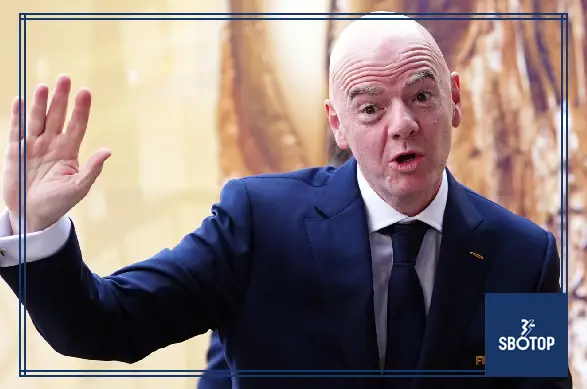
Gianni Infantino entered FIFA’s council meeting in Zurich on 15 October 2026 facing questions about commercial decision-making, financial transparency and the independence of football’s governing institutions. He emerged having apologised for mistakes surrounding an abandoned investment proposal, but without resolving the dispute over his leadership.
The controversy centres on FIFA Forward Enterprise, a proposed commercial structure involving private investment in the organisation’s competitions. Its withdrawal ended the immediate transaction, but not questions about how it had developed or why council members believed they had been inadequately consulted.
The meeting also addressed development funding, governance reform, disciplinary procedures and the FIFA Peace Prize. Together, those issues presented a broader test: whether FIFA’s leadership could provide explanations that satisfied its own governing body.
By 20 October, UEFA had requested further written answers. The dispute had therefore moved beyond one meeting, with consequences for accountability and Infantino’s bid for re-election in March 2027.
What Happened with the Investment Proposal?
The central question concerns the process behind FIFA Forward Enterprise. The proposal envisaged a company handling commercial interests associated with FIFA competitions, including the World Cup, with a minority stake sold to private investors.
Infantino has acknowledged mistakes in communication and consultation. He has also maintained that the initiative remained a proposal rather than a completed agreement.
That distinction matters. A plan that was explored and abandoned is different from a transaction that transferred rights or ownership. However, abandoning a proposal does not automatically settle whether the process used to develop it was appropriate.
The relevant accountability questions concern who authorised negotiations, which officials received information, what advisers were engaged and when the council should have been consulted.
Answering those questions requires documents and a reliable chronology. Political disagreement alone cannot establish misconduct, while an apology alone cannot provide a complete account.
Who Should Authorise Major Commercial Decisions?
The investment controversy raises a structural question about the relationship between FIFA’s president, administration, council and member associations.
An organisation needs executives capable of exploring opportunities. Requiring collective approval for every preliminary conversation would make ordinary administration difficult. Conversely, a proposal affecting major competition revenues can carry consequences far beyond routine business development.
The key issue is where that boundary lies and whether FIFA’s rules define it clearly.
In governance terms, exploring an idea, commissioning advice, negotiating terms and approving a transaction are separate stages. Each can require different oversight.
A useful review would identify which stage the proposal reached and what authority applied at that point. It should also establish how potentially significant commitments are reported.
Those are institutional questions. Their importance extends beyond Infantino because the same safeguards would apply to any future president considering a comparable commercial arrangement.
Can Confidentiality Coexist with Accountability?
FIFA has cited ongoing legal proceedings in the United States when explaining why details of the investment project remain confidential.
Legal restrictions can create legitimate limits on disclosure. However, public confidentiality and access by an organisation’s governing body are not necessarily identical questions.
Council members need enough information to discharge their responsibilities. The practical challenge is determining what can be provided, to whom, and under what protections.
Possible mechanisms in governance practice include restricted document access, confidential briefings and independent reviews. Whether any particular mechanism is appropriate depends on the actual legal constraints.
The existence of litigation should not be treated as proof that wrongdoing occurred. Equally, it does not automatically answer every request for explanation.
The credibility of FIFA’s response will depend partly on how precisely it identifies the restrictions and what meaningful oversight remains possible within them.
What Does the Funding Announcement Actually Mean?
FIFA presented a proposed development funding programme totalling $6.35 billion for the 2027–2030 period, including planned allocations of $25 million per member association.
The announcement offered a substantial financial commitment, but the implementation process was not complete. Distribution requirements, controls and approvals still needed further work.
That distinction is essential. A headline allocation is different from money already disbursed, and an association’s entitlement may depend on eligibility and reporting conditions.
For football development, the central questions concern access, timing and outcomes. Associations need to understand which projects qualify, how applications will be assessed and how expenditure will be audited.
The programme should ultimately be judged through delivery: facilities built, participation supported and sustainable football activity created.
Its size is significant, but the amount announced cannot by itself establish that the proposed spending will be effective.
Does More Funding Resolve the Leadership Dispute?
Development funding and governance accountability are connected, but they remain separate tests.
Infantino’s supporters can point to financial investment as evidence that his presidency benefits associations with limited resources. Those associations may reasonably place considerable weight on funding for pitches, coaching, administration and competitions.
Critics can nevertheless argue that successful redistribution does not remove the need for transparent decision-making.
It would be speculative to claim that every funding commitment was designed to influence an election. Establishing improper electoral conduct requires evidence beyond the timing of an announcement.
The appropriate questions concern how the programme was developed, whether objective criteria govern distribution and whether associations receive equal treatment regardless of political allegiance.
An effective governing organisation should be able to demonstrate both development results and sound oversight. Success in one area does not make scrutiny of the other unnecessary.
What Must Change in Disciplinary Procedures?
The council agreed to review disciplinary procedures following the decision to suspend, for a probationary period, the one-match ban imposed on United States forward Folarin Balogun during the 2026 World Cup.
The case raised questions about consistency and the treatment of automatic suspensions.
A review should distinguish between whether a decision was permitted under the existing rules and whether those rules were sufficiently clear or appropriate.
Those are different inquiries. A controversial outcome does not automatically prove that officials acted outside their authority. Conversely, a technically available procedure can still expose a weakness requiring reform.
The wider concern is equal treatment. Teams and players must understand what follows a dismissal, which appeals or exceptions exist, and who has authority to decide.
Clear written reasoning and consistent procedures are particularly important when a case attracts political attention or involves a host nation.
How Can Disciplinary Independence Be Demonstrated?
Concerns about political influence require careful handling. Allegations of interference should not be presented as established findings without supporting evidence.
The institutional question is how FIFA can demonstrate that disciplinary decisions are reached independently, even when senior politicians or prominent football officials express an interest.
Independence involves more than the formal title of a committee. Appointment procedures, communication rules, access to evidence and protection from pressure all matter.
A credible framework should identify who may contact decision-makers and how such contact is recorded. It should also explain how potential conflicts are managed.
Those safeguards protect the organisation as well as the participants. A documented process can help answer allegations fairly, rather than leaving the debate dependent on competing assertions.
The review’s value will therefore depend on whether it strengthens verifiable protections, rather than merely repeating that independence already exists.
What Is the Purpose of the Peace Prize?
The FIFA Peace Prize was also referred for assessment, placing another initiative under institutional scrutiny.
An award associated with a global sports organisation inevitably raises questions about criteria, selection and political neutrality. Those questions become more pressing when recipients hold public office.
The essential issue is whether the purpose and decision-making process are clear enough to withstand examination.
Who nominates recipients? Who evaluates them? What standards apply, and how are conflicts addressed? These are reasonable governance questions regardless of any individual award.
An assessment should also consider how the prize relates to FIFA’s football responsibilities. Sporting diplomacy can be part of international engagement, but symbolic initiatives require a defensible institutional basis.
The council’s decision to review the prize did not itself establish an adverse finding. It created an opportunity to clarify the framework and determine its future.
Will Reform Produce Measurable Changes?
FIFA established a working group to examine potential governance reforms. Its creation acknowledged that the dispute required an institutional response.
However, announcing a review is only the beginning. Its credibility depends on membership, independence, scope and a timetable for reporting.
A meaningful process should identify specific weaknesses and propose changes that can be tested. These might concern consultation requirements, commercial approvals or the information available to council members.
The review should also distinguish future safeguards from explanations of past decisions. Reform cannot substitute entirely for answering what already happened.
UEFA’s subsequent request for written responses demonstrated that this distinction remained central to the disagreement.
For FIFA, a successful outcome would involve both a documented account of the disputed process and clearer rules for future conduct. General commitments to unity would not perform either function on their own.
Can Infantino Rebuild Trust Before the Election?
Infantino’s re-election bid gives the dispute an immediate political dimension. However, criticism from influential officials does not automatically translate into an electoral defeat.
The presidency is decided through FIFA’s member associations, whose priorities and assessments can differ considerably. Any prediction about the result remains uncertain until the candidacy and voting processes unfold.
The more immediate test concerns trust within the organisation’s governing structures.
Infantino has apologised, defended the investment proposal’s original purpose and supported reviews. His critics continue to seek documentation and fuller explanations.
The Zurich meeting therefore produced decisions without producing closure. Its significance will depend on what follows: substantive answers, transparent procedures and reforms with practical effect.
For football’s governing body, the issue reaches beyond one president’s political survival. It concerns whether its institutions can examine consequential decisions, explain them convincingly and demonstrate that accountability remains part of how FIFA operates.
Also Read: