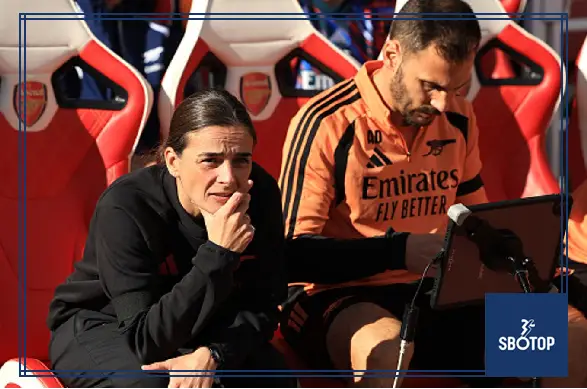
Olivia Smith delivered a spectacular equaliser, yet Arsenal’s 1-1 draw with Birmingham City left the Emirates Stadium with more questions than reassurance. Her second-half strike prevented a damaging home defeat, but the result extended the Gunners’ winless Women’s Super League sequence to five matches.
Oceane Hurtre had given Birmingham the lead with a composed finish on the counterattack. Arsenal responded through Smith and continued pursuing a winner, only to encounter determined defending, important saves and further frustration in front of goal.
For Renee Slegers, Saturday’s match on October 17, 2026, offered another uncomfortable combination: enough chances to suggest victory was possible, but insufficient precision to achieve it. Birmingham, meanwhile, earned their first away league point of the season through resilience and effective use of their attacking opportunity.
Boos greeted the final whistle, expressing dissatisfaction with a result that left Arsenal with one victory from six league fixtures.
A Home Fixture That Offered an Opportunity
Arsenal entered the match needing a response after a difficult opening to their league campaign. A home meeting with newly promoted Birmingham appeared to offer an opportunity to recover momentum. However, that expectation did not determine the contest. Birmingham arrived with a plan that demanded concentration from Arsenal, particularly when the hosts committed players forward.
The visitors protected central areas and looked for opportunities to attack the space behind their opponents. Arsenal therefore needed more than possession: they required accurate combinations, purposeful movement and effective finishing.
That distinction became increasingly important as the afternoon developed. The hosts could move the ball into attacking positions without consistently producing the decisive action.
For a team under scrutiny, those unconverted opportunities carried an additional cost. Every missed chance allowed Birmingham to remain competitive and increased the significance of any opening at the opposite end.
Arsenal Find Openings but Cannot Finish
The Gunners created several opportunities before the interval, with Kyra Cooney-Cross testing Sophie Baggaley and Alessia Russo attempting to exploit an opening after the goalkeeper’s distribution.
Russo’s effort went over, while other attacks ended through blocks or inaccurate finishing.
These moments showed that Birmingham’s defensive structure could be penetrated. Arsenal were not entirely short of ideas, and players did reach positions from which they could threaten.
Nevertheless, creating an opportunity and taking it are different parts of the attacking process. Arsenal’s inability to complete those moves kept the score level.
From an analytical perspective, the problem was therefore broader than simply producing more possession. The hosts needed greater accuracy in the final action, whether that meant choosing a pass, setting up a shot or directing an effort beyond the goalkeeper.
Without that improvement, their territorial advantage remained vulnerable.
Russo’s Header Strikes the Post
Arsenal’s closest first-half effort came in the 38th minute when Russo met Leah Williamson’s delivery with a diving header.
Her movement took her into a useful position, and the contact was clean, but the ball struck the post. Birmingham survived another dangerous moment without conceding.
The chance illustrated the value of a well-timed delivery into the box. Williamson supplied the ball, Russo attacked it effectively, and the resulting effort came close to providing the breakthrough.
However, the near miss did not change the scoreboard.
It would be speculative to claim that an opening Arsenal goal would necessarily have produced victory. What can be said is that the hosts missed an opportunity to make Birmingham chase the game.
Instead, the visitors reached half-time level, with their defensive work preserving the possibility of taking something from the match.
Birmingham Keep an Attacking Outlet
Birmingham’s contribution extended beyond defending their penalty area. Hurtre’s movement offered a route forward, while Lily Crosthwaite also threatened during the opening half.
Those attacks forced Arsenal to consider what might happen when possession changed hands. A team dominating the ball still needs protection against a direct pass or a runner attacking the space behind its defensive line.
For Birmingham, maintaining an outlet also helped relieve pressure. An attack did not have to end with a shot to make Arsenal retreat and reorganise.
The visitors’ approach depended on choosing those moments carefully. They could not expect the same volume of possession as the hosts, so the quality of their forward decisions mattered.
That balance became decisive after the interval. Birmingham had remained level through defensive discipline, then found the attacking execution required to take the lead.
Hurtre Punishes Arsenal on the Break
Hurtre scored in the 53rd minute after Neve Herron helped release her into space.
The forward held off recovering pressure, advanced towards goal and lifted her finish past Misa Rodriguez. Arsenal suddenly had to recover from a deficit in a match they had spent much of the afternoon trying to control.
The goal exposed the difference between attacking territory and defensive security. Arsenal had committed players forward but could not stop Birmingham’s transition once the opening appeared.
Hurtre still needed to finish well, and she supplied the necessary composure.
For the visitors, the breakthrough rewarded their willingness to attack when circumstances allowed. For Arsenal, it increased the urgency of finding a response.
The hosts now faced a compact opponent with a lead to protect, making patience and precision even more important as frustration grew around them.
Baggaley Delays the Response
Arsenal increased their pressure, but Baggaley continued to play an influential role.
She produced an important close-range save to deny Lisa Baum, preserving Birmingham’s advantage shortly before the equaliser.
That intervention demonstrated why the hosts’ difficulties could not be explained solely through poor finishing. Some opportunities were stopped by strong goalkeeping rather than wasted without pressure.
The distinction matters when assessing a performance. A team can create a good chance and still encounter an opponent capable of making a decisive save.
Baggaley’s work also gave the defenders ahead of her confidence that a single breach did not have to become a goal.
However, Birmingham still needed to keep limiting Arsenal’s opportunities. Repeated pressure increases the likelihood that one moment will escape even a well-organised defence, and Smith was about to provide exactly that moment.
Smith Finds an Exceptional Equaliser
Smith restored parity in the 66th minute with a superb strike from outside the penalty area.
After Arsenal recycled an attack, Georgia Stanway moved the ball towards her. Smith took the opportunity to set herself and unleashed a shot that beat Baggaley.
The finish supplied the quality Arsenal had been seeking. After failing to convert several closer-range openings, they found a solution through accuracy and power from distance.
It was an important individual contribution within a team move. The preceding circulation kept the attack alive, while Smith recognised and executed the shooting opportunity.
Her goal changed the immediate outlook. Arsenal had avoided remaining behind and still had time to pursue victory.
Nevertheless, an equaliser only restored the contest. The hosts needed another decisive action, while Birmingham remained organised enough to make that difficult.
Birmingham Resist the Search for a Winner
Arsenal continued attacking after drawing level, with Lotte Wubben-Moy among those denied as Birmingham defended their goal.
Baggaley remained influential, while Herron and captain Millie Turner contributed important defensive interventions. Their work helped prevent promising situations from becoming straightforward finishes.
The collective nature of that resistance was significant. Goalkeeping, positioning, blocks and clearances all played a part.
Arsenal introduced fresh players during the closing stages, seeking another route through. However, changes alone could not guarantee the required breakthrough.
The hosts still needed their movement and deliveries to create a chance that could be converted under pressure.
Birmingham completed the final defensive task. They had lost their lead but prevented the match from turning into defeat, leaving the Emirates with a point earned through sustained concentration rather than one isolated moment.
Possession Does Not Resolve Arsenal’s Problems
Arsenal finished with substantially more possession and attempts, but the score remained level.
Those figures support the impression that the hosts spent much of the match attacking. They do not automatically establish that every attempt was dangerous or that victory was inevitable.
The useful question is how consistently Arsenal turned possession into clear, well-executed chances.
They produced several genuine opportunities, yet too many attacks ended without the required accuracy. Birmingham’s defending and goalkeeping also contributed to that outcome.
Smith’s finish prevented the afternoon from becoming worse, but relying on exceptional goals is a demanding way to secure results regularly.
The tactical challenge is to make good opportunities more repeatable: move defenders, support the ball carrier and preserve defensive balance when attacks break down.
This match showed why those tasks must work together rather than be assessed separately.
Scrutiny Grows Without a Confirmed Decision
The full-time reaction reflected dissatisfaction with Arsenal’s league start. One win from six matches was a clear sporting concern, and the draw supplied further reason to examine performances.
However, increased pressure on Slegers should remain distinct from a confirmed decision about her position. Supporter frustration and debate do not themselves establish the club’s intentions.
Her immediate challenge was to turn promising periods into complete performances. Arsenal had enough attacking quality to recover, but they again failed to combine finishing efficiency with defensive security.
Birmingham could value the point for different reasons. They executed their counterattack, responded to conceding and protected the result.
Smith provided the afternoon’s outstanding finish, but the final whistle belonged equally to the visitors’ resistance. Arsenal escaped defeat; the more difficult task remained finding a reliable route back to winning.
Also Read: