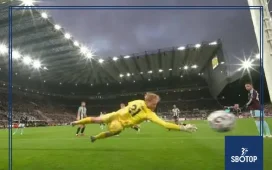
Wrexham delivered a welcome Championship response with a 4-1 victory over Preston North End, as Ben Whiteman scored against his former club and helped turn a competitive first half into a convincing home win.
Joe Worrall opened the scoring at the Racecourse Ground on Saturday, 17 October 2026, before Alfie Devine briefly brought Preston level. Whiteman restored Wrexham’s advantage before the interval, and second-half goals from Sam Smith and Kieffer Moore established a commanding margin.
The result gave Phil Parkinson’s side their third league victory of the season and moved them to 14th immediately after the match. Preston remained bottom with four points from eleven games.
Although the final score suggested a comfortable afternoon, Wrexham first had to survive early danger and respond to an equaliser. Their ability to negotiate those moments provided the platform for a decisive second-half burst.
Preston Threaten Before Wrexham Establish Control
Preston began with enough purpose to demonstrate that their difficult league position would not automatically make them passive opponents. Odel Offiah threatened with a lobbed effort, but Worrall headed the ball off the line. Andrew Hughes also went close with a header as the visitors looked to secure an early advantage.
Those opportunities matter when assessing the final result. Before Wrexham could build a substantial lead, they needed defensive interventions to keep the game level.
From an analytical perspective, the opening exchanges showed the danger of judging a match solely through the table. Preston were struggling for results, but they still possessed the ability to create uncomfortable situations.
Wrexham gradually began to generate chances of their own. Their attacking threat developed as the half progressed, with the home side eventually finding a breakthrough after Preston’s promising opening had produced no goal.
Worrall Contributes at Both Ends
Having already prevented a possible Preston opener, Worrall supplied the first goal in the 31st minute.
The defender met Danny Imray’s delivery with a header, giving Wrexham the lead and adding an attacking contribution to his earlier defensive work.
It was Worrall’s first goal for the club and his first in more than two years. The moment also came on his home debut, making it a particularly productive appearance.
His contribution illustrated how a defender can influence a match beyond routine marking and clearances. The intervention on the line preserved parity; the header at the other end changed the score.
For Wrexham, the opening goal rewarded their growing pressure. However, it did not immediately establish lasting control. Preston responded within five minutes, ensuring the hosts still had to demonstrate their capacity to recover from a setback.
Devine Gives Preston a Route Back
Preston equalised in the 36th minute through Devine.
After Wrexham lost possession in midfield, the visitors moved the ball towards Johnny Kenny. His attempt was deflected, and Devine reacted to finish the resulting opportunity.
The goal restored balance and gave Preston a tangible reward for their attacking efforts. It also prevented Wrexham from settling into the interval with the advantage created by Worrall.
For the hosts, conceding offered another reminder that productive attacking play does not remove the need to manage possession and react when the ball is lost.
Preston’s response briefly changed the atmosphere of the contest. A match that had begun to move towards Wrexham was level again, with both teams able to identify reasons for encouragement.
The next goal therefore carried considerable importance, especially with half-time approaching and neither side yet able to establish a secure position.
Whiteman Restores the Advantage
Whiteman supplied that goal in the 42nd minute.
An Imray cross was only partially cleared, leaving the former Preston midfielder an opportunity to strike. His low effort beat Daniel Iversen and returned Wrexham to the lead.
It was Whiteman’s first goal in Wrexham colours, arriving against the club he had left during the summer.
The personal connection added interest, but the competitive significance was straightforward: Wrexham had responded quickly enough to take a 2-1 advantage into half-time.
The finish also highlighted the importance of reacting to second balls around the penalty area. A defensive clearance does not necessarily end an attack if the opposition can collect possession and shoot before the defensive shape resets.
Whiteman made that moment count. Rather than allowing Preston’s equaliser to determine the remainder of the half, Wrexham produced another decisive action and regained the initiative.
A Narrow Half-Time Lead Leaves Work Unfinished
Despite leading at the break, Wrexham could not regard the match as settled.
Preston had already shown that they could create opportunities and recover from falling behind. A one-goal margin left the visitors within reach of another equaliser.
The second half therefore required more than protecting the scoreboard. Wrexham needed to continue offering an attacking threat while reducing the defensive openings Preston had found earlier.
As analysis, that balance is often central to matches involving teams under pressure. Defending too cautiously can invite sustained attacks, while committing excessive numbers forward can expose a narrow advantage.
Wrexham eventually found a productive solution through further goals. Before that happened, however, Preston had an opportunity to alter the direction of the afternoon.
Their failure to take it became more significant when the home side scored shortly afterwards.
Potts Misses Before Smith Gives Wrexham Breathing Space
Brad Potts entered during the second half and had a chance at the end of a Preston counterattack, but his effort missed the target.
At 2-1, the opportunity carried obvious importance. Converting it would have restored parity, although it cannot be assumed that the remainder of the match would then have followed any particular course.
Instead, Wrexham extended their advantage in the 59th minute.
Smith headed in Whiteman’s corner, moving the score to 3-1 and giving the hosts a more substantial cushion.
Whiteman had now contributed directly to two goals, combining his first-half finish with the delivery for Smith.
For Preston, the sequence was damaging: a chance to equalise was followed by a goal conceded. For Wrexham, it was the moment when a precarious lead began to become a commanding position.
Moore Completes a Decisive Four-Minute Spell
Wrexham’s fourth followed in the 63rd minute, with Moore turning in Callum Doyle’s low free-kick.
The goal completed a rapid double that changed the match considerably. Within four minutes, Wrexham had moved from a one-goal lead to a three-goal advantage.
That separation gave Preston a much more difficult task. Recovering one goal had remained a realistic immediate objective; finding three without conceding again demanded a very different finish to the game.
Moore’s goal also ensured that both starting forwards joined the scoring, alongside Worrall and Whiteman.
Four different scorers provided evidence of a varied contribution to the result. Wrexham did not depend on one exceptional individual performance to supply every finish.
The decisive spell instead combined delivery, movement and execution, with Smith and Moore converting opportunities that placed the outcome firmly in the hosts’ hands.
Deliveries Become a Major Source of Reward
A notable feature of Wrexham’s goals was the value of well-directed balls into dangerous areas.
Imray’s crossing contributed to the situations leading to the first two goals. Whiteman then supplied the corner for Smith, before Doyle’s free-kick created Moore’s opportunity.
This does not prove that every delivery was part of a specific rehearsed routine. Without detailed coaching information, such a claim would go beyond the evidence.
Nevertheless, the match demonstrated the rewards available when service and attacking movement connect effectively.
For Preston, it raised questions about handling crosses, clearing danger and tracking players arriving to finish. Those are related responsibilities, but each requires attention rather than a single broad explanation.
Wrexham’s execution made those defensive problems costly. Opportunities that might otherwise have remained promising attacks became goals, allowing the hosts to build a convincing final score.
Relief for Parkinson, Further Difficulty for Alexander
The victory arrived after Wrexham’s midweek home defeat by West Bromwich Albion and eased the immediate pressure surrounding Parkinson.
One result cannot establish that every concern has been resolved. However, four goals and a three-goal winning margin offered a concrete improvement in outcome.
Parkinson praised the individual and collective response of his players, highlighting their application after work on areas requiring improvement.
For Preston manager Graham Alexander, the afternoon brought a third defeat in his first three games in charge.
Alexander identified preventable goals as a concern while also acknowledging opportunities his team had failed to convert. That assessment reflected the match’s contrasting elements: Preston threatened, equalised and remained competitive for periods, yet could not defend well enough to sustain their position.
Their challenge extended beyond creating isolated chances. They needed greater reliability across the phases that determined the score.
A Strong Response That Needs Repeating
Wrexham finished with fourteen points from eleven Championship matches, improving their immediate position and providing a positive conclusion to a difficult week.
The result offered several encouraging elements: Worrall’s work at both ends, Whiteman’s goal and assist, and finishes from Smith and Moore.
There remained defensive matters to examine, particularly the early Preston chances and the equaliser. A convincing victory can contain useful warnings alongside successful actions.
Preston, meanwhile, needed to turn moments of promise into a more complete performance. Their response at 1-0 showed competitive intent, but the second-half double exposed how quickly an unsettled match could move beyond them.
Whiteman’s goal supplied the central personal storyline, yet Wrexham’s victory rested on a broader effort. They survived danger, answered a setback and converted the opportunities that transformed a narrow contest into an emphatic home win.
Also Read: