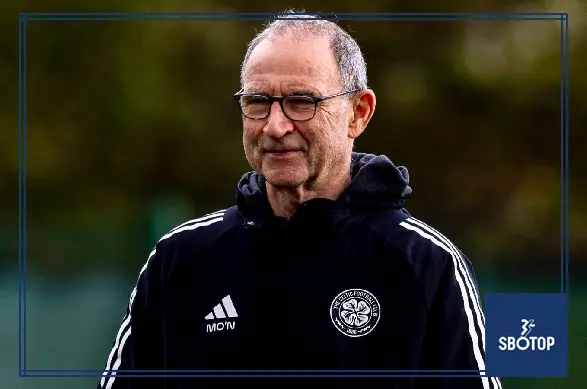
A year after unexpectedly returning to Celtic, Martin O’Neill chose to measure the experience through gratitude rather than personal achievement. Reflecting on the anniversary on 27 October 2026, the manager described a relationship that had renewed his enthusiasm and restored the daily involvement that makes football management so demanding and compelling.
His central message was simple: “The club has done more for me than I’ve done for the club.” It was an acknowledgement of what returning to Celtic had meant personally, rather than an attempt to minimise the team’s achievements.
The anniversary carried unusual weight because the intervening year had not followed a straightforward path. An emergency appointment became a successful interim spell, followed by another departure, another recall and domestic trophies. By the time O’Neill reflected on those events, he was preparing Celtic for further challenges, with the relationship between past success and present responsibility again at the centre of his work.
An Unexpected Call Changes the Picture
O’Neill returned in October 2025 following Brendan Rodgers’ resignation. The appointment was initially temporary, intended to provide leadership while Celtic searched for a permanent manager.
His own reaction made clear that this was not a carefully anticipated career move. He had not expected to be back in the dugout and described the speed of events as a surprise. Nevertheless, the immediate demands allowed little time for reflection.
Celtic had a league match against Falkirk approaching, followed by a League Cup semi-final against Rangers. O’Neill therefore entered an environment where affection and familiarity offered support, but results would quickly determine the mood.
That combination helps explain the significance of his return. He was welcomed because of his history, yet the job required present-day answers. The challenge was to turn an emotional reunion into clear instructions, competitive performances and a working relationship with players whose responsibilities could not be fulfilled through nostalgia alone.
A Winning Start Establishes Momentum
O’Neill’s first match back ended in a 4-0 home victory over Falkirk on 29 October 2025. Johnny Kenny scored twice, with Benjamin Nygren and Sebastian Tounekti also finding the net.
The result gave the returning manager an encouraging opening, but its importance extended beyond the score. A decisive performance provided immediate evidence that the team could respond to a changed environment and move attention towards football again.
O’Neill praised the players’ application while also identifying areas that required improvement. That balance was significant: appreciation did not mean the work was complete.
A successful first evening can generate confidence, but confidence needs reinforcement. The task was to make the performance a starting point rather than a brief emotional release. Celtic’s schedule ensured that the new coaching arrangement would quickly face different opponents, different pressures and occasions carrying considerably greater consequences.
Familiarity Helps, but Does Not Replace Work
A returning manager can benefit from understanding a club’s expectations, supporter culture and competitive pressures. O’Neill did not need an introduction to the significance attached to Celtic’s performances.
However, institutional familiarity is different from knowing every player’s current strengths, limitations and habits. The squad required observation, communication and practical preparation, just as any team would under a newly appointed coach.
His history could help establish credibility, but credibility still had to become useful action. Players needed to understand their roles, recognise the standards expected and see how those instructions could improve their collective performance.
This is where experience can matter most. Its value lies less in recalling previous victories than in recognising what a team needs now. The anniversary story was therefore not simply about a familiar figure returning. It concerned whether that figure could still translate judgement and communication into results.
The First Comeback Was Not the Whole Story
The initial spell did not become an uninterrupted year in charge. O’Neill stepped aside when Wilfried Nancy was appointed, before Celtic turned to him again after that arrangement ended.
On 5 January 2026, the club confirmed his return until the end of the season. The announcement identified Shaun Maloney and Mark Fotheringham among the assistants supporting him, alongside other members of the coaching staff.
That second appointment is essential to understanding the anniversary accurately. Describing O’Neill as having managed continuously since October would overlook an important part of the sequence.
It also changed the nature of the challenge. He was no longer merely responding to the first disruption. He was being asked to reconnect with the players and restore direction after another change. The responsibility involved rebuilding momentum while working within a season whose course had already become unusually complicated.
Domestic Success Gives the Return Substance
Celtic finished the 2025/26 campaign with the league title and Scottish Cup. When confirming O’Neill’s continuation in June, the club highlighted a run of seven consecutive league victories at the end of the season.
Those achievements gave his return substance beyond its emotional appeal. Celtic had entrusted him with an urgent task, and the campaign concluded with major honours rather than only an improvement in atmosphere.
The distinction matters because a celebrated appointment can initially be judged through sentiment. Trophies provide a firmer record of what the team accomplished, although they should never be attributed to the manager alone.
Players, coaches and support staff all contributed. O’Neill acknowledged that shared effort when discussing his continuation. His leadership formed part of the outcome, but the season’s recovery depended on a group translating preparation into performances across a decisive series of matches.
June Turns an Emergency Role into Commitment
On 11 June 2026, Celtic announced that O’Neill had agreed a one-year contract with an option for a further year. The arrangement moved the relationship beyond an immediate rescue assignment.
The terms require careful description. An option for an additional season is not the same as an unconditional two-year commitment, and it should not be presented as a guarantee about how long he would remain.
What the announcement did establish was that both parties had chosen to continue after the successful conclusion to the campaign. Celtic publicly emphasised his experience and leadership, while O’Neill expressed his desire to pursue further success.
That decision created a different kind of responsibility. A manager arriving temporarily can concentrate on urgent repairs. Continuing into another season requires maintaining standards, preparing the squad and building something sustainable after the initial effect of the appointment has faded.
Gratitude Changes the Emphasis
O’Neill’s anniversary reflection placed personal renewal alongside professional achievement. His assessment was that Celtic had given him something valuable through the opportunity to work, compete and belong within that environment again.
That should be understood through what he actually expressed. It does not justify speculation about private circumstances, nor does it require interpreting every emotional comment as evidence of a wider personal struggle.
The more grounded reading is that the role had brought renewed energy and involvement. Football management offers daily objectives, shared responsibilities and the intense connection between preparation and matchday.
For an experienced coach, those demands can remain meaningful regardless of previous achievements. O’Neill’s gratitude suggested that returning was not merely an opportunity to add another honour. It also restored the experience of contributing to a place with which he already had a deep connection.
Supporters Form Part of the Relationship
The bond between O’Neill and Celtic’s supporters gives the story much of its emotional force. His earlier achievements ensured that his return carried memories, expectations and a sense of recognition.
Such support can create a helpful environment, especially when a team needs confidence. It can make an appointment feel coherent before the first result arrives, giving players and staff a shared point around which to gather.
However, supporter affection does not remove scrutiny. Celtic’s standards continue to apply, and the manager’s standing cannot guarantee that every performance or decision will be accepted.
A balanced assessment recognises both sides. O’Neill’s relationship with the support is an asset, but it remains connected to present responsibilities. The enduring value of that bond depends partly on honesty: acknowledging what has been achieved while accepting that the next match still requires preparation and a performance.
Experience Must Serve the Present
O’Neill’s return naturally prompted discussion about experience and longevity. Yet age alone cannot explain a manager’s effectiveness, positively or negatively.
The useful questions concern judgement, communication, preparation and the ability to work with the people currently at the club. Experience becomes valuable when it helps identify a problem and select an appropriate response.
Equally, a long record does not make adaptation unnecessary. Opponents change, players develop and competitive demands evolve. A manager must keep evaluating whether familiar methods are producing the required effect.
This makes the anniversary a point for assessment rather than a verdict. The previous year established that O’Neill could make a substantial contribution after returning. It did not establish that every future challenge would be resolved in the same way, or that Celtic could stop planning beyond the immediate season.
A Return Defined by Mutual Benefit
One year after the unexpected call, O’Neill could reflect on a relationship that had benefited both sides. Celtic had received leadership through a turbulent campaign, while their manager described the opportunity as personally renewing.
His comments did not need embellishment to carry meaning. The documented sequence—an interim return, a second appointment, domestic success and a new contract—already explained why the anniversary mattered.
Nor was it necessary to turn gratitude into a promise about the future. His contract contained defined terms, while performances would continue to shape the conversation around the team.
The lasting impression was of a manager who recognised that contribution can work in both directions. O’Neill had helped Celtic through difficult moments, and Celtic had given him renewed purpose in return. The next task was to bring that energy into the work still ahead, one training session and one match at a time.
Also Read:
- SBOTOP Carrington’s Uncertain Tuesday: How Manchester United’s Training Return Became a Test of Leadership
- SBOTOP: Mbappe’s Late Double Changes the Clasico Conversation as Madrid Halt Barcelona’s Perfect Start
- SBOTOP Eleven Minutes That Changed Selhurst Park: Newcastle Expose Palace’s Fragility and Deepen Sage’s Problems