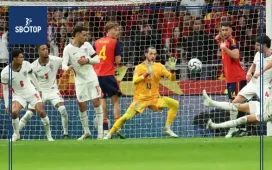
Samuel Edozie delivered Southampton’s response to a difficult first half as Saints recovered to draw 1-1 with West Bromwich Albion at The Hawthorns. His close-range finish cancelled out Isaac Price’s penalty in a Championship contest that gave both teams opportunities to claim more.
West Brom established the stronger platform before the interval, but Southampton returned with greater purpose and transformed the match into an open, competitive encounter. Neither side found the finishing touch required to turn promising positions into victory.
Played on November 3, the fixture ultimately rewarded Southampton’s recovery while leaving Albion to reflect on an advantage they could not extend. Price scored in the 22nd minute, with Edozie equalising eight minutes after half-time.
Albion Arrive With Confidence
There were sound reasons to anticipate a demanding evening for Southampton. West Brom entered the match having collected 10 points from their previous four league fixtures, including a 3-1 victory at West Ham.
That form provided the backdrop to an assertive opening. Albion approached the contest with the confidence of a team finding effective ways to turn encouraging performances into results. Southampton, meanwhile, arrived after beating Queens Park Rangers 4-1, making this a meeting between opponents with recent attacking success behind them.
The early exchanges nevertheless belonged to the hosts. Rather than allowing Southampton to settle comfortably, West Brom made the visitors respond to their tempo.
For a home team, a positive start can establish more than territorial advantage. It encourages players to attempt forward passes, supports an aggressive approach without the ball and gives the crowd reasons to remain involved. Albion supplied those ingredients, although converting them into a substantial lead proved harder.
Southampton Struggle to Find an Outlet
Southampton’s first-half problems were evident in their inability to register a shot. West Brom’s pressure disrupted their possession, while the visitors struggled to connect their midfield work with meaningful attacking situations.
Jimmy-Jay Morgan had an early opportunity for Albion but shot over when facing Daniel Peretz. Jayson Molumby subsequently tested the goalkeeper from distance, forcing a save over the crossbar.
Those incidents illustrated the range of problems Southampton faced. West Brom could threaten through penetration behind the defence and through attempts struck before the visitors had fully recovered their shape.
Southampton’s immediate requirement was therefore twofold: reduce the frequency of Albion’s chances and establish enough attacking presence to relieve the pressure.
Without that second element, defending becomes repetitive. Clearances return, midfielders spend longer retreating, and forwards receive possession in increasingly isolated positions. Southampton reached the interval having failed to turn their attacking personnel into an effective collective threat.
Price Converts the Breakthrough
West Brom’s opening goal followed Rabby Nzingoula’s involvement inside the penalty area. Jack Stephens brought him down, giving Price the opportunity to put Albion ahead from the spot.
Price converted confidently, sending Peretz the wrong way. It was his fifth goal of the season and an appropriate reward for the hosts’ stronger opening period.
The scorer also threatened again before the break, curling an effort wide as West Brom searched for a second. Southampton remained only one goal behind, despite having contributed little going forward.
That narrow margin would become central to the evening. A dominant half can create the impression that a team has control, but a single-goal lead remains vulnerable to one successful attack.
Albion had earned their advantage. What they had not secured was the cushion that would allow them to absorb an improvement from Southampton without immediately surrendering the lead.
Edozie Takes His Opportunity
Edozie’s selection gave the equaliser an additional significance. With Leo Scienza unavailable through injury, the winger received only his second start of the season.
His contribution at The Hawthorns ended a wait stretching back to February 2024 for a Southampton goal. Head coach Tonda Eckert subsequently praised his application and suggested that scoring could provide a further lift.
Edozie also became Southampton’s 15th different goalscorer across all competitions that season, with 14 players having scored during their opening 14 league games.
Those figures illustrate the breadth of Southampton’s scoring contributions, although they do not establish that any particular selection will succeed.
For Edozie, the immediate achievement was more straightforward. Presented with a starting opportunity, he supplied a decisive action in a competitive away fixture.
Whether that goal would lead to a sustained run in the team remained uncertain. It nevertheless gave him a concrete contribution around which to build.
A Better Start Produces the Equaliser
Southampton emerged after half-time with greater attacking purpose. Their equaliser developed through Ryan Manning’s delivery from the left and Kuryu Matsuki’s ability to keep the move alive at the far post.
Matsuki headed the ball back across goal, where Edozie finished from close range. The sequence rewarded movement across the width of the penalty area and a willingness to attack the space created by the initial delivery.
The finish itself was uncomplicated compared with the work required to produce it. Manning’s cross moved the defensive focus, Matsuki redirected the attack, and Edozie occupied the position where the opportunity appeared.
That combination is significant because attacking effectiveness does not always require an elaborate final action. Sometimes the decisive contribution is reaching the correct space before the defence can adjust.
Southampton had finally turned their possession into a clear chance, and Edozie ensured that the improvement changed the score.
The Match Opens After the Break
The equaliser altered the demands on both teams. West Brom could no longer protect an existing advantage, while Southampton had evidence that a more positive approach could trouble the hosts.
From that point, the contest offered a different balance. Albion retained attacking ambition, but Southampton were now capable of sustaining threats of their own.
For defenders, these changes are difficult. A match that initially involves controlling an opponent can suddenly require repeated decisions about whether to step forward, hold position or retreat towards goal.
The same uncertainty creates opportunities for attacking players. Midfielders can find passing lanes that were previously closed, while forwards benefit when defensive attention shifts between several threats.
Neither side established complete control of this phase. Instead, the match became a test of decision-making under pressure, with the next successful action potentially determining the outcome.
Goalkeepers Help Preserve the Draw
Southampton introduced Lewis Dobbin for Divin Mubama in the 71st minute, adding a fresh attacking option as the visitors pursued a winner.
Dobbin later received a clear opportunity after Finn Azaz sent him through, but Max O’Leary denied the substitute. At the other end, Peretz remained involved as West Brom continued to threaten, while Tammer Bany struck the upright late on.
Those moments prevented the closing stages from becoming a simple story of Southampton’s recovery or Albion’s disappointment. Both teams had grounds to believe victory remained possible.
A draw can sometimes reflect caution. This one contained enough late danger to suggest a different explanation: the opportunities existed, but the finishing and goalkeeping left the scores unchanged.
For O’Leary and Peretz, the challenge was maintaining concentration as possession moved between the teams. Their interventions helped ensure that neither side’s late ambition received the decisive reward.
What the Numbers Reveal
West Brom finished with 53 per cent possession and 17 attempts, compared with Southampton’s 10. Albion also recorded five shots on target to the visitors’ three.
Southampton, however, won five corners against West Brom’s three. The overall figures therefore show an advantage for the hosts in several measures without describing a match played entirely in one direction.
The distribution of those chances matters as much as the totals. Southampton’s attacking output came after a first half in which they had failed to shoot, making their improvement particularly pronounced.
Statistics can help identify that contrast, but they cannot replace the sequence of events. West Brom’s early superiority and Southampton’s later response formed distinct parts of the same contest.
The final score reflected neither complete Albion control nor an uninterrupted Saints comeback. It emerged from changing momentum and opportunities left unfinished.
A Useful Point With Clear Lessons
For West Brom, the principal frustration was failing to make their strongest period count more heavily. Their opening performance created the conditions for victory, but the lead remained small enough for Southampton to erase quickly.
For Saints, the recovery offered encouragement alongside an obvious concern. Responding well after half-time demonstrated resilience, yet the first-half attacking absence left them dependent on that response.
Both teams could therefore take practical lessons from the evening. Albion needed greater reward from their dominance. Southampton needed to establish their attacking rhythm earlier.
Neither conclusion requires predictions about the promotion race. One November draw cannot determine how a long campaign will finish.
What it did confirm was Edozie’s value on this particular night. His positioning and finish converted Southampton’s improvement into a point, ensuring that an evening which began under sustained pressure ended with a tangible return.
Also Read: