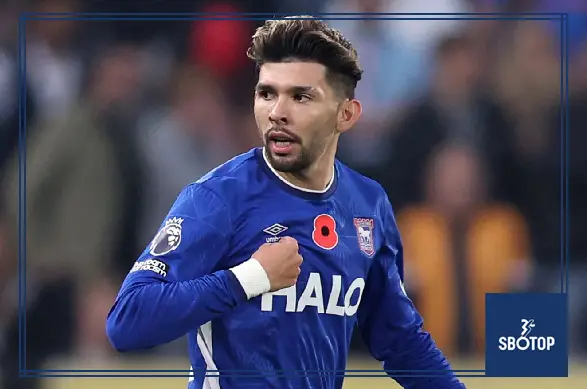
Julio Enciso delivered the defining moment of an absorbing contest as Ipswich Town drew 2-2 with Hull City at the MKM Stadium on Saturday, 31 October 2026. His spectacular second-half equaliser denied the Tigers a victory that had briefly appeared within reach after they overturned a first-half deficit.
Florentino Luís opened the scoring for Ipswich in the 22nd minute. Hull responded after the interval through Tim Iroegbunam and Oli McBurnie, only for Enciso to restore parity in the 74th minute. Neither side found a winner, leaving both to reflect on periods when the match had moved in their favour.
For Hull, the draw combined encouragement with frustration. Their second-half recovery demonstrated a capacity to respond, but they could not protect the advantage it produced. Ipswich experienced the opposite progression: an early lead disappeared before an exceptional individual contribution rescued a point. The afternoon offered four goals and several changes of direction, without delivering the outcome either team had pursued.
Ipswich Establish the First-Half Advantage
Ipswich settled more effectively during the opening period, progressing into useful areas while Hull City struggled to generate an equivalent attacking response. The visitors’ possession carried purpose, and their eventual breakthrough reflected the advantage they had established.
Florentino scored after receiving Abdoul Ouattara’s pass, giving Ipswich a deserved lead. Hull were left needing to change both the score and the pattern of a match that had not begun as they intended.
An early advantage gives a visiting team choices. Ipswich could continue looking for opportunities without immediately forcing their attacks, while requiring Hull to consider how aggressively they should respond.
That did not mean the game was settled. A single goal remained a narrow margin, particularly with most of the contest still ahead. However, Ipswich had completed the first important task: turning their stronger opening into something tangible rather than leaving their promising play unrewarded.
A Disallowed Goal Keeps Hull within Reach
Enciso thought he had increased Ipswich’s lead before the interval, but his effort was disallowed following a foul in the build-up. The decision preserved the one-goal difference and prevented the visitors from taking a stronger position into the break.
Hull therefore remained close enough for one successful attack to restore parity, despite having struggled through much of the opening half. Ipswich had reason to feel their performance deserved more, but only the valid opening goal counted.
The distinction mattered because a disallowed goal cannot simply be added to an imagined result. Had Ipswich led by two, both teams would have approached the remaining football differently. What actually followed was a second half beginning with Hull still one goal behind.
That situation gave the hosts a clear objective. They did not need to solve every problem immediately; they needed to improve sufficiently to produce the next decisive moment.
Hull Find a Different Rhythm after the Break
Hull’s response after half-time was substantially stronger. Their play gained urgency, and they began asking questions that Ipswich had not faced consistently during the opening period.
Sergej Jakirović later explained that his team had changed its system and added another midfielder. He associated the adjustment with improved pressure on the ball and greater effectiveness in possession. That was the manager’s assessment of the turnaround, rather than proof that one alteration alone explained everything.
The important evidence appeared in the hosts’ ability to create a genuine route back into the contest. Their attacking actions became more productive, and the visitors could no longer rely on the pattern established before the break.
For Hull, the improvement also showed why a poor first half need not define an entire match. Corrections still require players to execute them, but the second period provided a much stronger platform from which to compete.
Iroegbunam Converts the Equaliser
Iroegbunam brought Hull level in the 58th minute, running through after McBurnie released him and finishing past Christian Walton. The move gave the hosts a scoring reward for their improved second-half approach.
Its construction highlighted the value of support beyond the recognised striker. McBurnie provided the pass, while Iroegbunam’s forward movement created the finishing opportunity. Hull’s threat came from the relationship between the two actions.
For Ipswich, conceding required an immediate adjustment. They were no longer protecting a lead and needed to prevent the equaliser from becoming the beginning of a more damaging period.
The goal did not automatically transfer control of every phase to Hull, but it changed the scoreboard and the available possibilities. The home side had recovered from their difficult start and now had enough time to pursue more than a point.
McBurnie Completes Hull’s Turnaround
Ten minutes after Iroegbunam’s equaliser, McBurnie put Hull ahead with a low direct free-kick. His contribution changed from creator to scorer, giving him a central role in both goals that overturned the deficit.
The finish also provided Hull with a different route to goal. Their equaliser had developed through movement and a pass into space; the second came from a stationary opportunity requiring a precise strike.
A successful turnaround creates a new challenge. The work needed to recover from behind is not identical to the work needed to protect a lead. Hull now had to manage the game from a position they had spent much of the afternoon trying to reach.
That advantage lasted only six minutes. Before the hosts could turn their recovery into a more secure outcome, Enciso intervened with the moment that would dominate discussion of the match.
Enciso Produces an Exceptional Answer
Enciso’s equaliser was a left-footed strike into the top corner after he worked himself into a shooting position outside the penalty area. It arrived in the 74th minute, undoing Hull’s lead without erasing the effort that had created it.
The goal combined the ability to manufacture space with the technique to exploit it. Long-range attempts regularly fail to trouble a goalkeeper; this one had the accuracy and force needed to change the result.
For Ipswich, its value was immediate. A match they had initially led was threatening to become an away defeat, but Enciso supplied a response before Hull could establish a prolonged period of protection.
The quality of the finish should be acknowledged without treating it as inevitable. Hull still had defensive decisions to review, yet an exceptional strike can defeat a team even when a routine opportunity appears unlikely.
McBurnie and Enciso Shape Different Recoveries
McBurnie and Enciso influenced the match in contrasting ways. McBurnie helped build Hull’s comeback through a pass and a free-kick, while Enciso delivered the finish that prevented that comeback from becoming a home victory.
Their contributions illustrate how individual quality operates within a changing contest. One player helped transform a deficit into an advantage; the other restored equality after his team lost its earlier position.
Neither contribution removed the importance of teammates. Iroegbunam had to complete his run and finish, while Ipswich’s earlier work had already given them a goal through Florentino.
The result therefore belonged to several connected actions. Enciso supplied the most spectacular image, but the complete story required the opening goal, Hull’s improved second half and McBurnie’s involvement. Without those developments, the equaliser would have carried a different meaning.
Seven League Games without Victory for Hull
The draw extended Hull’s winless Premier League sequence to seven matches. They had shown enough resilience to avoid defeat, but the absence of a victory remained an important concern.
That record needs to be described accurately. Seven games without winning does not mean seven defeats. This match itself demonstrated the distinction, providing a point while still extending the wait for three.
For Jakirović, the challenge was to connect the positive response with a more complete performance. Starting slowly created a deficit; improving after the break produced a lead; failing to retain it prevented the desired outcome.
Those stages require different lessons. Greater intensity from the beginning could reduce the need for recovery, while better control after scoring could make a turnaround more valuable. Character helped Hull respond, but it did not by itself secure victory.
Ipswich Leave with Relief and Unfinished Work
Ipswich could appreciate the quality of their recovery while questioning how they lost the advantage established before half-time. Enciso’s goal rescued a point, but their earlier position had offered the possibility of more.
The visitors’ review therefore needed to include the second-half concessions. Hull’s improvement was real, yet Ipswich still had responsibilities when dealing with the run that produced the equaliser and the free-kick that followed.
A draw after falling behind can feel encouraging, but the emotional sequence does not change the final return. Ipswich earned one point from a match in which they had been both ahead and behind.
That mixed picture is useful when assessing development. The ability to respond matters, but so does reducing the situations that require rescue. Enciso supplied an exceptional solution; a team cannot assume that such a finish will always be available.
A Shared Result after Two Distinct Comebacks
The final whistle left the teams level after each had experienced an advantage. Ipswich’s first-half lead gave way to Hull’s second-half turnaround, before Enciso ensured neither side completed the afternoon with three points.
For Hull, the lasting frustration concerned a winning position that disappeared quickly. For Ipswich, relief at the equaliser sat alongside the knowledge that their stronger opening had not produced victory.
Enciso’s strike remained the standout moment: a finish of sufficient quality to change both the score and the conclusion. Hull’s wait for a win continued, while Ipswich departed with a point earned through a decisive response when defeat had become a genuine possibility.
Also Read: