

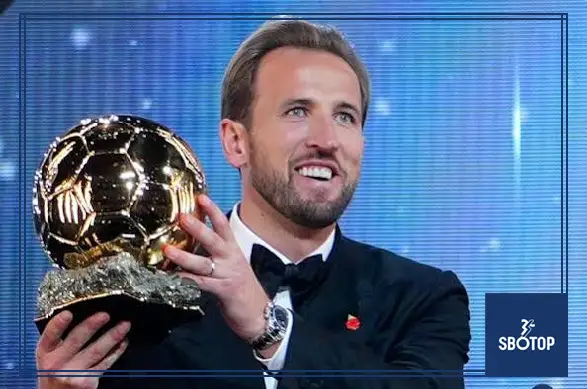
Harry Kane scored 73 goals for Bayern Munich and England in the season that earned him the 2026 Ballon d’Or. Two weeks after collecting the trophy in London, he missed out on the FIFPRO Men’s World 11 by the narrowest margin among the forwards. Kane received 27.6 per cent of the vote, just 0.8 percentage points behind Erling Haaland, who joined Kylian Mbappé, Lamine Yamal and Lionel Messi in the team announced on 9 November.
Kane was among the 26 finalists, and more than a quarter of the professionals who took part in the men’s ballot selected him. He became the first men’s Ballon d’Or winner to miss out on that year’s World 11 since FIFPRO established the award in 2005. His England teammate Jude Bellingham made the midfield, while Bayern teammate Michael Olise also reached the shortlist and finished outside the final side.
Four forwards finish ahead of Kane
Mbappé was the leading outfield player in the ballot with 9,105 votes, representing a 46 per cent share. Yamal received 37.4 per cent and Lionel Messi 29.5 per cent. Those three occupied the guaranteed forward places. Haaland, on 28.4 per cent, secured the final berth available to an outfield player. Kane’s 27.6 per cent left him immediately behind the four selected forwards.
The published figures show a much tighter contest for the last attacking place than for the first. Mbappé was well clear at the top of the forward vote, while fewer than two percentage points separated Messi from Kane. Cristiano Ronaldo and Khvicha Kvaratskhelia also made the eight-man shortlist for the attack alongside Olise and the five players at the top of the published figures.
There were milestones for two of the selected forwards. Messi returned to the World 11 for the first time since 2023, extending his record to 18 appearances. The Inter Miami forward had helped Argentina reach the 2026 World Cup final. Yamal, who helped Spain win that final, became the first player to earn two World 11 selections before turning 20. The Barcelona winger had also made the previous year’s side.
How professional footballers chose the team
The men’s ballot drew 19,806 professional footballers from 73 countries. Each voter could select three players in each of four categories: goalkeeper, defender, midfielder and forward. The selections covered performances from 4 August 2025 through 19 July 2026, so the assessment included the World Cup. Players needed at least 30 official appearances at domestic top-flight or senior international level during the qualifying period to be eligible.
The allocation rules gave one place to the leading goalkeeper and three apiece to the leading defenders, midfielders and forwards. The 11th went to the remaining outfield player with the most votes, whichever of the three outfield categories he occupied. In 2026 that player was Haaland, so the men’s team ended up with three defenders, three midfielders and four forwards.
That final berth is important to understanding Kane’s result. The rules opened a place for a fourth attacker, and Kane fell just short of the player who took it. The ballot grouped centre-forwards and wide attackers together, giving voters a choice among players with quite different roles. The resulting percentages represent how often each player appeared on ballots that could contain several forwards. They show who had enough support to make the side, while offering little insight into how individual voters weighed those roles.
The Ballon d’Or rewarded Kane’s prolific season
Kane won the Ballon d’Or at the London Palladium on 26 October, becoming the first English winner since Michael Owen in 2001. He was the fifth Englishman to receive the award, joining Owen, Sir Stanley Matthews, Sir Bobby Charlton and Kevin Keegan. The ceremony marked the award’s 70th anniversary, and its move to London for the occasion honoured Matthews, the inaugural winner in 1956.
Kane scored 61 goals for Bayern and 12 for England, reaching 73 in 65 appearances for club and country. He finished as the Bundesliga’s leading scorer for the third season in succession and struck 14 times in the Champions League as Bayern reached the semi-finals. Bayern retained the Bundesliga title and also won the DFB-Pokal and the Franz Beckenbauer Supercup. At international level, Kane captained England to third place at the World Cup, their best finish since winning it in 1966.
He also collected the Gerd Müller Trophy, the men’s striker award, for the second time. Kane had shared that prize with Mbappé in 2024. This time he finished ahead of the Frenchman in the main award as well, taking 1,055 points to Mbappé’s 1,027. Yamal finished third with 881 points.
Both awards produced close races involving Kane, but in different parts of the standings. His 28-point advantage over Mbappé came from a jury of 100 journalists ranking candidates for one individual prize. His 0.8-percentage-point gap behind Haaland came from professional players choosing several forwards for a team. Haaland had finished eighth in the Ballon d’Or ranking, while Mbappé, the runner-up, drew more support than any other outfield player in the FIFPRO vote. Those results show how the different ballots distributed support. The totals alone cannot explain what led any voter to choose one forward over another.
Raya leads all players as Bellingham represents England
David Raya was the most selected player in the men’s ballot. The Arsenal and Spain goalkeeper earned 10,278 votes, a 52 per cent share, and made the World 11 for the first time. Thibaut Courtois and Emiliano Martínez had also reached the final shortlist for the single goalkeeping place. Raya’s result gave him more votes than any player in the team, including the four forwards.
Barcelona’s Pau Cubarsí was the other men’s debutant, joining Paris Saint-Germain’s Achraf Hakimi and Nuno Mendes in defence. The midfield comprised PSG’s Vitinha, Spain’s Rodri and Real Madrid’s Bellingham. Rodri had represented Manchester City and Barcelona during the period reflected in the selection, while Bellingham was the only England player in the final men’s team. Declan Rice joined Bellingham and Kane among the finalists but missed out on a midfield place.
Raya, Cubarsí, Rodri and Yamal gave Spain four representatives after its World Cup triumph. Their selections took Spain’s historical total to 53 men’s appearances across 17 players, the highest of any country. Paris Saint-Germain supplied three players in Hakimi, Mendes and Vitinha. That spread of recognition also shows how the award brings performances from club and international football into the same selection, with voters choosing across leagues as well as national teams.
England’s representation unfolded differently across the two men’s awards. Kane led the Ballon d’Or standings, with Bellingham 11th and Rice 15th. Bellingham then secured one of three midfield places in the players’ team. A player’s overall position in the journalists’ ranking therefore gives only a partial guide to what might happen in a ballot with separate categories and a fixed number of places.
Bronze sets a record in the women’s selection
The women’s World 11, announced on the same day, brought a record ninth selection for England and Chelsea defender Lucy Bronze. More than 6,500 professionals from 64 countries voted for the side. Five England internationals made the team, with Bronze joined by Hannah Hampton, Alex Greenwood, Ella Toone and Alessia Russo. Seven of the 11 were with Women’s Super League clubs when the team was announced.
Hampton took the goalkeeping spot, with Bronze, Greenwood, Mapi León and Irene Paredes selected in defence. Toone joined Aitana Bonmatí and 2026 Women’s Ballon d’Or winner Alexia Putellas in midfield. Russo, Zambia’s Barbra Banda and Spain’s Claudia Pina completed the team in attack. Pina earned her first selection, and Bonmatí led the women’s ballot with 3,083 votes, a 47 per cent share.
Under the same allocation system, the extra outfield place went to a defender in the women’s team and a forward in the men’s. Putellas also earned a place in the players’ selection after winning her third Ballon d’Or in October. Kane was the year’s unusual case, coming first in one award and finishing just outside the available places in the other.
Kane’s omission stands out because of what he did over the season: he led the scoring in Germany again, won three domestic trophies with Bayern and captained England to a World Cup podium finish. The men’s World 11 recognised four other attackers, with the final place decided by less than a percentage point. That small gap is the most precise explanation of the outcome. A substantial share of Kane’s peers selected him, and only four forwards drew more support. On this ballot, four places were all there were.
Also Read: