

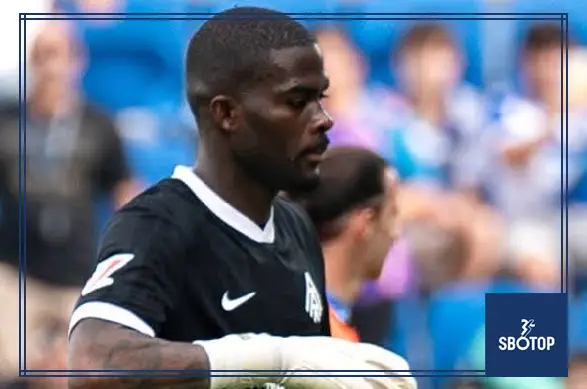
FC Andorra defender Lautaro Spatz offered his condolences to Jesús de Miguel’s family and defended teammate Jesús Owono after the Tenerife forward died following a collision with the goalkeeper. Spatz said the man he knew as a teammate and friend would never deliberately hurt another player. His statement came as Spanish football mourned De Miguel, who was 30, and authorities began examining the circumstances of his death.
De Miguel was injured on 2 November 2026 during a Spanish second-division match at the Heliodoro Rodríguez López stadium in Santa Cruz de Tenerife. He received medical attention on the pitch and was taken to hospital, where he died the following morning. The referee sent Owono off for using excessive force, and the Spanish football federation subsequently suspended him for 12 matches. Spatz’s comments addressed the goalkeeper’s intent as he understood it from knowing him personally. The federation’s decision addressed the challenge under football’s disciplinary rules.
The collision in stoppage time
Tenerife and FC Andorra were level at 2–2 when Owono came out of his goal to contest the ball late in the match. The goalkeeper raised a leg as he challenged and made contact with De Miguel. The referee recorded a direct red card in the sixth minute of second-half stoppage time, citing excessive force. The match was abandoned late in stoppage time, and the federation allowed the 2–2 score to stand.
Medical staff treated De Miguel on the field before he was taken by ambulance to the Hospital Universitario Nuestra Señora de Candelaria. He was admitted to intensive care. Tenerife confirmed that he died the next morning, on 3 November. The club’s announcement shifted attention from the interrupted fixture to the family, teammates and supporters who had lost a player they knew as Demi.
The referee’s report provides the basis for describing the challenge as one involving excessive force. Questions about Owono’s intentions called for a different kind of evidence. That distinction became important once the goalkeeper’s teammate spoke publicly and the disciplinary and police inquiries drew attention to different aspects of the same incident.
What Lautaro Spatz said about his teammate
Spatz published his message on social media on Tuesday evening. The Argentine centre-back sent condolences to De Miguel’s family and Tenerife and said he wanted to speak about a friend who was suffering deeply. He drew on his experience of knowing Owono to explain why he believed the goalkeeper would never intentionally injure anyone. He also reflected on how hard it was to imagine a collision during a football match ending in a player’s death.
Spatz had started the match for Andorra and was among the players who approached De Miguel and called for medical assistance. In his public message, he spoke both as someone who had been on the pitch and as a colleague concerned for Owono. His character assessment was personal. It gave an account of the teammate he knew and how that teammate was coping in the immediate aftermath.
His condolences and his defence of Owono belonged to the same statement. He recognised what De Miguel’s family and club were facing while asking people to consider the goalkeeper’s distress. The two parts of that message help explain why his intervention stood out in the first days after the death, when discussion had already turned to the challenge, the red card and what might follow for Owono.
Owono speaks publicly through FC Andorra
Owono released a statement through FC Andorra on 4 November. The Equatorial Guinea international described the days after the collision as the hardest of his life and offered his condolences to De Miguel’s family. He expressed his willingness to face questions about what happened and said he would do so with respect. His statement focused on grief and on the people closest to the Tenerife forward.
Andorra said psychological support was available to anyone at the club who needed it. The Equatoguinean Football Federation also issued a message of support for the 25-year-old goalkeeper. Owono subsequently withdrew from Equatorial Guinea’s Africa Cup of Nations qualifiers against Zimbabwe. Andorra coach Carles Manso said on 12 November that the club was giving him time and that his future remained uncertain.
The federation’s ruling and the police inquiry
On 13 November, the Spanish football federation imposed a 12-match suspension, the maximum under the disciplinary provision it applied. Its decision concerned the use of excessive force that caused serious injury. The federation also imposed fines under its disciplinary code. The length of the ban reflected the provision under which the case was decided, and the ruling recorded the sporting consequences of the challenge.
Spanish police separately opened an investigation into the circumstances of De Miguel’s death. Santa Cruz de Tenerife chief prosecutor José Luis Sánchez-Jáuregui said in the days after the collision that criminal proceedings would be very difficult. He discussed the relevance of how the challenge was assessed and whether evidence pointed to an intention to cause harm. His remarks were an early assessment of the legal outlook while the circumstances were being examined.
The red card, the subsequent suspension and Spatz’s defence each answer a different question. The referee assessed the challenge as it occurred. The federation applied its disciplinary rules after reviewing the incident. Spatz spoke about Owono’s character and his belief about the goalkeeper’s intent. Criminal liability was a separate question for the legal authorities.
Tenerife remembers its number nine
De Miguel had joined Tenerife in July 2025. In the days after his death, supporters left flowers, scarves and candles by Gate 9 at the Heliodoro, choosing the entrance that matched his shirt number. A funeral took place in Navahermosa, in the province of Toledo, on 5 November. Two days later, thousands gathered at Tenerife’s stadium for a public memorial, where captain Enric Gallego was among those who spoke.
The memorial brought together De Miguel’s teammates, Tenerife supporters and people from clubs across Spain. A delegation from fellow Canary Islands club Las Palmas attended, as did representatives of Athletic Club, Real Betis, Real Madrid and Villarreal. The ceremony gave supporters a chance to say goodbye at the ground where they had watched De Miguel play. It also gave his colleagues space to remember him in their own words.
Spanish football marked his death across the fixtures scheduled from 6 to 9 November. In the top two men’s divisions, players from both teams wore commemorative shirts bearing De Miguel’s number and came together before kick-off for a floral tribute. The observances also included a pause in the ninth minute. For supporters who had never seen him play in person, the tribute brought his shirt number and the importance it held for Tenerife to grounds across the country.
A teammate lifts De Miguel’s shirt
Tenerife played their first match since De Miguel’s death on 15 November. Shortly before half-time, midfielder Nacho Gil scored the opening goal and held up De Miguel’s shirt. The tribute came during play, after the pre-match ceremonies and the memorial had already given supporters time to gather. This time it was one of De Miguel’s teammates, marking a goal with the shirt of the forward who should have been there to share it.
Gil’s gesture followed a week in which the number nine had appeared at the stadium gates, on commemorative shirts and in tributes during matches around Spain. Its return in Tenerife’s first game back was especially personal. The shirt belonged to someone the players had trained with and the crowd had come to watch. When Gil lifted it, the attention returned to De Miguel and to the place he had occupied in the team.
Also Read: