

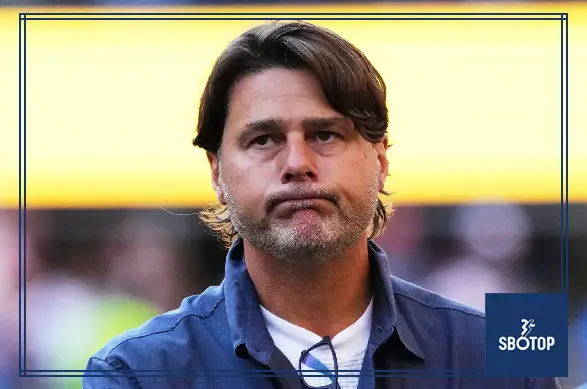
Manchester United took one day to go from confirming Michael Carrick’s dismissal to announcing Mauricio Pochettino as his successor. The speed of the appointment addressed an immediate problem for a club in the Premier League relegation zone. It also sharpened questions about how United handled Carrick’s departure, why they chose the former Tottenham and Chelsea head coach, and whether the people running the club can give him the stability they have repeatedly sought.
Football correspondent Kaveh Solhekol raised those questions on 12 November 2026, as United’s pursuit of Pochettino became public. He argued that the Argentine could have a positive short-term effect while questioning whether his record made him the strongest long-term choice. He also asked who within United’s leadership was driving the decision. Pochettino’s appointment was confirmed on 13 November. The debate has since moved from whether he would take the job to what United expect him to fix.
Why the Timing Drew Criticism
Carrick was still taking training when reports emerged that United had reached an agreement in principle with Pochettino, conditional on a vacancy opening up. United chief executive Omar Berrada and director of football Jason Wilcox were already due to meet minority owner Sir Jim Ratcliffe in Monaco to review the season. The meeting had been arranged before Carrick’s position became the focus of public attention.
Solhekol questioned the way that overlap looked from outside the club. A serving head coach was preparing his team while reports identified a likely successor. United had reason to plan for a possible change, given the team’s results and the complications of hiring someone already employed by a national federation. The criticism concerned how the situation unfolded publicly. The reporting did not establish who authorised the initial contact, who knew its timing, or how individual executives voted on Carrick’s future.
The formal sequence is clear. United confirmed Carrick’s departure on 12 November and announced the agreement with Pochettino the next day. The club reached a deal with the U.S. Soccer Federation to release him and his staff after their remaining duties. Pochettino stayed with the United States for two matches against Haiti before starting work in Manchester on 18 November. Reports estimated his release would cost about £7.4 million. United did not disclose the financial terms.
Carrick’s Record Explains Both Decisions
United had good reason to give Carrick the job permanently in May. After taking over from Ruben Amorim in January, he won 12 of the final 17 league games of 2025/26 and guided the club to third place. United took more Premier League points than any other team over that stretch. Champions League qualification was a measurable improvement, and the club rewarded him with a deal running to 2028.
The picture changed in the autumn. United won once in their opening ten league matches and were winless in eight when Carrick left. A 3–0 home defeat by Bournemouth increased the pressure, and his final game was a 4–4 draw with Aston Villa on 8 November. United were 18th with eight points. The board said the start had made a change necessary, while acknowledging what Carrick had achieved the previous season.
Those records explain why the same leadership could make two different decisions within six months. They also invite scrutiny of what happened between them. A team that had amassed points at a league-leading rate over 17 matches was struggling to win at home or away. Replacing the head coach was a decision United could act on during the international break. Establishing why the decline was so sharp remained a wider task.
The Case for Pochettino and the Case for Doubt
Solhekol’s assessment acknowledged that Pochettino could command the players’ attention and improve the team in the short term. His reservation was about the strength of the appointment over several seasons. He cited Eddie Howe’s domestic cup success with Newcastle United and Antonio Conte’s league title at Chelsea as examples of achievements that might carry weight when comparing coaches. Those comparisons reflected his judgment of their records. They did not establish that either coach was approached or available to United.
Pochettino’s strongest Premier League case comes from Tottenham. He took Spurs into the Champions League in four consecutive seasons and led them to their first final in the competition in 2019. He left without a trophy, a point critics raise when assessing his suitability for a club that expects to challenge for honours. Regular qualification and a European final still give United concrete evidence of what he achieved over an extended period in England.
His other jobs offer different evidence. He led Southampton to a then-club-record Premier League points total, won Ligue 1 and two domestic cups with Paris Saint-Germain, and finished sixth in his only season at Chelsea. Chelsea won their final five league matches of that campaign before he left by mutual consent in May 2024. Most recently, he took the United States to the round of 16 at the 2026 World Cup. United have hired a coach with experience of improving teams and competing at the highest level. How much of that experience translates to this squad remains to be seen.
Who Owns the Decisions Around the Head Coach?
Solhekol’s broader criticism concerned accountability. Ratcliffe oversees football operations through INEOS, while the Glazer family retains a larger ownership stake. Berrada runs the club as chief executive, and Wilcox is director of football. The public announcements confirmed the outcome of the process. They offered little detail about who first advocated appointing Pochettino or how the leadership weighed alternatives.
That question matters because the coach’s decisions are only one part of a club’s football strategy. Recruitment determines the options available to him. Contract decisions shape how quickly the squad can change. The people responsible for those areas must agree on what the team needs from the coach and what he needs from the squad. A rapid appointment can solve a vacancy in days. It takes longer to show that those decisions are working together.
Berrada acknowledged on 20 November that the club had yet to achieve the stability it wanted after going through three permanent managers in fewer than three seasons. He defended United’s summer recruitment and argued that the club should avoid spending heavily on players it was unsure would improve the team. His position addressed the criticism of transfer policy. Pochettino’s initial selections and any later recruitment will show how the squad, assembled before his arrival, fits the way he wants to play.
Anfield Exposed the Immediate Problem
Pochettino’s first match on 22 November ended in a 4–0 defeat by Liverpool. Leny Yoro was sent off in the eighth minute for denying Alexander Isak an obvious goalscoring opportunity. Dominik Szoboszlai scored from the resulting free kick, and Florian Wirtz doubled Liverpool’s lead three minutes later. Rio Ngumoha and Víctor Muñoz scored after half-time. United spent most of the match a player short and chasing the score.
The result left United 19th with eight points from 11 games. Pochettino backed his players’ commitment afterwards and stressed the impact of the early dismissal. There is limited scope to assess a new coach’s preferred approach from a match that changed so early. The league position, however, makes the immediate requirement plain. United need points while Pochettino learns which combinations can give him a more dependable team.
The schedule offered little time between those first tests. United were due to visit Sporting in the Champions League on 25 November before hosting Brentford in the Premier League on 28 November. The European fixture put Pochettino in charge of a campaign made possible by Carrick’s spring turnaround. The Brentford game put the emphasis back on the domestic results that prompted the change.
The Appointment Will Be Judged Over More Than One Run of Results
United’s choice has a clear football rationale. Pochettino knows the Premier League, has developed players at several clubs and has taken an English side to a Champions League final. The criticism has a clear basis too. United renewed their commitment to Carrick after a successful spell, reversed course within months and pursued a successor while the outgoing coach was still working with the team. Berrada’s own assessment confirms that the continuity the club wanted has yet to materialise.
The first measure of progress is whether United can start winning league games again. A longer assessment will turn on whether Pochettino and the club’s leadership agree on the kind of squad they are building and support that plan through a difficult spell. United acted decisively once they chose to replace Carrick. The more demanding test is whether the decisions that follow give Pochettino the continuity the club says it wants.
Also Read: