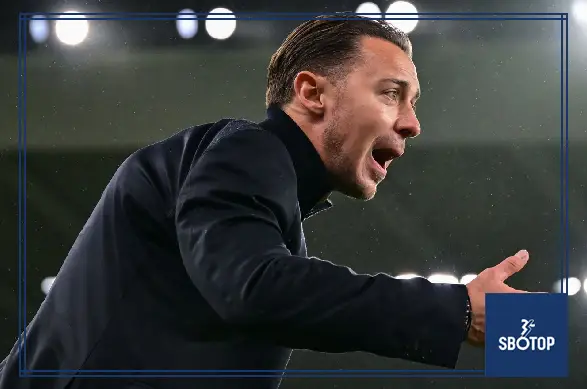
Jamie Carragher’s assessment of Newcastle United after their 1-0 home defeat by Everton was blunt. The former Liverpool defender described the Magpies as “flat and a little bit boring”, expressing concern that Matthias Jaissle’s team could face a difficult Premier League season.
His criticism followed a disappointing performance at St James’ Park on Monday, 2 November 2026. Thierno Barry scored the only goal early in the second half, while Newcastle struggled to produce a convincing attacking response. Boos greeted the hosts at half-time and full-time, and Jacob Ramsey’s late dismissal compounded an already frustrating evening.
Carragher’s warning was an assessment rather than a prediction that could be treated as certainty. Nevertheless, the performance supplied reasons for concern. Newcastle had lost their energy, struggled to impose their intended approach and allowed Everton to record a second victory over them within days.
An Uncomfortable Repeat Against Everton
Newcastle entered the league meeting seeking a response to their 3-1 Carabao Cup defeat at Everton the previous Thursday. The return fixture offered an immediate opportunity to demonstrate improvement against familiar opposition.
Instead, David Moyes’ side again found a way to win. Their 1-0 success brought Everton their first away Premier League victory of the season and extended their recent winning record on Tyneside.
For Newcastle, the repetition made the defeat particularly difficult to absorb. A narrow scoreline might ordinarily suggest a match decided by one isolated moment, but the wider performance raised questions about creativity, conviction and execution.
The two fixtures involved different competitions and circumstances, so they should not be treated as identical. Even so, Newcastle had another chance to solve problems posed by the same opponent and finished without a goal or a point.
Barry Punishes a Costly Breakdown
Everton’s winner arrived in the 49th minute. Tyrique George’s low shot escaped Lukáš Horníček’s grasp, leaving Barry to finish from close range.
The goal involved several stages of defensive failure. Everton reached a shooting position, the initial effort was not secured, and Barry was available to convert the rebound. Newcastle were left chasing the game almost immediately after the interval.
Jaissle argued that an incident involving Barry and Fabian Schär in the build-up should have resulted in the goal being disallowed. That was the Newcastle manager’s interpretation; the goal stood and remained decisive.
Everton had also created promising opportunities before scoring, with Barry and Harrison Armstrong failing to convert first-half chances. Their eventual breakthrough therefore came after earlier warnings, rather than appearing entirely disconnected from the direction of the contest.
Carragher Questions the Team’s Identity
The force of Carragher’s criticism came partly from the difference between what he expected and what Newcastle delivered. He associated Jaissle’s coaching background with aggressive, proactive football that could engage the crowd.
Against Everton, he saw little of that character. His concern extended beyond the result to the experience of watching a team unable to generate sustained excitement or pressure.
That distinction matters. Supporters can accept a defeat more readily when they recognise a clear approach and see players applying it with conviction. A performance without either a result or an identifiable strength offers fewer reasons for encouragement.
However, Carragher’s language remained subjective. Describing football as dull expresses an informed viewing judgement, not a statistical finding. Its relevance rested on how closely it matched observable difficulties in Newcastle’s attacking play and their failure to control important phases.
Jaissle Identifies a Gap Between Training and Matches
Jaissle’s own explanation acknowledged that the performance had not reflected the intended plan. He said Newcastle had worked on patterns designed to create advantages, but those ideas were largely absent during the match.
He also stated that repeatedly sending long balls forward had not been the approach prepared in training. His comments pointed towards a problem translating instruction into action under competitive pressure.
That gap can have several possible causes, including positioning, decision-making and the quality of support available to the player in possession. The public information does not establish one definitive explanation.
What it does show is that the manager did not regard the performance as an accurate expression of his intentions. Newcastle’s task was therefore more specific than simply working harder: they needed to understand why rehearsed ideas were not appearing when the opposition applied pressure.
Why Long Passes Need a Supporting Structure
Playing long is not inherently ineffective. Direct football can exploit space, bypass pressure and create dangerous second-ball situations when the team is organised around it.
The difficulty arises when long passes become an escape from problems rather than a planned attacking route. Without coordinated movement and nearby support, possession can be surrendered before the team has advanced together.
Jaissle’s criticism suggested that Newcastle’s distribution had become disconnected from the patterns he wanted. In that context, the issue was the relationship between the pass and what happened next.
A forward contesting an aerial ball needs teammates close enough to collect a knockdown or apply pressure after losing the duel. Otherwise, the team can become stretched between attack and defence, forcing repeated recovery runs and preventing any sustained rhythm in possession.
Late Chances Cannot Disguise the Earlier Problems
Newcastle did eventually threaten an equaliser. Anthony Elanga came close, Ramsey shot narrowly wide, and substitute Yoane Wissa forced Jordan Pickford into important late work.
Those moments prevent the performance from being characterised as entirely without attacking danger. Everton had to defend their advantage and rely on their goalkeeper during the closing stages.
Yet a late push did not erase the limited threat Newcastle had carried for much of the evening. Creating urgency after falling behind is useful, but it is a difficult foundation for consistent results.
The more important question was why that attacking intent had appeared so intermittently. Newcastle needed a way to produce opportunities through repeatable combinations, rather than relying on the match situation to force a final surge. Their chances offered evidence of capability, while their inconsistency remained the concern.
Ramsey’s Red Card Adds Frustration
Ramsey’s dismissal came deep into stoppage time after two bookings in quick succession. He had entered as a substitute and briefly offered an attacking threat before his evening ended early.
The timing must be kept in perspective. Everton were already leading, and Newcastle had struggled for most of the match before being reduced to ten men.
It would therefore be inaccurate to make the sending-off the central explanation for the defeat. It was an additional setback at the end of an unsuccessful attempt to recover.
Nevertheless, discipline forms part of managing difficult situations. A team chasing a late equaliser needs to maximise its remaining opportunities. Losing a player reduced Newcastle’s options and added another avoidable complication to a performance that already contained enough problems.
Home Expectations Make the Performance More Painful
St James’ Park brings substantial expectations, particularly regarding intensity and the willingness to take the initiative. Newcastle’s inability to establish those qualities contributed to the audible frustration.
Jaissle acknowledged the supporters’ reaction and accepted responsibility for the performance. That response avoided dismissing the dissatisfaction as unreasonable.
Still, crowd frustration should not be treated as proof of a permanently damaged relationship. It reflected an unhappy evening and a difficult run, not a reliable measure of every supporter’s view.
The practical challenge was to give the stadium something positive to respond to. Coordinated pressure, purposeful possession and committed recovery work can help rebuild momentum. Those actions require organisation as much as emotion; simply demanding greater passion offers an incomplete answer to technical and tactical difficulties.
A Warning About the Season, Not a Final Verdict
Immediately after the Everton defeat, Newcastle were 13th with 11 points from nine league matches. That position formed the context for Carragher’s concern.
It did not establish that the club was destined for a relegation battle or that a recovery was impossible. With most of the campaign remaining, the evidence supported concern about direction rather than certainty about the final table.
Carragher was questioning whether the existing performances could sustain better outcomes. That is a reasonable distinction: results can briefly conceal weaknesses, just as an isolated defeat can exaggerate them.
The next stage of assessment needed to examine whether Newcastle’s patterns improved. More connected possession, clearer pressing and stronger chance creation would provide firmer evidence of progress than reassurance based solely on reputation or the quality of individual players.
Everton Deserve Their Share of the Credit
An examination of Newcastle’s shortcomings should not reduce Everton to passive beneficiaries. Moyes’ side created opportunities, capitalised on the decisive mistake and defended their advantage.
Barry’s readiness to attack the rebound was an important part of the winning goal. Pickford’s late intervention also helped preserve the result when Newcastle finally generated pressure.
The visitors’ performance demonstrated the value of doing specific tasks effectively. They did not need an elaborate winning goal; they needed someone in position to exploit the opportunity and a team capable of protecting the lead.
For Newcastle, that provided a clear comparison. Intentions and attractive coaching principles matter, but matches are settled through execution. Everton completed the decisive actions, while the home side failed to turn enough of their possession or late urgency into an equaliser.
The Response Must Be Visible on the Pitch
Carragher’s verdict sharpened the scrutiny around Newcastle because it questioned their identity as well as their form. The problem he identified was a team appearing less energetic and less assertive than expected.
Jaissle’s explanation offered a related diagnosis: the work prepared during the week had not transferred convincingly into the match. Bridging that divide required clearer execution and collective understanding.
Newcastle still had opportunities to change the course of their season. However, improvement needed to become visible through their football: better support around the ball, more coordinated pressure and attacking movements that consistently troubled opponents.
The Everton defeat did not decide the campaign. It did expose enough weaknesses to make Carragher’s warning difficult to dismiss. Newcastle’s answer would have to come through sustained performances, rather than promises that the intended version of the team would eventually emerge.
Also Read: