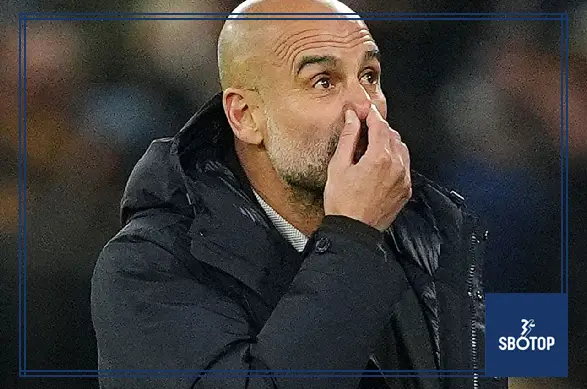
Manchester City’s stunning 2–0 defeat to Bayer Leverkusen sent shockwaves through European football—not because City lost, but because of how they lost. Pep Guardiola’s team, renowned for depth, tactical flexibility, and structural superiority, looked unusually blunt, stretched, and predictably reliant on individual brilliance that never arrived. The match did more than add a blemish to City’s impressive continental record; it peeled back the veneer of invincibility and revealed underlying structural problems the club can no longer ignore.
City’s dependence on Erling Haaland has been a well-documented narrative, but this match demonstrated that their issues run much deeper: the midfield lacks balance, the defence looks increasingly fragile, rotation options are either inexperienced or inconsistent, and the tactical ecosystem Guardiola meticulously constructed appears shakier than it has in years. Leverkusen, under Xabi Alonso, didn’t just beat City—they exposed them.
This long-form analysis takes a deep dive into what went wrong, why it’s happening now, and how the champions can rebuild their aura of dominance before the season slips away from them.
A Defeat That Revealed More Than a Bad Night
Manchester City are no strangers to poor performances early in campaigns—they often start slowly then surge toward the finish line. But the 2–0 loss to Bayer Leverkusen was different. Manchester City were outworked, outpaced, and outthought for large stretches. Leverkusen were sharper in midfield transitions, more coordinated in pressing phases, and far more purposeful in attack.
From the first whistle, City looked uncomfortable playing against a team that matched them technically and surpassed them tactically. Leverkusen showed no fear pressing City high, forcing turnovers in midfield, and denying Rodri the time and space he typically uses to orchestrate City’s rhythm. This alone disrupted City’s entire structure, but the ripple effects were even more damaging: with Rodri suffocated, City’s backline was exposed, their wide play became predictable, and Haaland rarely received quality service.
The defeat wasn’t about one or two individuals having an off night. It was a systematic breakdown across several interconnected areas—each pointing toward the same overarching theme: Manchester City no longer have the same squad depth that carried them through grueling seasons.
Beyond Haaland The Crumbling Midfield Engine
Much has been said about City’s over-reliance on Haaland, but the bigger problem is the midfield that’s supposed to feed him. Guardiola built his dynasty on midfield dominance—technical superiority, positional discipline, and relentless control of tempo. But in this match, City’s midfield was second best in nearly every sequence.
-
Rodri’s Burden Has Become Unsustainable
Rodri is widely considered the best defensive midfielder in the world. But the burden on him has reached unsustainable levels. When he is fully in rhythm, City’s machine hums. When he is neutralized, as Leverkusen expertly managed, the whole system falters.
Leverkusen pressed Rodri with dual triggers—forcing him onto his weaker foot, closing his passing lanes, and baiting him into sideways passes that killed City’s momentum. Without another midfielder capable of sharing creative and defensive responsibilities, Rodri looked isolated, overworked, and increasingly frustrated.
-
De Bruyne’s Absence Still Haunts the Side
Kevin De Bruyne’s injury history has become a more severe issue than City anticipated. While Phil Foden, Julián Álvarez, and Bernardo Silva can each operate between the lines, none offer the same combination of creativity, physicality, and direct threat that De Bruyne brings.
Without him, City lack a midfielder who can break defensive structures with unpredictable passing or late surging runs. Against Leverkusen’s compact mid-block, City looked painfully one-dimensional.
-
Kovacic Nunes and the Struggle for Stability
City’s summer signings were intended to restore depth and add fresh dimension to the midfield. Instead, Mateo Kovacic and Matheus Nunes have struggled to impose themselves consistently within Guardiola’s intricate system.
Kovacic excels in ball carrying but lacks the defensive presence needed to support Rodri. Nunes has dynamism but appears tactically raw for Guardiola’s demands. This leaves the team with a structural problem: there is no reliable, high-level alternative when Rodri or De Bruyne are unavailable or neutralized.
Guardiola’s midfield used to be his greatest weapon. Now, it often feels like an overburdened fault line.
Defensive Instability From Fortress to Fragility
City’s defensive unit once embodied composure and reliability. Last season’s treble-winning squad kept the ball with such suffocating control that defending became a secondary task. But the loss to Leverkusen exposed growing fragilities that opponents are beginning to target.
-
Walker and Aké Show Their Limitations
Kyle Walker remains one of the best recovery defenders in the world, but age is catching up. His sprinting ability is still elite, but his positional play has become more erratic, especially against teams that pull defenders into uncomfortable zones. Leverkusen exploited this repeatedly.
Nathan Aké, reliable as he’s been, struggled against the pace and precision of Leverkusen’s attacking rotations. Without John Stones or Rúben Dias in peak form, City lacked calmness and leadership in critical defensive transitions.
-
Laporte’s Departure Still Hurts
Aymeric Laporte offered a unique blend of ball-playing quality and defensive intelligence. His departure created a hole that has yet to be truly filled. While Guardiola trusts Joško Gvardiol long-term, the Croatian defender is still adapting, and his form has fluctuated.
Without Laporte or a fully fit Stones, City’s defensive buildup looks significantly less fluid. Mistimed passes, slower switches of play, and positional miscommunications were all evident against Leverkusen.
-
The System Depends Too Much on Perfect Execution
Guardiola’s defensive model requires:
- Full-backs who invert with precision
- Centre-backs comfortable in midfield spaces
- Wingers who maintain pressing triggers
- Midfielders who cover second balls instantly
When even one component fails, the system wobbles. Against Leverkusen, several components failed simultaneously.
City looked more vulnerable than they have in years—not because opponents outmuscled them, but because they outmaneuvered them.
An Attack Too Dependent on Moments Not Structure
Despite their defensive and midfield issues, City still created opportunities—but they felt forced rather than fluid. For a team built on calculated patterns of play, this is alarming.
-
Haaland Isn’t the Problem—He’s the Symptom
Erling Haaland is extraordinary, but City have become overly dependent on his movement and finishing. When opponents deny him service, City’s attacking structure looks unimaginative.
Leverkusen’s defenders compressed the central channels, cutting off supply lines from Foden and Álvarez. Haaland was left feeding on scraps, often forced into wide areas where he is least effective.
The issue isn’t Haaland’s performance—it’s the lack of supporting creativity.
-
Wingers Struggling to Influence Games
The departure of Riyad Mahrez and the declining form of Jack Grealish have removed critical elements of City’s wing play:
- Mahrez offered elite one-v-one ability and composure
- Grealish provided ball retention and dribbling control
- New arrivals have not matched this consistency
Doku is electric but inconsistent. Bernardo Silva is brilliant but not a natural winger. Foden remains City’s bright spark, but he cannot carry the creative load alone.
City’s inability to stretch Leverkusen’s defensive line was a major contributor to their attacking stagnation.
A Squad That Suddenly Looks Thin
City’s squad once boasted two world-class options at nearly every position. Now, several areas appear thin or understaffed:
- Midfield: No like-for-like Rodri replacement
- Attack: No elite creators besides Foden and (when fit) De Bruyne
- Defense: Too dependent on Stones’ fitness and Walker’s aging pace
- Full-backs: Limited options after Cancelo and Zinchenko departures
Pep has often said he prefers smaller squads, but this approach is risky in a season filled with injuries, heavy scheduling, and increasingly competitive opponents.
Leverkusen showed the consequences of those risks.
Leverkusen’s Tactical Masterclass A Blueprint for Others
Xabi Alonso deserves immense credit. His approach was bold, intelligent, and disciplined.
-
Key elements of Leverkusen’s plan
- High Press on Rodri
Cut City’s supply line and force them into slow buildup. - Wing Overloads
Targeted Walker and Aké with diagonal runs, isolating them repeatedly. - Quick Vertical Transitions
Exploited spaces behind City’s midfield when they committed players forward. - Compact Midfield Block
Prevented City’s typical triangles from forming.
In many ways, this match presented a tactical blueprint for how to disrupt Guardiola’s system.
The Psychological Ripple Effect City Losing Their Aura
Losing a game isn’t the issue—how City lost is. For years, City played with an aura that intimidated opponents before kickoff. Their control, rhythm, and relentless consistency made victory feel inevitable.
But this season, teams are beginning to sense vulnerability.
- Wolves beat them with aggressive transitions
- Arsenal outworked them in midfield
- Tottenham pressed them with intensity
- Leverkusen outthought them tactically
City no longer feel invincible. That psychological shift can be dangerous.
Also Read:
- SBOTOP : Controversy Over Ronaldo’s Sanction Removal: FIFA Faces Potential Lawsuit Ahead of the World Cup
- SBOTOP : Comparing Stephen Curry to Legendary Point Guards: What Makes Him Unique and Superior
- SBOTOP Man City Shocked Again as Bayer Leverkusen Seal 2–0 Win: Guardiola’s Men Suffer Back-to-Back Champions League Defeats