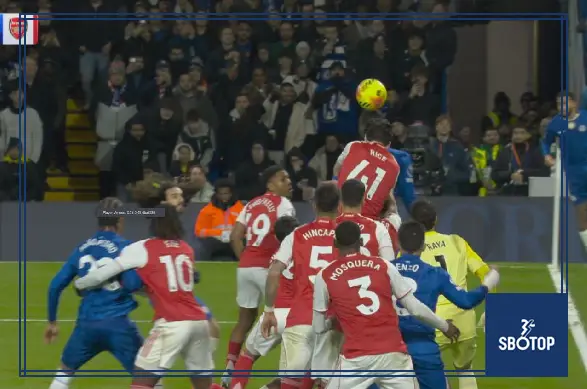
Chelsea and Arsenal played out a tense 1-1 draw at Stamford Bridge, but the spotlight post-match has been on Trevoh Chalobah’s opening goal and the potential offside involvement of Enzo Fernandez. The goal, which put Chelsea ahead early, has sparked debate among pundits, fans, and analysts over whether it should have been disallowed. VAR (Video Assistant Referee) checks did not overturn the goal, yet many argue the play warrants closer examination.
This article delves into the goal’s context, the rules governing offside in football, VAR procedures, historical precedents, and the broader implications of controversial goals on the Premier League.
The Match Context
Chelsea vs. Arsenal is always a fixture charged with intensity. Both teams came into the match seeking points crucial for their respective campaigns. Chelsea, playing at home, were eager to assert dominance, while Arsenal looked to secure a result to maintain their position near the top of the league.
The first goal of the match came in the early stages when Trevoh Chalobah capitalized on a defensive lapse to put Chelsea ahead. The build-up involved Enzo Fernandez, whose position raised questions about the legality of the goal. Arsenal players immediately protested, signaling potential offside involvement, and the VAR team was consulted to review the play.
The Goal in Question
Chalobah’s goal occurred after a sequence of passes that exploited gaps in Arsenal’s midfield and defense. Fernandez’s movement prior to the pass drew attention because, at the moment the ball was played, he appeared to be ahead of the last defender.
Offside rules in football are nuanced. A player is in an offside position if they are nearer to the opponent’s goal line than both the ball and the second-last defender when the ball is played, provided they are involved in active play. In this case, the debate hinges on whether Fernandez’s position influenced Chalobah’s goal.
VAR reviewed the incident and deemed the goal valid. The decision relied on interpreting Fernandez’s involvement: whether he actively interfered with play or merely occupied space without affecting the outcome. Despite the ruling, the goal remains a topic of debate across social media and sports commentary.
Understanding Offside Rules
The offside rule, one of football’s most complex regulations, often sparks controversy. According to the Laws of the Game:
- Offside Position: A player is in an offside position if any part of the head, body, or feet is nearer to the opponent’s goal line than both the ball and the second-last defender.
- Active Play: Being in an offside position is only penalized if the player is actively involved in play, which includes:
- Interfering with play (playing or touching the ball)
- Interfering with an opponent (blocking vision or challenging for the ball)
- Gaining an advantage from being in that position
In Chalobah’s goal, Fernandez’s position is critical. If he obstructed Arsenal defenders’ line of sight or distracted the goalkeeper, he could be considered to have interfered with play. Conversely, if he was not involved in the active play, the goal remains valid, which is what VAR concluded.
VAR Procedures and Decision-Making
VAR has become a vital tool in modern football, aiming to ensure fair outcomes while minimizing human error. The procedure for reviewing potential offside goals includes:
- Initial Review: Referee stops play and communicates with VAR officials.
- Frame-by-Frame Analysis: VAR examines the moment the ball is played, using multiple camera angles and digital overlays to assess offside position.
- Active Involvement Check: Officials determine if the offside-positioned player interfered with play or opponents.
- Referee Decision: Based on VAR feedback, the on-field referee decides whether to allow or disallow the goal.
In the case of Chalobah’s goal, VAR officials reviewed Fernandez’s position using these protocols. Their conclusion that the goal was valid indicates they judged him not to have interfered actively, despite being in a potentially offside position.
Historical Offside Controversies
Offside controversies are far from new. Premier League history is filled with contentious goals that sparked debates:
- Thierry Henry’s hand-assisted goals for Arsenal, where his position or involvement was disputed.
- Mohamed Salah’s early goal for Liverpool against Chelsea, initially flagged by linesmen but later allowed after VAR review.
- Manchester United vs. Liverpool clashes, where marginal offside positions led to prolonged debates.
These cases highlight that even with VAR, the interpretation of “active involvement” remains subjective, creating gray areas that continue to provoke discussion.
Reactions from Players and Managers
The aftermath of Chelsea 1-1 Arsenal saw strong reactions:
- Chelsea: Chalobah and team management praised the goal, emphasizing their focus on performance rather than controversy. Manager [insert manager name] noted that VAR confirmed the goal’s validity, reinforcing confidence in the decision.
- Arsenal: Players expressed frustration, arguing that Fernandez’s offside position disrupted defensive organization. Manager [insert manager name] called for clearer guidelines on offside interference, stressing the importance of consistency.
Fans, pundits, and social media users also weighed in, with opinions split between those supporting VAR’s decision and those questioning whether stricter interpretation should have applied.
The Psychological Impact of Controversial Goals
Controversial goals have more than tactical implications—they affect team psychology. For Chelsea, scoring early provided momentum, while Arsenal had to overcome frustration and reorganize defensively. Players must manage emotional responses, maintaining focus despite perceived injustices.
Psychologically, such incidents can:
- Boost Confidence: The scoring team gains morale and belief in their game plan.
- Cause Distraction: Opponents may dwell on the decision, impacting concentration.
- Influence Aggression: Heightened emotions can lead to rash tackles or disciplinary issues.
The Chalobah-Fernandez incident illustrates these dynamics, highlighting how offside controversies shape matches beyond mere statistics.
Technical Analysis Was VAR Correct
A detailed review of Chalobah’s goal involves:
- Position of Fernandez: Slightly ahead of Arsenal’s last defender at the time of the pass.
- Proximity to Chalobah: Not directly receiving the ball but close enough to potentially influence defenders.
- Impact on Defensive Line: No clear obstruction of goalkeeper’s vision; defenders’ reactions were influenced by Chalobah’s movement.
Based on these observations, VAR’s decision aligns with the laws of the game. Fernandez did not actively play the ball nor interfere directly, which falls within the “no offside interference” interpretation.
Also Read: