Arsenal forward Gabriel Martinelli has avoided additional disciplinary action following a controversial on-field incident involving injured Liverpool defender Conor Bradley. The moment, which occurred during a high-profile Premier League clash between two title contenders, sparked intense debate among pundits, fans, and former players, with questions raised over player conduct, refereeing consistency, and the boundaries of competitive aggression in modern football.
While Martinelli’s actions were scrutinised heavily in the aftermath, football authorities ultimately decided not to impose further punishment beyond what was addressed during the match itself. The decision has brought temporary closure to a contentious episode, but it has also reignited broader discussions about sportsmanship, player safety, and how incidents involving injured players should be handled.
The Incident That Sparked Controversy
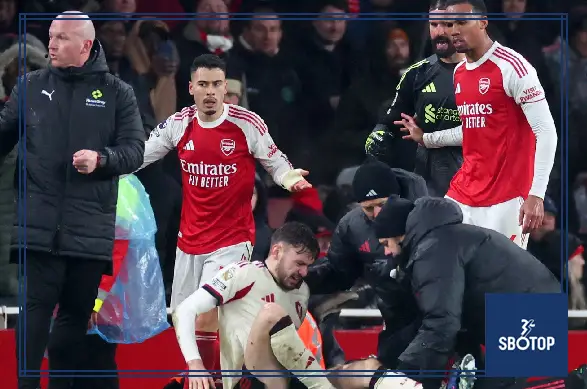
The flashpoint came during a heated phase of the match when Conor Bradley, having picked up an injury moments earlier, was visibly struggling on the pitch. As play continued, Martinelli made contact with Bradley, pushing him as the Liverpool defender attempted to recover his position. The challenge, while not violent in nature, immediately drew attention due to Bradley’s compromised physical state.
Liverpool players reacted swiftly, surrounding the referee and appealing for stronger action. The atmosphere inside the stadium intensified, with supporters from both sides expressing contrasting views on the incident. For some, it was a routine physical contest exaggerated by circumstance. For others, it crossed an ethical line, given Bradley’s visible injury.
On-Field Decision and Immediate Aftermath
The referee opted to manage the situation without issuing a red card or escalating the punishment beyond an in-game warning. That decision proved pivotal, as it set the tone for how the incident would later be assessed by disciplinary bodies. Martinelli continued to play, while Bradley was eventually substituted, unable to continue due to the injury. The contrast between the two players’ fortunes added emotional weight to post-match discussions, with Liverpool supporters feeling aggrieved and Arsenal fans arguing that Martinelli had been unfairly vilified.
Disciplinary Review and Final Verdict
Following the match, the incident was reviewed as part of standard post-game procedures. Match officials, alongside league authorities, examined video footage, referee reports, and contextual factors before reaching a conclusion.
Ultimately, it was decided that Martinelli’s actions did not warrant retrospective punishment. Officials deemed the contact insufficiently severe to justify further sanctions, noting that the referee had seen the incident clearly and handled it in real time.
This decision reinforced the principle that retrospective action is generally reserved for incidents that escape the referee’s attention or involve clear acts of violent conduct.
Arsenal’s Response and Internal Perspective
Arsenal maintained a measured stance throughout the process. Club representatives avoided inflammatory statements, instead expressing confidence in the disciplinary system and trust in the match officials’ judgment.
Internally, the incident was reportedly reviewed by Arsenal’s coaching staff, with an emphasis on maintaining discipline and awareness, particularly in emotionally charged matches. While Martinelli avoided formal punishment, the club is believed to have reminded players of their responsibilities regarding player safety and conduct.
Such internal reviews are common at elite clubs, where maintaining a positive disciplinary record is seen as integral to long-term success.
Martinelli’s Playing Style Under the Microscope
Gabriel Martinelli is widely admired for his intensity, work rate, and fearless approach. His willingness to press aggressively and engage physically has earned praise from managers and fans alike. However, those same qualities can occasionally place him at the centre of controversy.
This incident has prompted renewed discussion about the fine line between competitive edge and excessive aggression. Supporters of Martinelli argue that his style embodies the spirit of the Premier League, while critics suggest that greater awareness is required when opponents are injured.
Balancing intensity with responsibility remains one of the key challenges for players operating at the highest level.
Liverpool’s Viewpoint and Reaction
From Liverpool’s perspective, the incident was understandably frustrating. Losing a player to injury is always disruptive, and the manner in which Bradley was forced off heightened emotions.
While the club refrained from making formal complaints, comments from players and staff reflected disappointment that the situation had escalated as it did. Liverpool supporters, in particular, expressed concern about player welfare and consistency in officiating decisions.
The absence of further sanctions for Martinelli did little to ease those frustrations, even if the decision aligned with existing disciplinary frameworks.
The Refereeing Debate
Refereeing consistency remains one of the most debated aspects of modern football, and this incident added fuel to that ongoing conversation. Critics questioned whether referees should take extra precautions when dealing with injured players, while others defended the official’s handling of the situation.
The referee’s decision to allow play to continue, followed by minimal disciplinary action, was within the laws of the game. However, the subjective nature of such decisions ensures they will always attract scrutiny.
Calls for clearer guidelines on how referees should respond when injured players are involved in physical challenges have grown louder in the wake of this incident.
Player Safety in the Modern Game
Player safety has become a central focus in football governance, particularly with increased awareness of injury risks and long-term health concerns. Incidents involving injured players are especially sensitive, as they raise ethical questions beyond the letter of the law.
While football is inherently physical, there is growing expectation that players exercise caution when opponents are clearly hurt. The Martinelli-Bradley incident highlights the tension between competitive instinct and moral responsibility.
Governing bodies continue to explore ways to protect players without undermining the flow and intensity that define the sport.
Media and Public Reaction
The media response to the incident was swift and divided. Some commentators criticised Martinelli, framing the push as unnecessary and unsporting. Others defended him, arguing that he acted instinctively in a fast-moving game and that the reaction was overblown.
Social media amplified these contrasting views, with clips of the incident circulating widely and fueling heated debates. As often happens, narratives formed quickly, sometimes detached from the full context of the match.
The eventual decision not to punish Martinelli further shifted the conversation, prompting discussions about fairness, precedent, and the role of hindsight in disciplinary decisions.
Impact on Arsenal’s Season
From Arsenal’s standpoint, avoiding further sanctions for Martinelli is significant. The Brazilian forward is a key component of their attacking setup, valued for his versatility and directness.
A suspension could have disrupted Arsenal’s momentum during a crucial phase of the season. Instead, Martinelli remains available, allowing the team to maintain continuity and tactical consistency.
The incident, however, serves as a reminder of how quickly external factors can influence a campaign, particularly in high-profile matches.
Learning Moments for Young Players
At just 23, Martinelli is still developing both as a footballer and as a professional. Incidents like this, while uncomfortable, can serve as valuable learning experiences.
Understanding how actions are perceived, especially under intense scrutiny, is part of growth at elite level. Even without formal punishment, the episode offers an opportunity for reflection and maturity.
Coaches often stress that leadership is demonstrated not only through performance but also through decision-making in emotionally charged situations.
The Broader Ethical Question
Beyond the immediate outcome, the incident raises broader ethical questions about football culture. Should players be expected to show restraint when opponents are injured, even if play continues? Where should the line be drawn between responsibility and competitiveness?
There are no simple answers. Football’s laws provide a framework, but cultural expectations and personal values also play a role. The Martinelli-Bradley incident sits squarely within this grey area, making it a useful case study for ongoing discussion.
Comparisons with Past Incidents
Football history is littered with controversial moments involving injured players. Some have resulted in retrospective bans, while others have been dismissed as unfortunate accidents.
Consistency across such cases is difficult to achieve, given the unique circumstances of each incident. However, comparisons inevitably arise, influencing public perception and shaping debates about fairness.
In this case, authorities appear to have prioritised the referee’s in-game judgment, reinforcing the principle that officials’ decisions carry significant weight.
Also Read:
- SBOTOP: Rangers Hit by Injury Blow as Connor Barron Faces 8–12 Week Layoff Sterling Also Ruled Out for Aberdeen Clash
- SBOTOP: Gary Neville Slams Gyökeres’ Display as Arsenal Striker Fails to Impact Liverpool Clash
- SBOTOP: World Champions Tang Jie and Ee Wei Stress That Perfect Record Isn’t Everything